Barcelona is a city students often know from a soccer jersey or a photo of the Sagrada Familia. The fun facts about Barcelona go much further. It has its own language, a street grid designed by an engineer, and traditions you won’t see anywhere else in Spain.
This guide collects fun facts about Barcelona that work as pre-trip material for high school groups. Each fact connects to a place students can visit or a tradition they can see on the ground. Teachers can turn them into a class warm-up, a scavenger hunt, or a short research project before departure. Parents can use them to start a conversation at home about the trip.
You’ll find facts about architecture, language, and local traditions, plus answers to common questions families ask about Barcelona.
Fun facts about Barcelona’s architecture
Barcelona’s buildings tell the story of the city. These facts help students look up and notice details on every walk.
The Sagrada Familia is now the tallest church in the world
Construction on the Sagrada Familia began in 1882. In 2026, workers placed the top of the central Tower of Jesus Christ, bringing the basilica to 172.5 meters (about 566 feet). That height makes it the tallest church in the world. Parts of the building, like the Glory Façade, are still under construction. Students visiting today are seeing a project that has lasted more than 140 years.
Several of Gaudí’s buildings are UNESCO World Heritage Sites
UNESCO first recognized Gaudí’s work in 1984 with Park Güell, Palau Güell, and Casa Milà. The listing was expanded in 2005 to include more of his buildings, such as Casa Batlló and the Nativity façade of the Sagrada Familia. Our post on Gaudí architecture tours explains how students explore these sites.
The Eixample district was planned as a grid with cut corners
In the 1800s, engineer Ildefons Cerdà designed the Eixample, a new district built in a grid. Its blocks have cut, angled corners. The idea was to improve light, air, and visibility at intersections. Look at a map of Barcelona from above and students will spot the octagon-shaped blocks right away.
Facts about Barcelona’s language and identity
Barcelona is the capital of Catalonia, and that identity shapes daily life. These facts help students understand what they’ll hear and see.
Catalan and Spanish are both official
In Catalonia, Catalan and Spanish are both official languages. Street signs, menus, and announcements often appear in Catalan first. Students practicing Spanish will still be understood everywhere. Learning a few Catalan words, like “Bon dia” (good morning) and “Gràcies” (thank you), is a respectful touch.
Human towers are part of world heritage
Castells are human towers built by teams called colles. People stand on each other’s shoulders, sometimes eight or more levels high, and a child climbs to the top. UNESCO added castells to its list of the Intangible Cultural Heritage of Humanity in 2010. Students may see a performance during local festivals.
Books and roses on Sant Jordi Day
Every April 23, Catalonia celebrates Sant Jordi (Saint George), its patron saint. Streets fill with stalls selling books and roses, and people exchange them as gifts. Teachers can tie this tradition to a reading or literature unit.
Facts about Barcelona’s modern history
Barcelona has changed a lot in the last few decades. These facts help students connect what they see to recent history.
The 1992 Olympics transformed the waterfront
Barcelona hosted the Summer Olympic Games in 1992. The city used the event to redevelop its coastline, which had been an industrial area. Today, the beaches and promenades near Barceloneta are some of the most visited spots in the city. On our itinerary, students explore this area on a coastal bike tour.
The mountain monastery next door
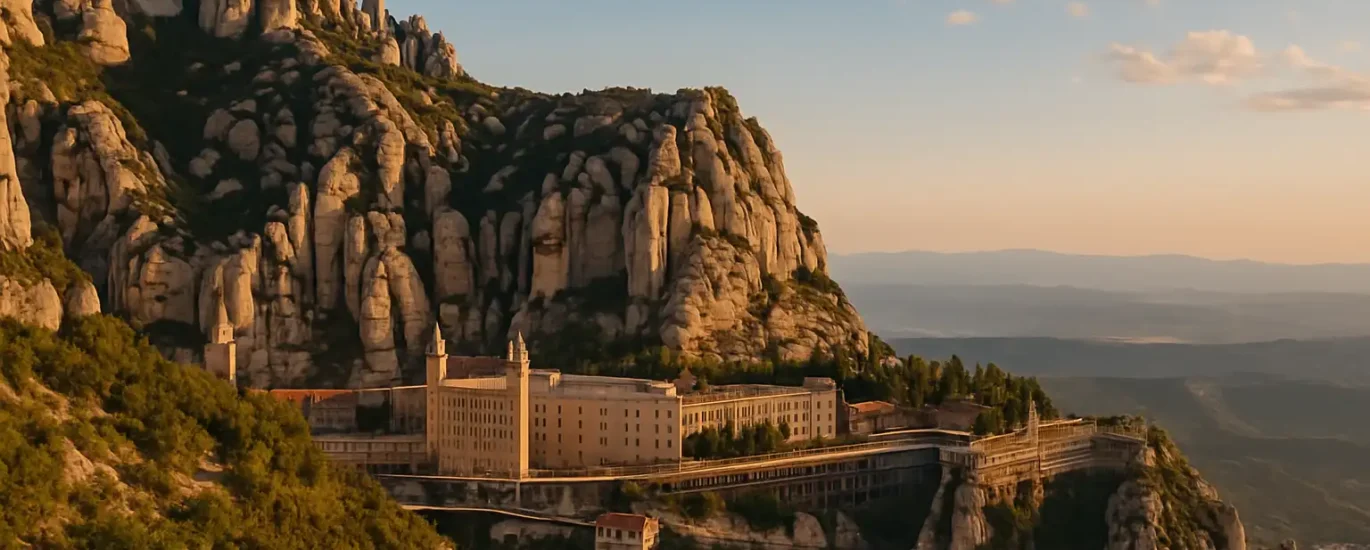
Montserrat, about an hour from the city, is a mountain range with a Benedictine monastery built into its rock. Students reach it by regular train and cogwheel train. Our guide to the Montserrat day tour covers the trip in detail.
How teachers can use these facts before a trip
Facts stick when students do something with them. A few ideas:
- Spot the fact: Give each student one fact. During the trip, they find the place connected to it and share it with the group.
- Map challenge: Have students find the Eixample’s cut-corner blocks on a satellite map.
- Bilingual signs: Ask students to photograph signs in Catalan and Spanish and compare the words.
- Food link: Pair these facts with our guide to tapas in Spain to prepare for the cooking class in Barcelona.
FAQ
What is Barcelona famous for?
Barcelona is famous for Antoni Gaudí’s architecture, especially the Sagrada Familia and Park Güell. It’s also known for its beaches, its soccer club, and its Catalan culture and language.
Do people in Barcelona speak Spanish?
Yes. Catalan and Spanish are both official in Catalonia, and almost everyone in Barcelona speaks Spanish. Students will hear both languages and see both on signs.
How tall is the Sagrada Familia?
The Sagrada Familia reached its full height of 172.5 meters in 2026, when the top of the central Tower of Jesus Christ was put in place. It is the tallest church in the world.
See these facts in person in Barcelona
Reading about Barcelona is a good start. Standing under the Sagrada Familia, hearing Catalan on the street, and biking along the waterfront makes the learning stick. Engaged Education’s 10-day Barcelona & Madrid Discovery itinerary combines guided visits with community activities, public transport, and a dedicated tour leader.
Fill out our form or download our Engaged Education Brochure to learn more about our educational programs in Spain.