Ask a student what they expect to eat in Spain and many will say “tapas.” Fewer can explain what tapas actually are. That gap is a great teaching opportunity. Food is one of the easiest ways for students to practice Spanish and read a culture up close.
This guide explains tapas in Spain for teachers, parents, and students preparing for an educational trip. You’ll learn where the word comes from, how tapas culture changes by region, and which dishes students are likely to try. You’ll also find practical notes on ordering in Spanish, mealtimes, and dietary needs. Teachers can use this guide as pre-trip reading or as the base for a vocabulary unit.
What are tapas in Spain?
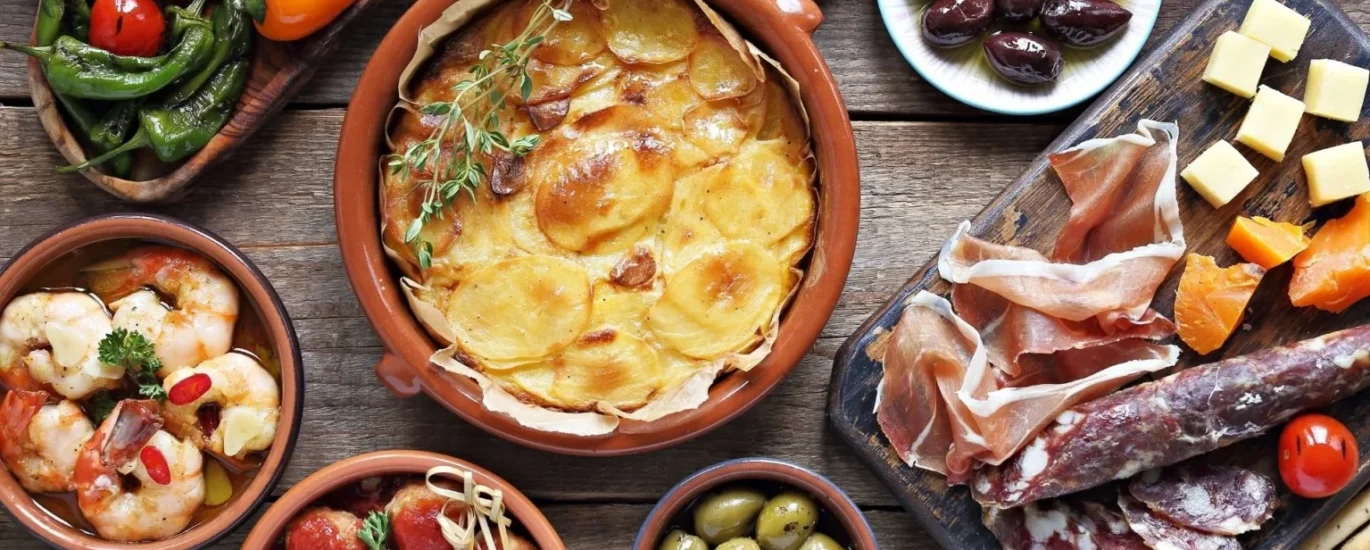
Tapas are small plates of food, usually shared at a bar or table. People order a few at a time and keep adding as the evening goes on. The verb tapear means to go out for tapas, often moving from one bar to the next.
Where the word comes from
Tapa means “lid” or “cover” in Spanish. A popular story says bartenders once covered drinks with a slice of bread or ham to keep out flies or dust. Other stories credit Spanish kings with the custom. Historians treat these stories as legends. They still make a fun discussion prompt: ask students why a culture might keep a story alive even when its origin is unclear.
Learn new vocabulary: Tapas, raciones, and pintxos
Students will see a few terms on menus:
- Tapa: a small portion, often a few bites.
- Media ración: a half portion, good for sharing among two or three people.
- Ración: a full portion, meant for a group.
- Pintxo: the Basque version, often a small bite on a slice of bread held together with a toothpick.
Learning these words before the trip helps students order with confidence and avoid ordering far too much food.
How tapas culture changes across Spain
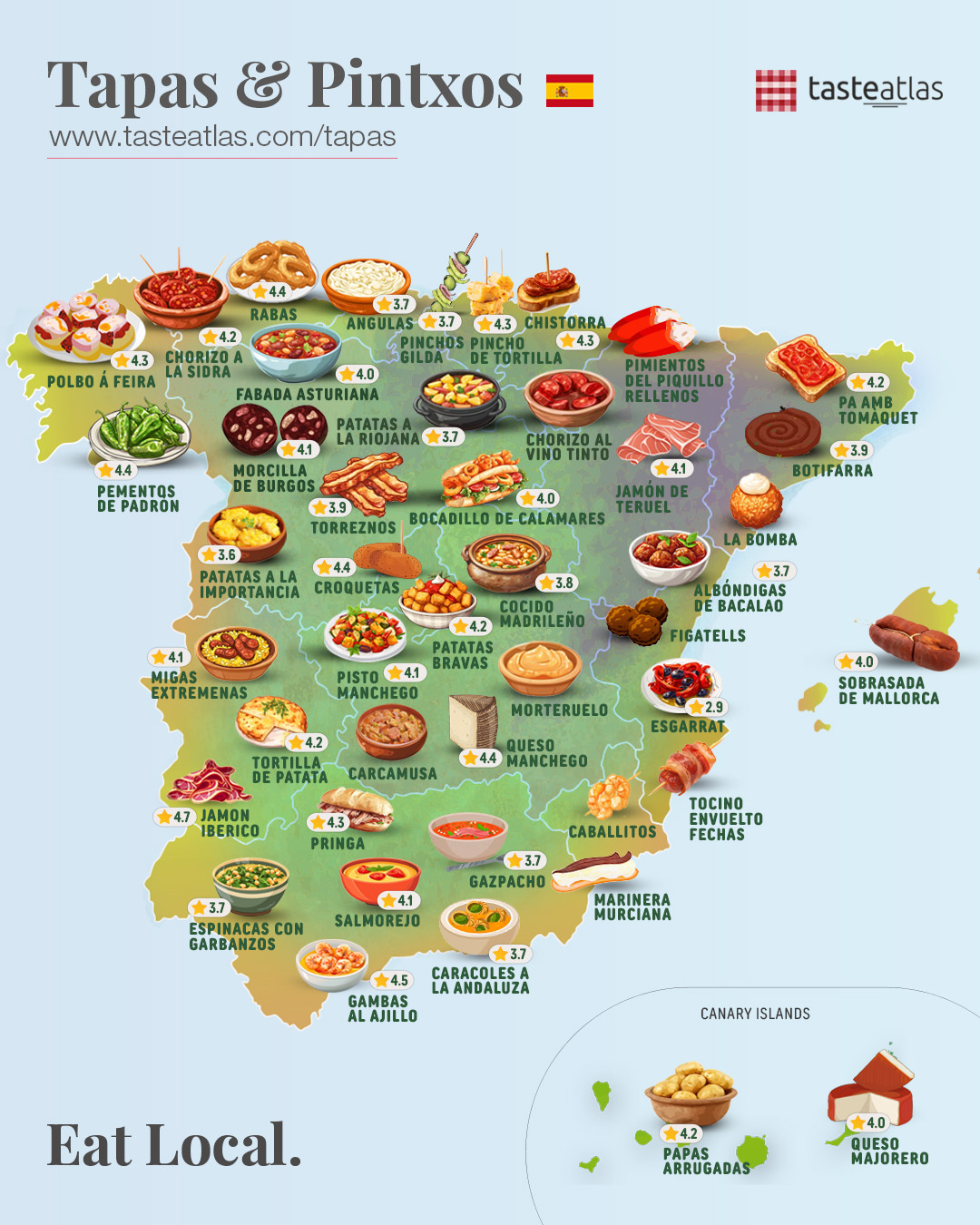
Spain has strong regional identities, and food is one of the clearest ways to see them. This makes tapas a useful lens for comparing regions in class.
Barcelona and Catalonia
In Barcelona, students will hear Catalan as well as Spanish. Menus may list pa amb tomàquet, bread rubbed with tomato, olive oil, and salt. Catalan cooking draws heavily on the Mediterranean, so seafood shows up often. Students can compare the Catalan and Spanish names for the same dish, which is a quick lesson in bilingual signage.
Madrid and central Spain
Madrid has a long tradition of tapas bars, especially around La Latina and the streets near Plaza Mayor. Classic orders include patatas bravas (fried potatoes with a spicy sauce) and croquetas (breaded, fried bites, often with ham or chicken). Many bars serve a small snack with a drink at no extra charge, though this varies.
Granada, the Basque Country, and beyond
In Granada, a free tapa with each drink is a well-known local custom. In the Basque Country, pintxos are lined up along the bar counter. Students won’t visit every region on one trip. Knowing these differences still helps them see “Spanish food” as many regional traditions.
Common tapas students will try
Here are dishes students will likely see on menus:
- Tortilla española: a thick potato and egg omelet, served in wedges.
- Patatas bravas: fried potatoes with a spicy tomato-based sauce.
- Croquetas: creamy, breaded bites, often filled with ham or chicken.
- Gambas al ajillo: shrimp cooked in olive oil and garlic.
- Jamón: cured ham, served in thin slices.
- Pimientos de Padrón: small green peppers, fried and salted. Most are mild, but an occasional one is spicy.
A good pre-trip activity is a menu-reading exercise. Give students a real menu in Spanish and ask them to plan a shared order for four people.
Practical tips for student groups travelling to Spain
Food culture also comes with logistics. Teachers and parents should know these points before departure.
1. Mealtimes in Spain run late
Lunch in Spain is often eaten between 2:00 and 3:30 p.m. Dinner usually starts around 9:00 p.m. or later. Students used to earlier meals may feel hungry in between. Well-planned itineraries schedule snacks and adjust meal times for teenagers while still giving them a feel for the local rhythm.
2. Share dietary needs early
Tapas menus feature a lot of pork, seafood, wheat, and dairy. Students with allergies, celiac disease, or vegetarian, vegan, halal, or kosher diets should share their needs with program staff well before departure. A short card in Spanish that explains the allergy is also useful.
3. Drinks and group rules (very important)
Tapas bars serve alcohol, and Spain’s legal drinking age is 18. Educational programs set their own rules for students, which are usually stricter. Parents should review the program’s conduct policy before signing up.
How tapas fit into an Engaged Education trip in Spain
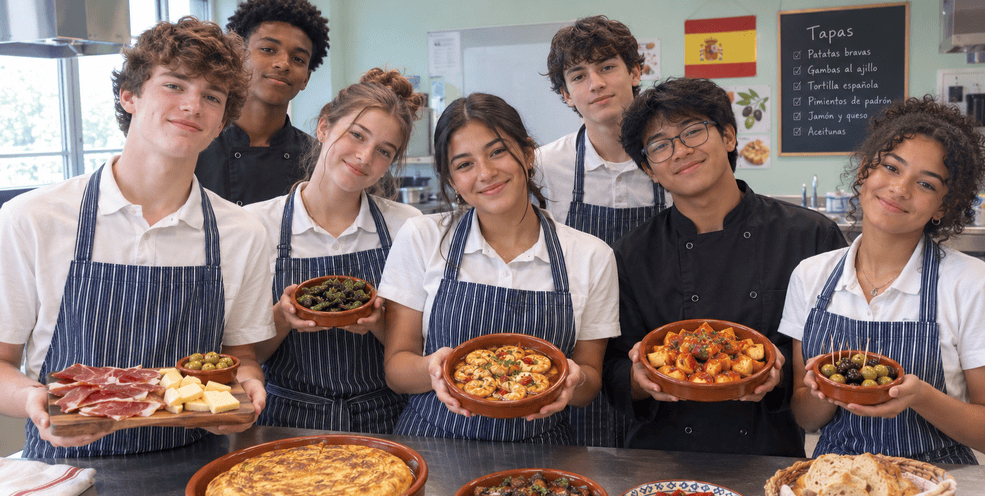
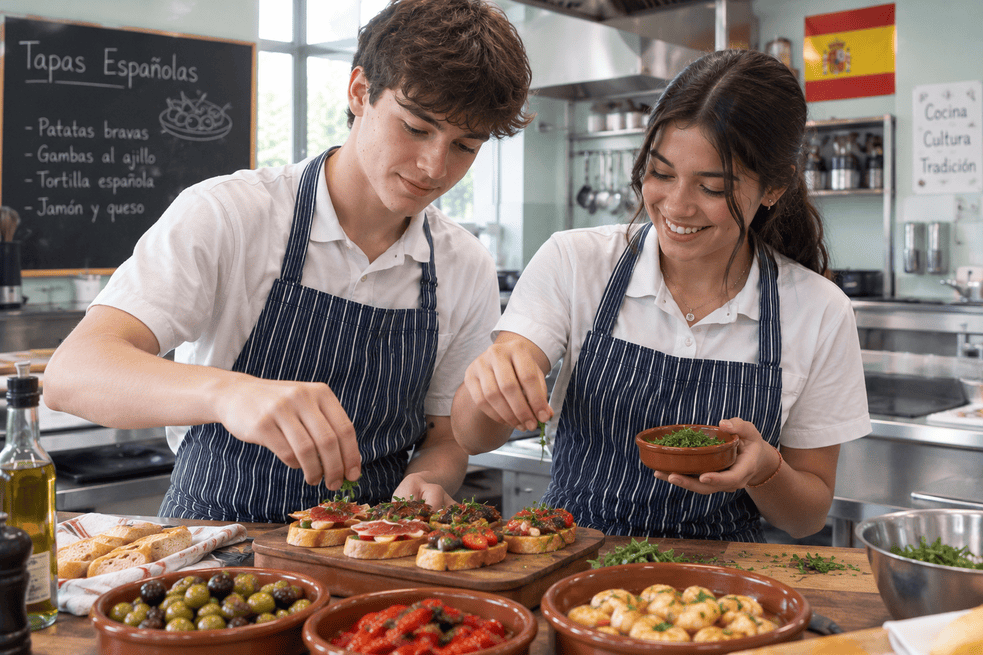
On our Barcelona & Madrid student trip itinerary, students take a Spanish tapas cooking class at Mescladis, a Barcelona social organization that trains refugees, immigrants, and people with disabilities for employment.
Students first hear about the project from the people who run it. Then they cook alongside them, using food vocabulary in real time. Learn more in our 10 Days Immersion program in Spain: Barcelona & Madrid.
Food also connects to other parts of the trip. Students who visit Gaudí’s buildings can compare Catalan identity in architecture and cooking. Our article on Gaudí architecture tours covers that side of Barcelona. For more cultural traditions to explore, see cultural festivals in Europe.
Bring Spanish food culture into your classroom and beyond
A tapas cooking class gives students a reason to listen, ask questions, and speak Spanish in a real setting. Engaged Education’s Spain itinerary pairs these hands-on activities with clear logistics, included meals, and a dedicated tour leader.
Fill out our form to learn more about our Engaged Education educational programs.
FAQ
What are tapas in Spain?
Tapas are small plates of food meant for sharing, usually ordered a few at a time with drinks. They range from potato omelet and fried potatoes to seafood and cured ham.
Are tapas free in Spain?
Sometimes. In Granada and some other cities, bars often serve a small tapa free with each drink. In most of Spain, including Barcelona, tapas are ordered and paid for separately.
Can students with food allergies eat tapas safely?
Yes, with planning. Students should tell program staff about allergies before the trip and carry a written note in Spanish. Staff can then choose restaurants and confirm ingredients ahead of time.