Most students know two things about Peru before they travel: Machu Picchu and llamas. That’s a fine start. A group that arrives knowing a bit more asks better questions, notices more, and connects what they see to what they studied in class.
This guide collects interesting facts about Peru that work well as pre-trip material for high school groups. Each fact links to a place, a tradition, or a skill students will actually use on the ground. Teachers can turn them into a warm-up activity, a research assignment, or a quick quiz before departure. Parents can use them to start a conversation at home about what their student will see.
You’ll find facts about history, geography, language, and food, plus answers to common questions families ask before a trip to Peru.
Fun facts about Peru’s ancient history
Peru’s history goes back much further than the Inca Empire. These facts help students build a timeline before they visit the sites in person.
1. Caral is one of the oldest cities in the Americas
The Sacred City of Caral-Supe, north of Lima, is about 5,000 years old. That puts it in the same era as the early cities of Egypt and Mesopotamia. UNESCO added Caral to its World Heritage list in 2009. Students who know this arrive in Lima with a different sense of how deep Peruvian history runs.

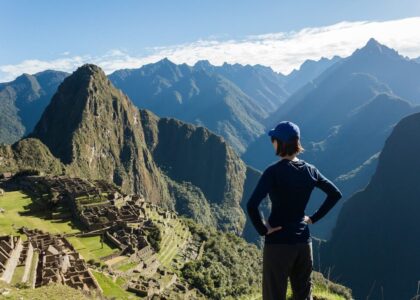
2. Machu Picchu was built in the 15th century
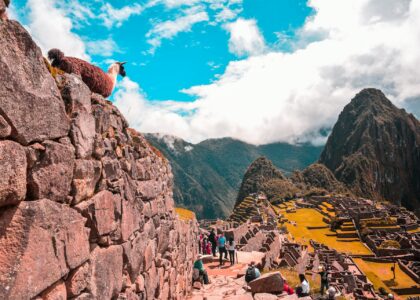
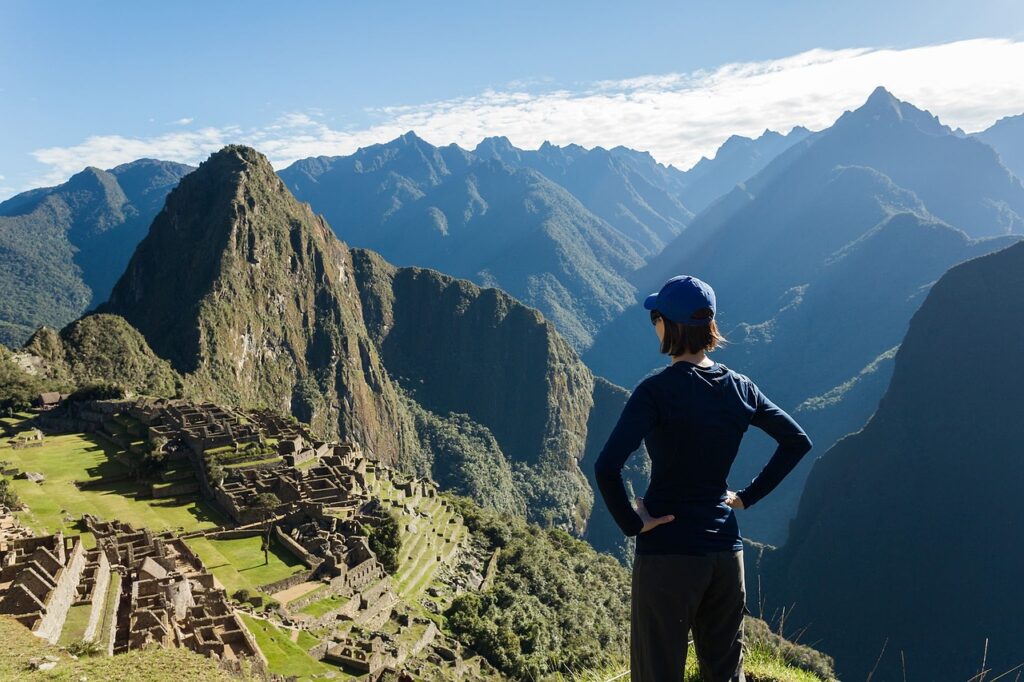
The Inca built Machu Picchu in the mid-1400s, during the reign of Pachacuti. It became a UNESCO World Heritage Site in 1983. For more sites like this one, see our guide to UNESCO sites in South America.
3. The Nazca Lines are best seen from above
The Nazca Lines are huge designs drawn into the desert floor in southern Peru. Some show animals, like a hummingbird and a monkey. Others are straight lines that run for kilometers. Researchers still debate their purpose. Our article on the Nazca people covers the main theories.
Interesting facts about Peru’s geography
Peru packs desert coast, high mountains, and rainforest into one country. Students will feel these changes in their bodies, so geography is also a safety topic.
1. Cusco sits at about 11,150 feet
Cusco was the capital of the Inca Empire. Today it sits at roughly 3,400 meters (11,150 feet) above sea level. Most travelers feel the altitude on the first day. Well-planned itineraries build in time to acclimatize, with light activity, water, and rest. Students with heart or lung conditions should talk to their doctor before the trip.

2. Lake Titicaca is one of the highest navigable lakes in the world
Lake Titicaca sits on the border between Peru and Bolivia at about 3,800 meters (12,500 feet). Near Puno, the Uros people live on floating islands built from totora reeds. Students learn how the reeds are harvested, layered, and replaced over time.
3. The Amazon covers more than half of Peru
Many students picture Peru as mountains only. In fact, rainforest covers more than half of the country. Programs that include Puerto Maldonado give students a direct look at Amazon ecosystems and conservation work.
Facts about Peru’s culture, language, and food
These facts help students understand the people they’ll meet, which is the heart of any educational trip.
1. Quechua is an official language
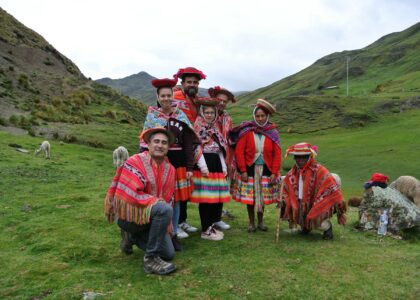
Peru’s constitution recognizes Spanish as an official language. It also recognizes Quechua, Aymara, and other Indigenous languages where they are predominant. Millions of Peruvians speak Quechua, especially in the Andes. Learning a few Quechua greetings, like “Allillanchu” (hello, how are you?), shows respect and often sparks a smile.
2. Peru is the birthplace of the potato
People in the Andes domesticated the potato thousands of years ago. Peru still grows thousands of native varieties in every color and shape. The International Potato Center, based in Lima, keeps one of the largest potato genebanks in the world. Ask students to count how many varieties they see at a local market

3. Ceviche is part of Peru’s cultural heritage
Ceviche is raw fish cured in lime juice, often served with sweet potato and corn. Peru declared it part of its national cultural heritage in 2004. In 2023, UNESCO added the practices around ceviche to its list of Intangible Cultural Heritage.
4. Afro-Peruvian music shaped the coast
The cajón, a wooden box drum, is closely linked to Afro-Peruvian music. Peru declared the cajón part of its national cultural heritage in 2001. Our post on Afro-Peruvian culture goes deeper into its history.
How teachers can use these facts before a trip
Facts work best when students do something with them. A few simple ideas:
- Fact match: Give each student one fact. During the trip, they look for the place or object connected to it.
- Timeline build: Ask the class to place Caral, Nazca, and Machu Picchu on one timeline.
- Language challenge: Teach five Spanish phrases and two Quechua greetings before departure.
- Market journal: Students record foods they recognize and foods they’ve never seen.
These activities also give you clear learning outcomes to share with your administration.
Bring these facts to life in Peru
Reading about Peru is a good first step. Seeing Caral’s timeline in a museum, tasting ceviche in Lima, and greeting a family in Quechua is a different kind of learning. Engaged Education offers Peru itineraries through Lima, Arequipa, Puno, Cusco, and Puerto Maldonado, with logistics and supervision planned for school groups.
Fill out our form to learn more about the Peru programs available for your students.
FAQ
What is Peru best known for?
Peru is best known for Machu Picchu, the Inca Empire, and its food. It’s also known for Lake Titicaca, the Nazca Lines, and its large share of the Amazon rainforest.
Is altitude a concern for students traveling to Peru?
Yes, altitude deserves planning. Cusco and Puno sit above 11,000 feet. A good itinerary includes acclimatization time and staff who know the signs of altitude sickness. Students should check with their doctor before travel, especially if they have existing health conditions.
What language do people speak in Peru?
Most Peruvians speak Spanish. Quechua and Aymara are also official in the regions where they are predominant. Students practicing Spanish will have plenty of chances to use it.