
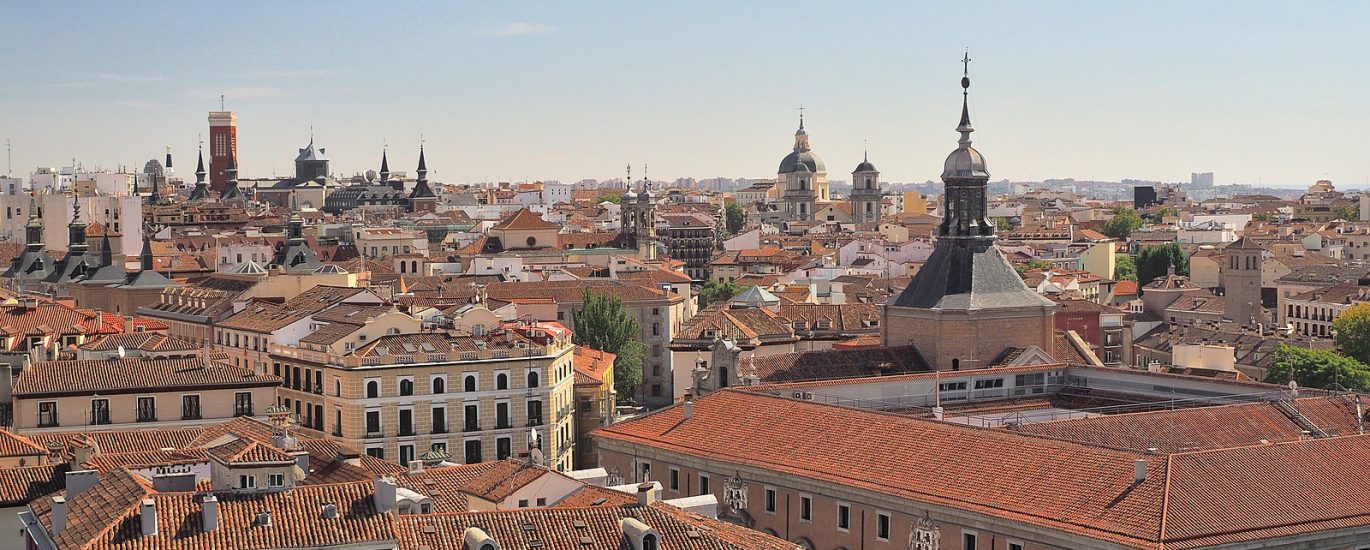
Madrid is Spain’s capital, its largest city, and the place where many students first hear Castilian Spanish spoken all day. Some of the most interesting facts about Madrid hide in small details: a plaque that marks the center of Spain’s roads, a palace with thousands of rooms, and a restaurant that has been open since the 1700s.
This guide gathers interesting facts about Madrid, Spain, for high school groups preparing for a trip. Each fact connects to a place students will visit or a tradition they can see in person. Teachers can use them as a warm-up, a research activity, or a scavenger hunt. Parents can use them to start a conversation at home about what their student will experience.
You’ll find facts about history, landmarks, art, and daily life, plus answers to common questions about Madrid.
Facts about Madrid’s history and landmarks
Madrid’s center is compact, so students can see centuries of history in one walk.
Madrid became the capital in 1561
King Philip II moved the royal court to Madrid in 1561. Before that, the court had moved between several cities. Madrid grew quickly once it became the permanent seat of power. Students can see the results in the grand squares and buildings of the historic center.
Kilometer Zero is in Puerta del Sol
In front of the Real Casa de Correos in Puerta del Sol, a small plaque marks Kilometer Zero. It’s the starting point for measuring Spain’s national roads. Students like to take a photo standing on it.
The Royal Palace has more than 3,000 rooms
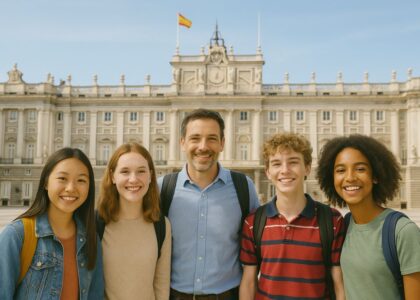
The Royal Palace of Madrid has 3,418 rooms and more than 135,000 square meters of floor space. It’s the largest royal palace in Western Europe. It is the official residence of the Spanish royal family, though they live elsewhere and use it mainly for state ceremonies. Students visit the palace as part of the Madrid portion of our itinerary.
The world’s oldest restaurant is in Madrid
According to Guinness World Records, Restaurante Botín has operated since 1725. It’s the oldest restaurant in the world. It sits just steps from Plaza Mayor. Students may not eat there, but it’s a great story to share when they walk past.
Facts about Madrid’s art and green spaces
Madrid is a city of museums and parks. These facts help students plan what to look for.
The Paseo del Prado is a World Heritage Site
In 2021, UNESCO added the Paseo del Prado and Buen Retiro Park to its World Heritage list as a “Landscape of Arts and Sciences.” The Paseo is a tree-lined boulevard. Along it sit the Prado Museum, the Reina Sofía Museum, and the Thyssen-Bornemisza Museum, often called Madrid’s “Golden Triangle of Art.”
Picasso’s Guernica hangs in Madrid
The Reina Sofía Museum is home to Guernica, Pablo Picasso’s painting about the 1937 bombing of the Basque town of the same name. The painting is a strong starting point for class discussions on art, history, and the Spanish Civil War.
Retiro Park was once a royal garden
Buen Retiro Park was originally a royal retreat. It opened to the public in the 1800s. Today, families row boats on its lake and visit the Crystal Palace, a glass and iron pavilion inside the park.
Facts about daily life and traditions in Madrid
Some of the most memorable facts come from everyday life.
Twelve grapes at midnight
On New Year’s Eve, crowds gather in Puerta del Sol. When the clock on the Real Casa de Correos strikes midnight, people eat one grape for each chime. Families across Spain follow the same tradition at home while watching the broadcast from the square.
The bear and the strawberry tree
A bronze statue of a bear reaching into a strawberry tree stands in Puerta del Sol. The image appears on Madrid’s coat of arms. It’s also one of the most popular meeting points in the city.
Madrid has diverse neighborhoods
Madrid’s neighborhoods each have their own character. In Lavapiés, one of the city’s most culturally diverse neighborhoods, students take part in a street art workshop with a partner organization. It’s a good chance to practice Spanish in a creative setting. Our guide to Spanish gestures and etiquette helps students prepare for these conversations.
How teachers can use these facts
- Photo challenge: Students find and photograph Kilometer Zero, the bear statue, and the Royal Palace.
- Art prep: Show Guernica in class before the trip and discuss its context.
- Timeline: Place 1561, 1725, 1937, and 2021 on a timeline and connect each date to a site.
- Compare cities: If your trip includes Barcelona, ask students to compare the two cities’ identities and languages.
For more planning ideas, see our guide on Spanish field trips.
FAQ
What is Madrid known for?
Madrid is known for its art museums, especially the Prado and Reina Sofía, the Royal Palace, Plaza Mayor, and Retiro Park. It’s also Spain’s capital and largest city.
What is Kilometer Zero in Madrid?
Kilometer Zero is a plaque in Puerta del Sol. It marks the point from which distances on Spain’s national roads are measured.
What is the oldest restaurant in Madrid?
Restaurante Botín, open since 1725, is the oldest restaurant in Madrid. Guinness World Records lists it as the oldest restaurant in the world.
Explore Madrid with your students
Madrid’s history, art, and neighborhoods make it a strong classroom for Spanish learners. Engaged Education’s Barcelona & Madrid Discovery itinerary includes guided visits to Plaza Mayor, Puerta del Sol, and the Royal Palace, plus a community art workshop in Lavapiés. Our best immersion program in Spain post covers the full trip.
Fill out our form or download our Engaged Education Brochure to learn more about our educational programs in Spain.