
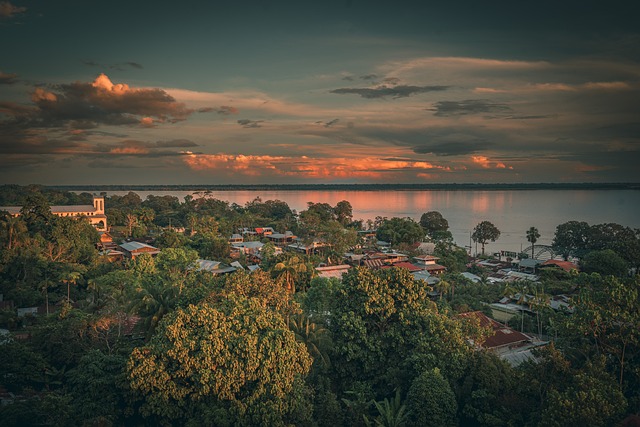
Ask students to picture Peru and most will imagine mountains, llamas, and Machu Picchu. Few will picture rainforest. Yet the Amazon rainforest covers more than half of Peru, and the rivers that feed it start high in the Andes. Understanding that connection helps students see Peru as one linked landscape, from the desert coast to the jungle.
This guide covers key facts about the Amazon rainforest in Peru for high school students and teachers. You’ll learn where the Peruvian Amazon is, why it matters for the planet, and how the Andes and the Amazon connect. You’ll also see how students can explore these links on a language immersion trip to Cusco, plus classroom activities to use before or after travel.
Key facts about the Amazon rainforest in Peru
These facts give students a clear picture of the region before they study it in depth.
The Amazon covers more than half of Peru
Most of eastern Peru is lowland rainforest. Peru has the second-largest share of the Amazon rainforest, after Brazil. Even so, most Peruvians live on the coast or in the Andes, so the rainforest is the country’s least populated region.
The Amazon River begins in the Peruvian Andes
The most distant sources of the Amazon River are in the Andes of southern Peru. Water from melting snow and mountain springs flows east, joins larger rivers, and eventually reaches the Atlantic Ocean in Brazil. This makes Peru home to both the start of the river and a large part of its basin.
Iquitos can’t be reached by road
Iquitos, in northern Peru, is often described as the largest city in the world that can’t be reached by road. People arrive by plane or by boat along the Amazon. It’s a strong example for geography lessons on how rivers shape daily life.
Protected areas keep large forests intact
Peru protects large parts of its rainforest. One example is the Tambopata National Reserve in the Madre de Dios region, created in 2000. It covers more than 274,000 hectares and is known for clay licks, where macaws and parrots gather to eat mineral-rich soil. Our post on nature conservation in Peru explains why protecting these areas matters.
How the Andes and the Amazon connect
Students don’t need to enter the rainforest to see how it shapes Peru. Many of its links start in the mountains around Cusco.
The Urubamba River flows toward the Amazon
The Urubamba River runs through the Sacred Valley and past Machu Picchu. Downstream, it joins other rivers to form the Ucayali, one of the main rivers of the Amazon system. When students stand by the Urubamba, they are looking at water that will eventually reach the Amazon.
Machu Picchu sits where mountains meet cloud forest
Machu Picchu lies on the eastern slopes of the Andes. The area is greener and more humid than Cusco because warm, moist air rises from the Amazon basin. Students can notice orchids, mosses, and dense vegetation around the site. This transition zone helps explain why Peru has so many ecosystems in a short distance.
Ecosystems change with altitude
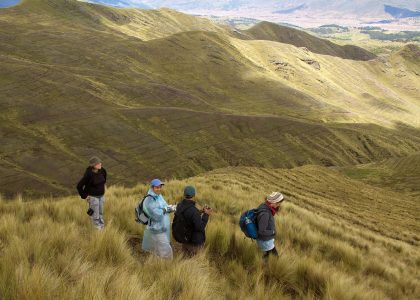
In a single day of travel, the landscape can shift from high grasslands to cloud forest. Comparing these zones is a simple way to teach how altitude, temperature, and rainfall shape plants and animals. Our list of interesting facts about Peru adds more context on Peru’s geography.
Bringing the Amazon into the classroom
The Amazon connects to several subjects. These activities work before or after a trip to Peru.
- Follow the water: Trace the Urubamba River on a map from the Sacred Valley to the Ucayali and the Amazon.
- Ecosystem comparison: Compare Lima’s coast, Cusco’s highlands, and the Amazon lowlands. Ask students how climate and altitude shape each one.
- Conservation debate: Research a protected area like Tambopata and discuss how it balances conservation and local livelihoods.
- Spanish vocabulary: Learn nature words in Spanish, like selva (jungle), río (river), and guacamayo (macaw).
Explore the Andes on a language immersion trip
Engaged Education’s Language Immersion in Cusco is an 8-day program for high school groups. Students take interactive Spanish lessons and explore Cusco’s historic center and archaeological sites. They also visit the Sacred Valley, take a train to Machu Picchu, and practice Spanish with members of MEDLIFE’s partner communities. The trip includes a group leader, local guides, and transportation throughout.
For groups focused on the coast, the Language Immersion in Lima program combines Spanish lessons with a market challenge, art and history tours, and a day trip to the Ballestas Islands. Our Peru language immersion guide explains how these programs work.
FAQ
Where is the Amazon rainforest in Peru?
The Amazon rainforest covers most of eastern Peru, east of the Andes. It includes regions such as Loreto, home to the city of Iquitos, and Madre de Dios, home to the Tambopata National Reserve.
How much of Peru is covered by the Amazon?
The Amazon covers more than half of Peru’s territory. Most of the population lives outside the rainforest, on the coast and in the Andes.
Is Machu Picchu in the Amazon rainforest?
Machu Picchu lies on the eastern slopes of the Andes, in a cloud forest area that connects the mountains to the Amazon basin. The Urubamba River, which flows past the site, is part of the Amazon river system.
Discover Peru’s landscapes with your students
The Amazon is part of the story of Peru, from the rivers of the Sacred Valley to the cloud forest around Machu Picchu. Engaged Education’s language immersion programs in Lima and Cusco help students explore that story in Spanish, with logistics, guides, and supervision planned for school groups.
Fill out our form or download our Engaged Education Brochure to learn more about our Peru language immersion programs.