South of Lima, Peru’s coast turns into desert. In a single day, students can watch sea lions and penguins from a boat, then stand at the edge of a desert oasis surrounded by giant sand dunes. Huacachina, Peru and the nearby Ballestas Islands make one of the most memorable day trips for a school group.
This guide explains what students see at the Ballestas Islands and Huacachina, what they can learn there, and how to prepare for a long day on the coast. It’s written for teachers comparing activities, parents who want to know what the excursion involves, and students getting ready for it. You’ll also find answers to common questions about safety, timing, and what to bring.
The Ballestas Islands: wildlife off the coast of Paracas
The Ballestas Islands are a group of rocky islands off the coast near Paracas, in the Ica region. Boats leave from the Paracas waterfront, and the outbound trip takes about 30 minutes.
What students see
The islands are home to large colonies of seabirds, including Guanay cormorants, Peruvian boobies, and Peruvian pelicans. Visitors often see sea lions resting on the rocks, and Humboldt penguins are also common. Because of this concentration of wildlife, the islands are sometimes nicknamed the “poor man’s Galápagos.” Wildlife sightings vary from day to day.
Why boats don’t land
Tours stay on the water and do not go ashore. Boats pass close enough for good views while keeping disturbance to the animals low. This is a good opportunity to talk with students about how protected areas manage visitors.
The Candelabra geoglyph
On the way to the islands, boats stop near the Paracas Peninsula to view the Candelabra. It’s a large three-pronged figure carved into a sandy hillside, about 150 meters (490 feet) high. No one knows for sure who made it or why. Students can compare theories about it with theories about the Nazca Lines.
Guano and history
Many of the rocks are covered in guano, or bird droppings. In the 1800s, guano was one of Peru’s most valuable exports because it was used as fertilizer. This makes the islands a useful starting point for lessons on natural resources and economic history.
Huacachina: a desert oasis in Peru
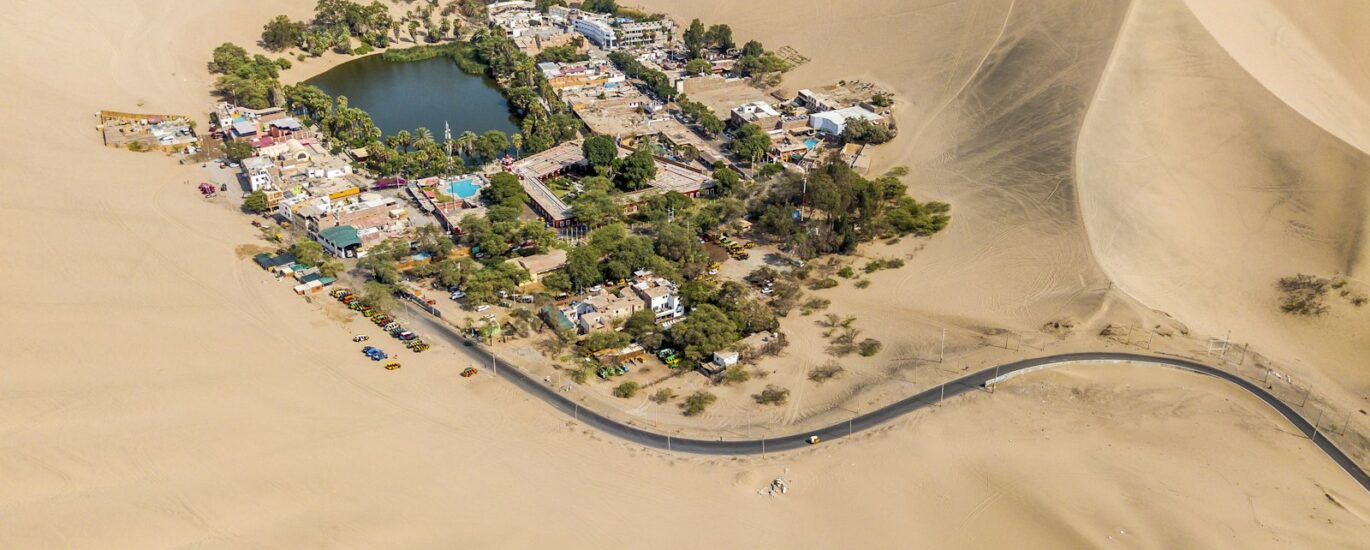
After the islands, the day continues inland to Huacachina, a small village built around a lagoon near the city of Ica.
What makes Huacachina unique
Huacachina is surrounded by some of the tallest sand dunes in the area. Palm trees and buildings ring a small green lagoon, creating a scene that looks very different from Lima. For many students, it’s their first time in a true desert.
Sandboarding and dune buggies
Huacachina is known for dune buggy rides and sandboarding. These activities are exciting and physical. Students should follow the guide’s safety instructions, wear seat belts in buggies, and tell staff if they have back, neck, or other health concerns. Students who feel unsure about these activities should talk to their group leader before the excursion.
What students can learn
Huacachina gives teachers material for geography and science lessons. Students can discuss how deserts form along Peru’s coast, why the region gets so little rain, and how oases support life. Comparing the morning’s marine ecosystem with the afternoon’s desert shows how varied Peru’s coast is. Our post on Peru’s natural resources adds context on conservation.
How to prepare for the day trip
This is a long day, often with an early start. Good preparation helps students enjoy it.
What to bring
- Sunscreen, sunglasses, and a hat
- A light jacket for the morning boat ride, which can be windy and cool
- A refillable water bottle
- Comfortable clothes that can get sandy
- Closed-toe shoes or sandals with straps
- A small bag to protect phones and cameras from sand
Our international trip packing list covers more essentials.
Health and comfort
Students prone to seasickness should talk to their doctor before the trip. The desert can be hot and dry, so drinking water throughout the day matters.
How this day trip fits into a Lima program
On Engaged Education’s 8-day Language Immersion in Lima program, the Ballestas Islands and Huacachina excursion takes place on Day 6. The full-day trip includes the boat excursion, entrance fees, and dune buggies, plus a box breakfast and lunch. It follows days of Spanish lessons, a market challenge, history and art tours, and a community visit in Lima. For more on the program, see our Peru language immersion guide.
FAQ
Can you get off the boat at the Ballestas Islands?
No. Tours stay on the water to protect the wildlife. Boats get close enough for students to see birds, sea lions, and often penguins.
What animals live on the Ballestas Islands?
The islands are home to seabirds such as Guanay cormorants, Peruvian boobies, and Peruvian pelicans. Sea lions and Humboldt penguins are also commonly seen.
Is sandboarding in Huacachina safe for students?
Sandboarding and dune buggy rides are popular activities run by local operators. Students should follow safety instructions and share any health concerns with staff. Students who feel unsure should talk to their group leader before the trip.
Add the Peruvian coast to your students’ learning
The Ballestas Islands and Huacachina show students a side of Peru that few expect: ocean wildlife and desert dunes in a single day. Engaged Education’s Language Immersion in Lima program includes this excursion along with Spanish lessons, cultural visits, and a group leader throughout.
Fill out our form to learn more about our Language Immersion in Lima program.