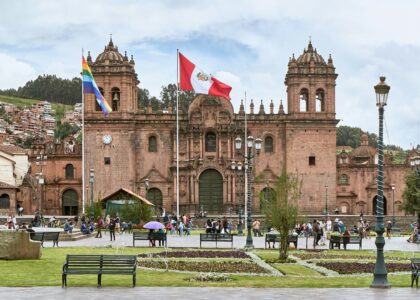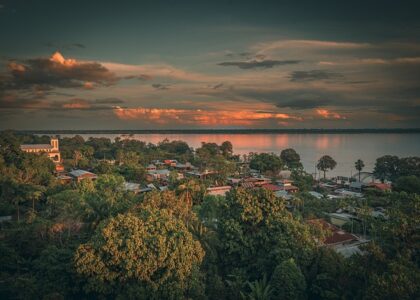

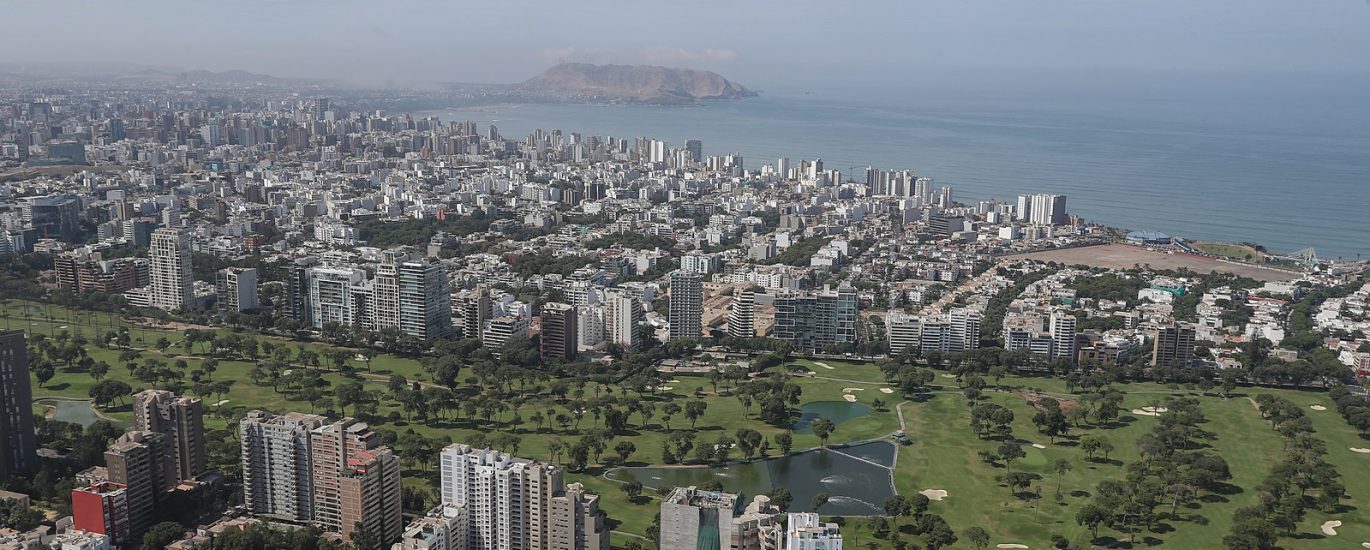
Many travelers pass through Lima on their way to Cusco. That’s a missed opportunity. Peru’s capital is a coastal city of more than 10 million people, with colonial plazas, ancient adobe pyramids, ocean cliffs, and one of the most celebrated food scenes in the Americas. For a school group, there are plenty of things to do in Lima, Peru that connect directly to Spanish, history, and art classes.
This guide covers the best things to do in Lima for high school groups. You’ll learn which neighborhoods and sites offer the most educational value, how each one links to classroom learning, and how to practice Spanish along the way. It’s written for teachers planning an itinerary, parents curious about what students will see, and students preparing for the trip.
Historic and cultural things to do in Lima
Lima’s history spans thousands of years. These sites help students build a timeline in person.
Explore the Historic Center
Lima’s Historic Center is a UNESCO World Heritage Site. Founded by the Spanish in 1535, the city was the capital of the Viceroyalty of Peru for centuries. Students can visit the Plaza Mayor, the Cathedral, and colonial buildings with carved wooden balconies. A guided walk helps students connect what they see to lessons on colonial Latin America.
See a pre-Inca pyramid in Miraflores
Huaca Pucllana is an adobe and clay pyramid in the middle of the Miraflores district. It was built by the Lima culture, which developed on Peru’s central coast between about 200 and 700 AD. Seeing an ancient structure surrounded by modern apartment buildings is a memorable lesson in how cities grow on top of their past.
Visit the Lugar de la Memoria (LUM)
The Lugar de la Memoria, la Tolerancia y la Inclusión Social is a museum dedicated to Peru’s period of internal armed conflict in the 1980s and 1990s. It helps students understand recent Peruvian history and how a society remembers difficult events. Teachers should prepare students beforehand, since the content is serious.
Art, music, and neighborhoods in Lima
Lima’s neighborhoods each have their own character. These visits work well for language practice.
Walk through Barranco
Barranco is Lima’s bohemian and artistic district. Students will find murals, galleries, small cafés, and colorful colonial houses. The Bridge of Sighs (Puente de los Suspiros) is a popular stop. A street art walk gives students a chance to describe what they see in Spanish and talk with local artists.
Learn about Afro-Peruvian music and dance
Afro-Peruvian culture shaped much of the music and food of Peru’s coast. Instruments like the cajón, a wooden box drum, come from this tradition. A music and dance workshop gives students a hands-on way to learn about this history. Our post on Afro-Peruvian culture goes deeper.
Walk the Miraflores cliffs
Miraflores sits on cliffs above the Pacific Ocean. The Malecón, a long oceanfront path with parks and viewpoints, is a good place for a group walk. On clear days, students can watch paragliders over the coast.
See the Magic Water Circuit
The Circuito Mágico del Agua is a park with illuminated fountains in central Lima. Evening shows combine water, music, and light. It’s a relaxed group activity after a full day.
Food and markets in Lima
Food is one of the best ways to practice Spanish in Lima.
Take on a market challenge
Local markets are full of fruits, vegetables, and ingredients students may never have seen. A market challenge, where students find items and ask vendors questions in Spanish, turns a shopping trip into a language lesson.
Join a cooking class
Cooking classes let students prepare traditional Peruvian dishes and learn food vocabulary at the same time. Many students taste ceviche, Peru’s national dish, for the first time in Lima. Our guide to interesting facts about Peru shares more about its food culture.
How Engaged Education students experience Lima
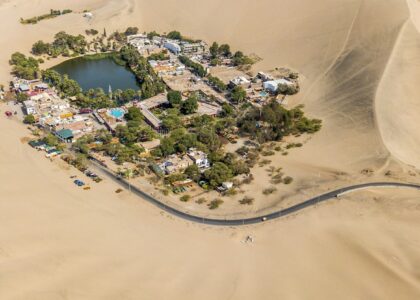
Engaged Education’s 8-day Language Immersion in Lima program brings many of these activities together. Students start with a walk through Miraflores. During the week, they take daily Spanish lessons and complete a market challenge at a local market, followed by a cooking class. They also explore the Historic Center and the LUM, take an art tour in Barranco, and join an Afro-Peruvian music and dance workshop. One day includes a visit to MEDLIFE partner communities to learn about global health while practicing Spanish. Another is a full-day excursion to the Ballestas Islands and Huacachina.
The program includes a group leader, transportation, entrance fees for listed activities, and medical emergency insurance. Our Peru language immersion guide explains how the program works.
FAQ
What is Lima, Peru known for?
Lima is known for its Historic Center, a UNESCO World Heritage Site, its food scene, and its location on cliffs above the Pacific Ocean. It’s also Peru’s capital and largest city.
Is Lima a good destination for a school trip?
Yes. Lima offers history, art, food, and many chances to practice Spanish. Most sites are close together, and neighborhoods like Miraflores and Barranco are easy to explore with a guide.
How many days do students need in Lima?
A week gives students time to explore the main sites, take Spanish lessons, and add a day trip outside the city. Shorter stays usually cover only the Historic Center and Miraflores.
Explore Lima with your students
Lima is a city that rewards time and curiosity. Engaged Education’s Language Immersion in Lima program combines Spanish lessons with history, art, food, and a coastal excursion, all planned for school groups.
Fill out our form to learn more about our Language Immersion in Lima program.