Peru has become one of the world’s best-known food destinations, and for good reason. Its dishes blend Indigenous ingredients with Spanish, African, Chinese, and Japanese influences. For students, each dish of traditional Peruvian food tells a story about geography, migration, and history.
This guide covers traditional Peruvian food and Peruvian dishes students are likely to try on a trip to Lima or Cusco. You’ll learn what each dish is, where it comes from, and what it reveals about Peru’s culture. You’ll also find tips for students with dietary needs and ideas for using food as a Spanish lesson. Teachers can use it as pre-trip reading, and parents can use it to know what their student will be eating.
Peruvian dishes from the coast and Lima
Lima sits on the Pacific coast, so seafood plays a big role in its cooking. These dishes are common in the capital.
Ceviche
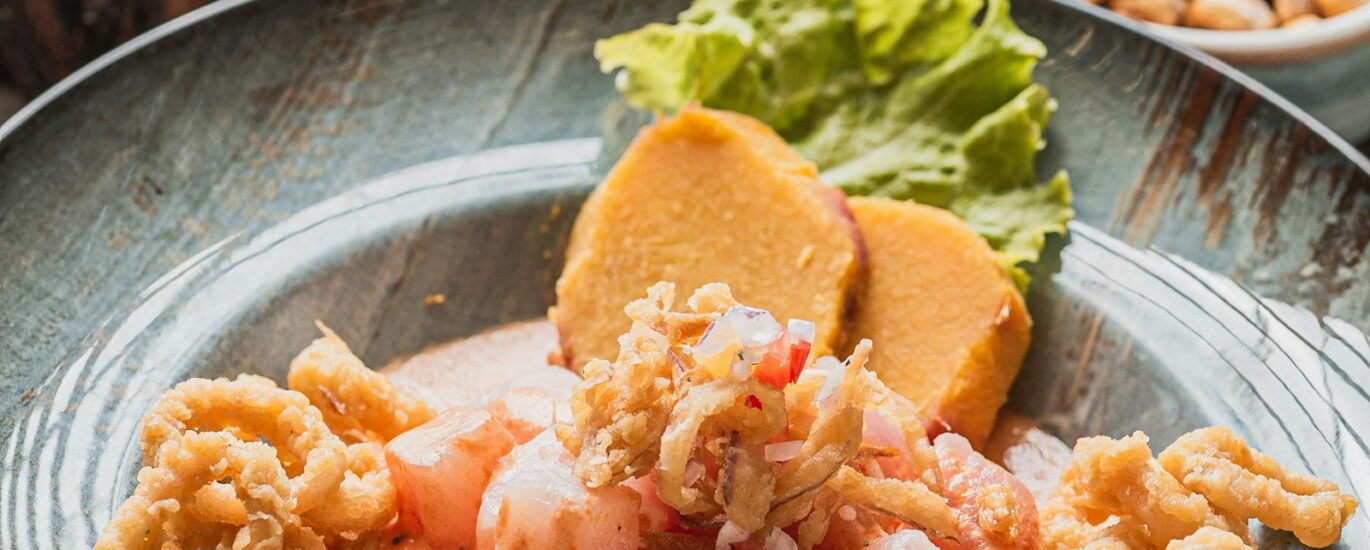
Ceviche is raw fish cured in lime juice with onion, chili, and salt. It’s usually served with sweet potato and Andean corn. Peru declared ceviche part of its national cultural heritage in 2004. In 2023, UNESCO added the practices and meanings around ceviche to its list of Intangible Cultural Heritage.
Causa limeña
Causa is a cold dish made from layers of mashed yellow potato seasoned with lime and ají amarillo, a yellow Peruvian chili. The layers are filled with chicken, tuna, or avocado. It’s a good example of how central the potato is to Peruvian cooking.
Lomo saltado
Lomo saltado is stir-fried beef with onions, tomatoes, and soy sauce, served with rice and French fries. It reflects the influence of Chinese immigrants who arrived in Peru in the 1800s. Their cooking style, known in Peru as chifa, is now part of everyday Peruvian food.
Ají de gallina
Ají de gallina is shredded chicken in a creamy, mildly spicy yellow sauce, served with rice, potatoes, and olives. It’s a comfort dish found in homes and restaurants across Lima.
Anticuchos
Anticuchos are grilled skewers, traditionally made with marinated beef heart. They’re closely linked to Afro-Peruvian culinary history. Our post on Afro-Peruvian culture explains more about this heritage.
Traditional food from Cusco and the Andes
In the Andes, cooking relies on ingredients that grow at high altitude.
Potatoes and corn
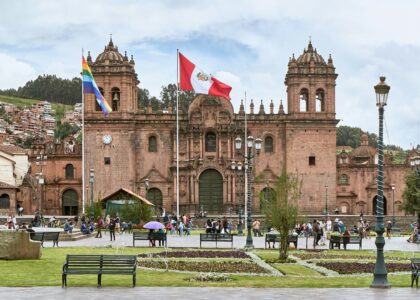
Peru is home to thousands of native potato varieties. In Cusco’s markets, students will see potatoes in many colors and shapes, along with large-kernel Andean corn called choclo. Ask students to count how many types they can find.
Quinoa soup
Quinoa has been grown in the Andes for thousands of years. Quinoa soup, made with vegetables and sometimes meat, is a warm, filling dish that’s common in Cusco’s cool climate.
Cuy
Cuy, or guinea pig, is a traditional Andean dish with a long history in the region. It’s often served for celebrations. Students may see it on menus in Cusco. Teachers can use it to start a respectful conversation about how food traditions differ between cultures.
Drinks and desserts
- Chicha morada: a sweet, non-alcoholic drink made from purple corn, pineapple, cinnamon, and cloves.
- Inca Kola: a bright yellow soda that’s popular across Peru.
- Picarones: ring-shaped fritters made from squash and sweet potato, served with a syrup.
- Suspiro a la limeña: a sweet dessert of caramel custard topped with meringue.
Using Peruvian food to learn Spanish
Food gives students real reasons to speak Spanish.
- Market vocabulary: Learn words like papa (potato), choclo (corn), palta (avocado), and limón (lime).
- Ordering practice: Role-play ordering a meal before the trip.
- Recipe reading: Read a simple Peruvian recipe in Spanish and list the ingredients.
- Compare with Spain: Peruvians say palta, while people in Spain say aguacate. Our guide to tapas in Spain is a useful comparison.
Tips for students with dietary needs
Peruvian food uses a lot of seafood, chili, dairy, and meat. Students with allergies or dietary restrictions should list them on their medical forms well before departure. A short card in Spanish that explains the allergy helps at restaurants. Vegetarian options exist, but students should ask before ordering.
How students taste Peru on an Engaged Education trip
Both of Engaged Education’s Peru programs include hands-on food experiences. On the 8-day Language Immersion in Lima, students start a day with a Spanish lesson on food vocabulary, complete a market challenge at a local market, and finish with a cooking class. On the 8-day Language Immersion in Cusco, students also take a cooking class to prepare traditional Peruvian dishes. For more on the programs, see our Peru language immersion guide.
FAQ
What is the national dish of Peru?
Ceviche is widely considered Peru’s national dish. It’s raw fish cured in lime juice, usually served with onion, chili, sweet potato, and corn.
What traditional Peruvian food should students try?
Students should try ceviche, lomo saltado, causa limeña, and ají de gallina in Lima. In Cusco, quinoa soup and dishes made with native potatoes and corn are good choices. Chicha morada is a popular non-alcoholic drink.
Is Peruvian food spicy?
Many dishes use Peruvian chilies like ají amarillo, but most are flavorful and only mildly hot. Spicy sauces are often served on the side.
Bring Peruvian food into your students’ learning
Food is one of the most direct ways to understand Peru’s history and culture. Engaged Education’s language immersion programs in Lima and Cusco include market visits, cooking classes, and Spanish lessons built around everyday life.
Fill out our form to learn more about our Peru language immersion programs.