

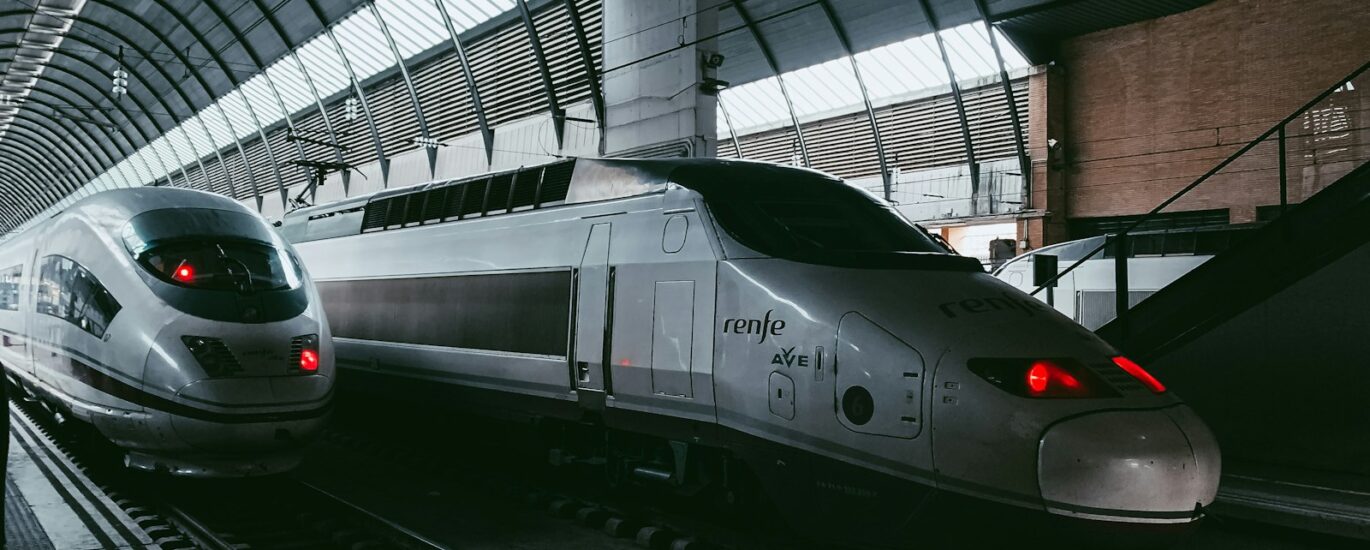
Moving a school group between cities is one of the most important days of any trip. For a Spain itinerary, the Barcelona to Madrid train is usually the simplest option. High-speed trains run between the two city centers many times a day, and there is no airport security line or long transfer.
This guide explains how the route works for student groups. You will learn which companies run the trains, how long the trip takes right now and what to expect at the stations. You will also find a checklist for chaperones and a short look at how this travel day fits into our 10-day Spain program.
How the Barcelona to Madrid Train Works
Spain has one of the largest high-speed rail networks in Europe. The line between Barcelona and Madrid is one of its busiest routes.
Operators on the Route
Several companies run high-speed trains between the two cities:
- Renfe, Spain’s national rail company, runs AVE trains and its lower-cost AVLO service.
- Iryo runs high-speed trains on the same line.
- Ouigo also offers high-speed service on the route.
Each company sets its own rules for tickets, seat selection and luggage. If you book independently, read the conditions of the specific operator before you buy.
Stations: Barcelona Sants and Madrid Atocha
Most trains leave from Barcelona Sants, the city’s main station. They arrive at Madrid Puerta de Atocha, the high-speed terminal of the Atocha complex in central Madrid. Arriving passengers step off on the platform level and use moving walkways to reach the arrivals hall.
Journey Time in 2026
The fastest nonstop trains normally take about two hours and 37 minutes. In early 2026, Spain’s rail infrastructure manager, Adif, lowered the speed limit on several sections of the line for safety reasons. This added about 25 minutes to each trip. Officials said the restrictions would last at least until the end of 2026. Booking sites now list the fastest trips at around three hours.
Times may change again before your trip. Check current timetables with the operator a few weeks before departure, and again the day before.
Planning the Train Day for a Student Group
A high-speed train is comfortable and easy, but a group of teenagers with luggage still needs a plan.
Before You Leave the Hotel
- Check out early. Leave extra time for a group check-out and transfer to the station.
- Count bags. Each student should handle their own luggage. Label every bag with a name and the school’s name.
- Keep passports on hand. Students should carry ID in a secure, zipped pocket.
- Pack a small day bag. Snacks, water, a charger and any medication should stay with each student during the trip.
Our international trip packing list helps students pack light. Lighter bags make the station much easier.
At the Station
Long-distance trains in Spain have a baggage security check before boarding. Bags go through an X-ray scanner. It is quicker than airport screening, but a large group still takes time.
Boarding usually opens 10 to 20 minutes before departure. Train doors close about two minutes before the train leaves. Arrive early, keep the group together and stay near the departure boards.
Stations are crowded and attract pickpockets. Ask students to wear bags in front and keep phones in zipped pockets. Assign each chaperone a small group to count before boarding and after arrival.
On Board
Seats are assigned. Chaperones can spread out across the car to keep an eye on everyone. The trip is a good time for a short journal entry or a reflection prompt about the first half of the trip. Students can also watch the landscape change from the Mediterranean coast to the dry plains of central Spain.
Booking for Groups
Renfe has group booking options. For groups of more than 25 people, it asks groups to request a quote by email or phone. Renfe also has specific conditions for school groups. Rules can change, so confirm details directly with the operator.
For more on managing a group on travel days, read our field trip chaperone guide and our tips on organizing a school trip abroad.
The Barcelona to Madrid Train in Our Spain Program
In the Spain Global Impact Fellowship 2027, the train ride is Day 6 of 10. After five days in Barcelona, the group takes the high-speed train to Madrid. A transfer takes everyone to the hotel, and students have free time before dinner.
The train and the transfers are part of the included program transportation. Teachers do not have to book tickets, so they can focus on their students.
In Madrid, the program continues with a city tour, a guided student visit to the Prado Museum, a Lavapiés street art workshop and community activities with local organizations.
FAQ
How long is the train from Barcelona to Madrid?
The fastest nonstop trains normally take about two and a half hours. Because of speed restrictions in place during 2026, the fastest trips currently take about three hours. Check the latest timetable before you travel.
Which station do trains from Barcelona arrive at in Madrid?
Most high-speed trains from Barcelona Sants arrive at Madrid Puerta de Atocha, in central Madrid. Confirm the station on your ticket, since some services may use other stations.
Is there security screening for trains in Spain?
Yes. Long-distance trains have a baggage X-ray check before boarding. Plan to arrive early so the whole group can pass through.
Travel Across Spain with Your Students
A train day connects the two halves of a Spain trip and shows students how a country’s regions link together. Our Spain Global Impact Fellowship 2027 is a 10-day program in Barcelona and Madrid built for high school groups. Fill out our form to learn more.
Start your journey by downloading the Engaged Education Brochure and learn more about our immersive programs in Spain and beyond. Interested in creating lasting impact around the world? You can directly assist communities in need by becoming a monthly donor through MEDLIFE’s Moving Mountains initiative.