A useful student travel journal gives a class something specific to return to: a detail noticed, a source consulted, a question left open. The right travel journal prompts help students keep that kind of record. After the trip, they can use an entry to explain how the evidence relates to the course.
This guide is for teachers planning journals for educational tours. You’ll find how to set a clear purpose, 12 original prompts grouped by task, a simple journal page you can copy, and tips for feedback and privacy. The prompts are proposed teaching resources. Adapt their wording and scope to your subject and students.
Give the travel journal one clear purpose
Tell students what the journal will help them investigate. In a history course, an entry might examine how an exhibition supports one interpretation. In a Spanish class, it might look at a phrase on a public sign and the clues to its meaning.
Set the purpose narrowly enough that students know what deserves a note. “Record something that helps answer our course question” works better than asking them to document every stop.
Explain who will read the work and how it will be used. Students should also know which personal writing they can keep private.
Start with a record another reader can follow
Ask students to note enough context to find the evidence later: the place, the object or label, and the date. Then ask them to separate what they noticed from what a label or guide told them. Both are useful, but they answer different questions. The Smithsonian’s field book activity shows how notes and sketches tied to place and time make observations easier to use.
Travel journal prompts for each stage of the trip
Use one or two prompts at a stop. The full list is a selection tool for teachers. Students don’t need to finish it at every location.
To make a precise record
- Which small detail helps answer our course question? Describe it so a classmate could find it.
- What feature would a labeled sketch explain more clearly than a sentence?
- Which detail came from your own observation, and which came from a label or a guide?
To examine an interpretation
- What explanation are you considering, and which part of your record supports it?
- What else could account for the same detail?
- What would you need to check before treating your explanation as established?
To connect with the course
- Which idea from our course helps you explain this detail? Name the lesson or text.
- Where does the evidence fit that idea, and where is the fit uncertain?
- What question will you take back to class because the visit didn’t settle it?
To revisit an entry after travel
- What can you now support more carefully after checking a course source?
- Which part of the entry would you keep, qualify or correct, and why?
- Which unanswered question still matters to your explanation?
A justified decision to keep an interpretation is a valid answer. Students don’t need to claim that every experience changed their mind.
Use a simple journal page
A one-page template keeps entries consistent. Students can also copy these headings into a notebook:
- Course question
- Context and date: setting, object or source, and any viewing limits.
- Observation or source detail: in words or a labeled sketch, with its origin.
- Interpretation and evidence: the explanation and the detail behind it.
- Course connection and open question
- Return to the entry: date, source checked, and what was kept or corrected.
Keep the first entry intact when students add the later note. That shows what they could support at each stage. Before departure, practice with a classroom image or short text, so students learn to tell description from interpretation.
Help students repair an unfinished entry
Give feedback that points to one next action. If an entry says “interesting,” ask which feature led to that word. If a conclusion has no source, ask where it came from.
Make time, choose formats and protect privacy
Agree with the trip leader on when students can pause safely to write. Students can make a short note at the next stop and label anything added later from memory.
A written paragraph is one option. Where the learning goal allows, a labeled sketch or short audio note works too. A paper notebook is enough, and no app or public account is needed.
Keep academic work separate from any request to publish student writing. Personal reflections can stay voluntary. Students shouldn’t need to record names, photos or private details about people they meet. Our guide to student travel reflection has ideas for using entries back in class. For more on hands-on learning, read about learning by doing.
Where journals fit on an Engaged Education trip
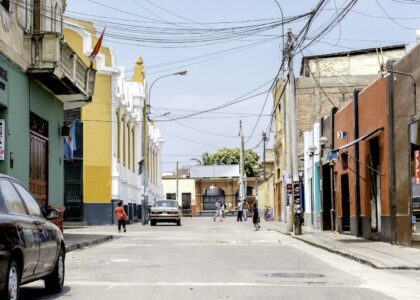
Our programs include natural moments for journal entries. On the Lima and Cusco language immersion programs, students take Spanish lessons, explore historic centers and markets, and finish with a reflection session on the last day. On the Spain program, students visit sites such as the Sagrada Familia and the Prado, and join workshops in Barcelona and Madrid. Share your course question with us during planning so we can discuss where a pause for writing fits. Teachers new to planning can start with our guide for teachers.
FAQ
What makes a good student travel journal prompt?
A good prompt asks for a specific detail and its source. It also links the detail to a course question students can revisit after the trip.
How many journal prompts should students answer on a trip?
One or two per stop is usually enough. A single careful entry is more useful than a long list of rushed notes.
Do students need to share personal feelings in their journal?
No. Personal reflections can stay voluntary. The academic task can focus on observations, sources and course connections.
Plan a trip with built-in reflection
A focused journal helps students turn what they see on a trip into evidence they can use in class. Our Language Immersion programs in Lima and Cusco and our Spain Global Impact Fellowship 2027 are built for high school groups. Fill out our form to learn more.
Start your journey by downloading the Engaged Education Brochure and learn more about our immersive programs in Peru, Spain, and beyond. Interested in creating lasting impact around the world? You can directly assist communities in need by becoming a monthly donor through MEDLIFE’s Moving Mountains initiative.