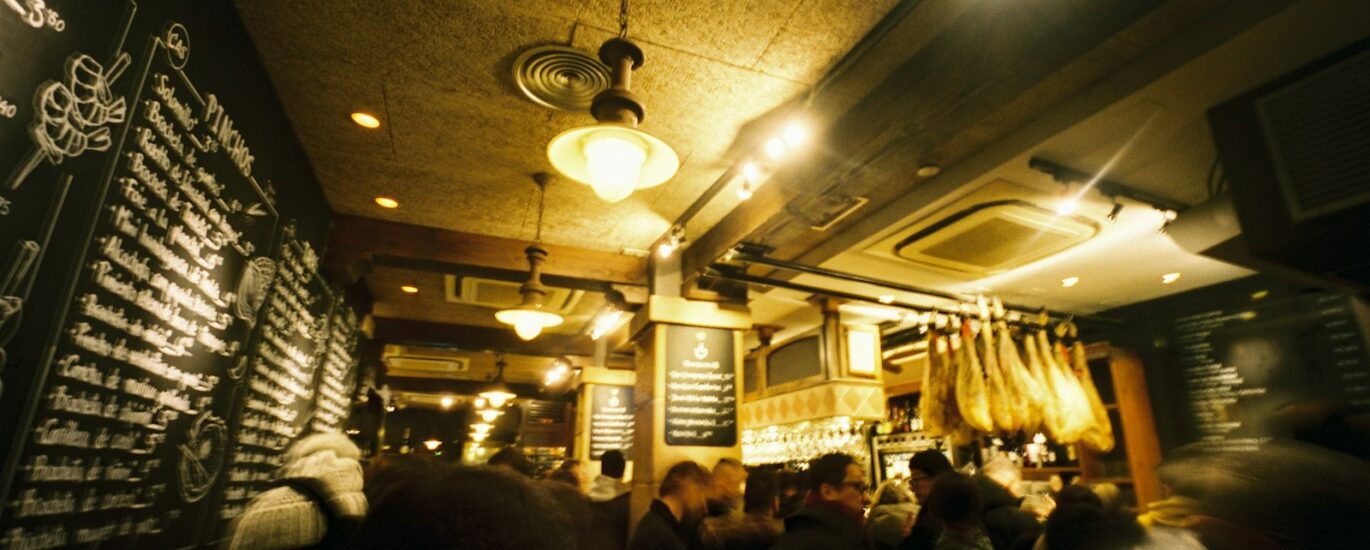
Restaurants are one of the first places students use Spanish abroad. They read a menu, ask a question and place an order, often on the first day. Ordering food in Spanish is a simple task with a clear goal, which makes it a great way to build confidence early in a trip.
This guide gives students the key phrases they need, from getting a table to asking for the bill. You will also find essential menu vocabulary, phrases for allergies and dietary needs, and cultural tips for eating out in Spain and Peru. Teachers can use the lists as a pre-trip lesson. At the end, we explain how our programs in Lima, Cusco, Barcelona and Madrid include real food-related language practice.
Spanish Restaurant Phrases for Every Step of the Meal
Arriving and Getting a Table
- Hola, buenas tardes. Una mesa para cuatro, por favor. Hello, good afternoon. A table for four, please.
- ¿Tienen reserva? Do you have a reservation? (The server may ask this.)
- La carta, por favor. The menu, please.
Placing the Order
- Quisiera… I would like… This is polite and works everywhere.
- Para mí, el pollo, por favor. For me, the chicken, please.
- ¿Qué me recomienda? What do you recommend?
- De primero… / De segundo… For the first course… / For the main course…
- ¿Me trae agua, por favor? Could you bring me water, please?
In bars in Spain, students will also hear “¿Me pone…?” This literally means “Will you put me…?” It is a normal, polite way to order there.
During and After the Meal
- ¿Me puede traer otra servilleta? Can you bring me another napkin?
- Está muy rico. It’s delicious.
- La cuenta, por favor. The check, please.
- ¿Podemos pagar con tarjeta? Can we pay by card?
- ¿Podemos hacer cuentas separadas? Can we have separate checks? Ask this before ordering.
Menu Vocabulary Students Should Know
- La carta: the menu (à la carte)
- El menú / el menú del día: a set meal
- La entrada / el entrante: starter
- El primer plato / el segundo plato: first course / main course
- El postre: dessert
- La bebida: drink
- Agua con gas / sin gas: sparkling / still water
- Las raciones: larger shared portions (Spain)
Allergies and Dietary Needs
Food allergies are a safety issue, so these phrases are worth practicing until they feel automatic:
- Soy alérgico / alérgica a… I’m allergic to…
- ¿Este plato lleva nueces? Does this dish contain nuts?
- Sin gluten / sin lactosa: gluten-free / lactose-free
- Soy vegetariano / vegetariana. I’m vegetarian.
Phrases help, but they are only one layer of protection. Students with allergies or dietary needs should tell program staff well before departure. They should also carry any prescribed medication and a written allergy card in Spanish.
Ordering Food in Spanish: Spain vs. Peru
The same basic phrases work in both countries. The food culture around them differs.
Eating Out in Spain
Meal times in Spain are later than many students expect. Lunch is often the main meal and can last an hour or more. Dinner commonly starts around 9 p.m. Many restaurants offer a “menú del día” at lunch on weekdays. It usually includes a first course, a main course and dessert or coffee, often with bread and a drink.
Tapas culture is also central to social life. Small plates are often shared at the table. In Spain, tipping is not mandatory, though leaving a small amount for good service is common.
Eating Out in Peru
In Peru, many local restaurants offer a set lunch called “el menú.” It usually includes a starter, such as soup or salad, a main course and a drink. It is commonly served from around midday to mid-afternoon. Popular dishes include lomo saltado, ají de gallina and arroz con pollo.
In mid-range restaurants, check the bill for a service charge. Students can ask, “¿La propina está incluida?” For dish ideas, see our list of traditional Peruvian foods and our guide to the best Latin American food destinations.
Practicing Menu Vocabulary on Our Programs
Food is a strong theme across our programs. On our 8-day Language Immersion in Lima program, Day 2 starts with a Spanish class focused on food vocabulary. Students then complete a market challenge at Mercado #1 and join a cooking class.
On our 8-day Language Immersion in Cusco program, Day 2 includes an orientation and safety meeting, a walk in Cusco and a cooking class. The program summary also lists a Pisac Market Challenge in the Sacred Valley.
On our 10-day Spain Global Impact Fellowship 2027, students visit Mescladis in Barcelona, a social organization that provides training and job opportunities to refugees, immigrants and people with disabilities. They join a hands-on Spanish tapas cooking class. In Madrid, they visit the San Cristóbal Market for a project presentation and team-building activity. Breakfast, lunch and dinner are included daily in Spain.
FAQ
How do you order food politely in Spanish?
Start with a greeting, then use “Quisiera…” (I would like) or “Para mí…” (For me) followed by the dish and “por favor.” Both are polite in Spain and Latin America.
How do you ask for the check in Spanish?
Say “La cuenta, por favor.” In Spain, servers often wait for you to ask, so the check may not arrive on its own.
What is the “menú del día”?
The “menú del día” is a set meal served at lunchtime, common in Spain on weekdays. It usually includes a first course, main course, dessert or coffee, and often bread and a drink.
Practice Spanish at the Table with Your Students
Ordering a meal is a small, real task that helps students use Spanish with confidence. Our Language Immersion programs in Lima and Cusco and our Spain Global Impact Fellowship 2027 are built for high school groups. Fill out our form to learn more.
Start your journey by downloading the Engaged Education Brochure and learn more about our immersive programs in Peru, Spain, and beyond. Interested in creating lasting impact around the world? You can directly assist communities in need by becoming a monthly donor through MEDLIFE’s Moving Mountains initiative.