Peruvian culture is a meeting point of many histories. Andean communities, Spanish colonial rule, African heritage, and later waves of immigration all shaped the country. For high school students, that mix makes Peru a strong place to study identity, language, and history in person.
This guide gives teachers and parents a clear overview before a trip. You will learn about Andean culture and Quechua, Afro-Peruvian music and dance, and the role of food in daily life. You will also see which traditions students can experience on our Lima and Cusco language immersion programs. Use it to prepare lessons, set expectations, and help students arrive with good questions.
Understanding Peruvian Culture: Where It Comes From
Peru’s culture grew from several roots. Each one is still visible today in language, music, food, and public celebrations.
Andean culture and the Quechua language
The Inca Empire had its capital in Cusco. Many Andean communities today keep customs that go back centuries, such as weaving, farming on terraces, and shared community work. Quechua is still spoken across the highlands. Peru made Quechua an official language in 1975, alongside Spanish.
A key idea in Andean culture is respect for Pachamama, or Mother Earth. Offerings to the earth and mountains are still part of community life in many places. Our post on Peruvian cosmovision explains these beliefs in more detail.
Spanish colonial influence
Spain ruled Peru for nearly three centuries. That period brought the Spanish language, Catholicism, and colonial architecture. In Cusco, many Spanish buildings stand on Inca stone foundations. Students can see the two cultures layered in the same street.
Afro-Peruvian heritage
Enslaved Africans were brought to Peru’s coast during the colonial era. Peru abolished slavery in 1854. Afro-Peruvian communities shaped coastal music, dance, and cooking. The cajón, a wooden box drum, came from this tradition. Peru declared the cajón part of its national heritage in 2001. Our article on Afro-Peruvian culture and traditions covers this history.
Peruvian Traditions Students Can Learn About
Traditions give students a practical way into the culture. Here are a few worth studying before departure.
Festivals and celebrations
Inti Raymi, the Festival of the Sun, takes place in Cusco every June 24. It honors Inti, the Inca sun god, and marks the winter solstice. The modern version was revived in 1944. It is staged at Qorikancha, the Plaza de Armas, and the Sacsayhuamán archaeological site.
On the coast, June 4 is the Day of Afro-Peruvian Culture. It honors the birthday of poet and musician Nicomedes Santa Cruz.
Food as culture
Food is central to Peruvian traditions. Many dishes mix Andean ingredients, such as potatoes, corn, and quinoa, with Spanish, African, Chinese, and Japanese influences. Markets are a good place to see this in action. Our guide to traditional Peruvian food lists dishes students can look for.
Music, dance, and art
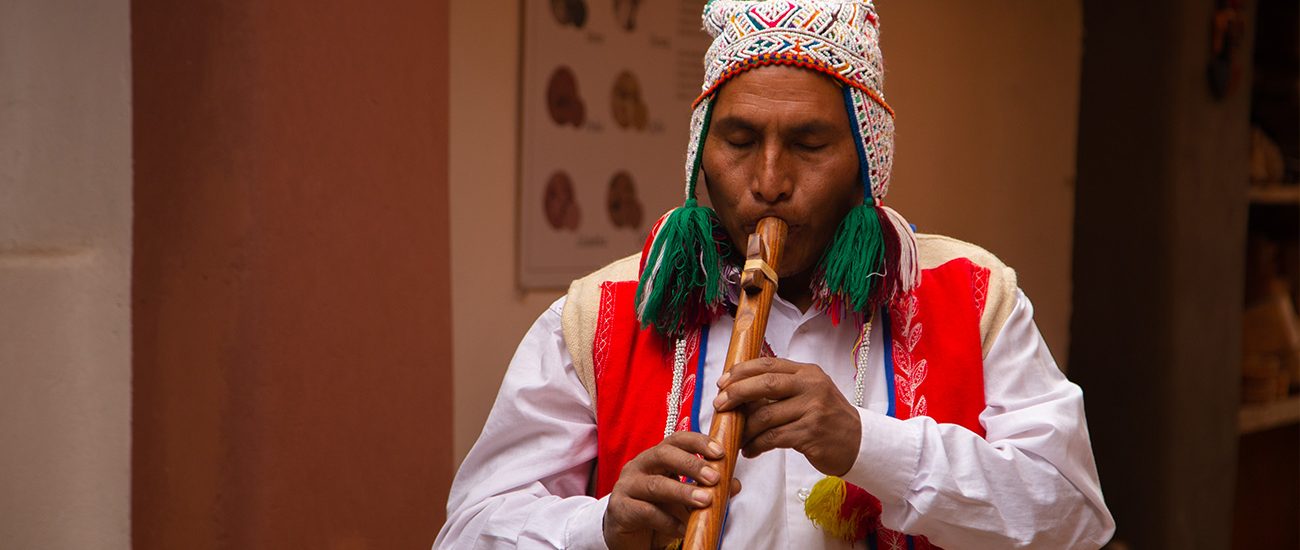
Each region has its own sound. Andean music uses panpipes, flutes, and the charango, a small string instrument. Coastal styles like festejo use the cajón and guitar. Textiles and ceramics also carry meaning, with patterns that can identify a community.
Respectful habits for students
Cultural learning starts with good manners. Students should greet people before asking questions. They should always ask before taking photos of people. A few words of Spanish, such as “buenos días” and “gracias,” go a long way.
How Students Experience Peruvian Culture on Our Programs
Our two Peru programs focus on Spanish practice and cultural learning. Each one shows a different side of the country.
Language Immersion in Lima (8 days). Students take Spanish lessons tied to real activities. They complete a market challenge at Mercado #1 and join a cooking class. They visit MEDLIFE partner communities to learn about global health while practicing Spanish. They explore Lima’s historic center and the Lugar de la Memoria (LUM). In Barranco, they take a graffiti tour and join an Afro-Peruvian Music and Dance Workshop.
Language Immersion in Cusco (8 days). Students explore Cusco’s historic center, Sacsayhuamán, Puca Pucara, and Tambomachay. They attend an evening of traditional dance at Centro Qosqo de Arte Nativo. In the Sacred Valley, they visit Pisac and the Sounds of the Andes Interpretation Center, where they learn about clay instruments in a ceramic workshop. The program also includes a guided visit to Machu Picchu.
Both programs include an orientation and safety meeting, an expert tour conductor, and a final reflection session.
FAQ
What are the main influences on Peruvian culture?
Peruvian culture combines Andean Indigenous traditions, Spanish colonial heritage, and Afro-Peruvian contributions. Later immigration from China, Japan, and Europe also shaped Peruvian food and daily life.
What is the most famous Peruvian tradition?
Inti Raymi is one of the best-known Peruvian traditions. It is held in Cusco every June 24 to honor the Inca sun god and mark the winter solstice.
What language do people speak in Peru?
Spanish is the most widely spoken language in Peru. Quechua is also an official language and is common in the Andes, including the Cusco region.
Bring Peruvian Culture to Life for Your Students
Studying Peruvian culture in person helps students connect language, history, and daily life. Our Language Immersion in Lima and Language Immersion in Cusco programs pair Spanish lessons with guided cultural activities for high school groups. Fill out our form to learn more.
Start your journey by downloading the Engaged Education Brochure and learn more about our immersive programs in Peru, Spain, and beyond. Interested in creating lasting impact around the world? You can directly assist communities in need by becoming a monthly donor through MEDLIFE’s Moving Mountains initiative.