
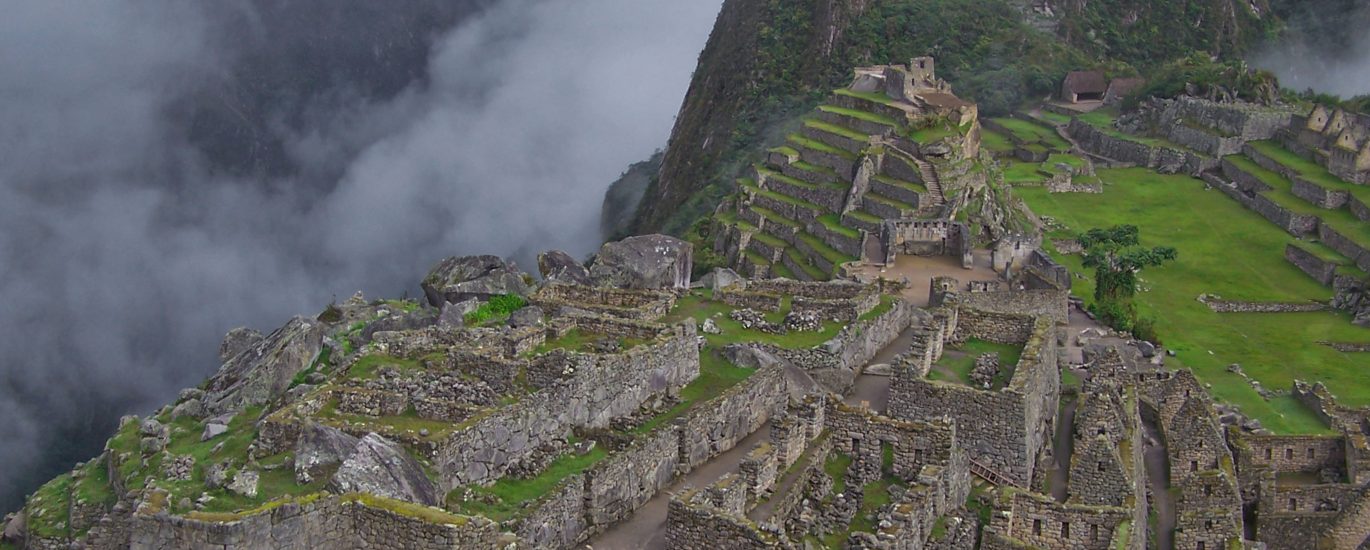
Who built Machu Picchu? Students ask this question as soon as they see the first photo of the stone citadel on its mountain ridge. The short answer is the Inca. Most archaeologists believe the emperor Pachacuti ordered it built around 1450 as a royal estate.
This article gives students and teachers a clear overview of Machu Picchu history. You will learn who Pachacuti was, how Inca builders worked without mortar, and why the site was abandoned. We also cover the 1911 expedition that made it famous abroad and the local families who already knew it well. Use these Machu Picchu facts in a pre-trip lesson so students arrive ready to ask good questions.
Who built Machu Picchu: Pachacuti and the Inca
Machu Picchu was built by the Inca in the 15th century. Most archaeologists link it to Pachacuti Inca Yupanqui, the ninth Sapa Inca, or ruler. Historians debate his exact reign. One widely used chronology places it from 1438 to 1471.
Who was Pachacuti?
Pachacuti turned the small kingdom of Cusco into a large empire. The Inca called that empire Tawantinsuyu. His name is often translated as “the turn of the world.” Under his rule, Inca territory spread toward Lake Titicaca in the south and Quito in the north. He also rebuilt Cusco as an imperial capital, including the Qorikancha, the main temple of the Sun.
His son and successor, Tupac Inca Yupanqui, continued expanding the empire. Some sources date construction at Machu Picchu across both reigns.
Why the Inca built it
Machu Picchu was most likely a royal estate. It was used for feasts, religious ceremonies, and imperial administration. It sits on a ridge between two peaks, Machu Picchu and Huayna Picchu, high above the Urubamba River. The setting matters. The Inca treated mountains, rivers, and the sun as sacred.
People lived and worked there year-round. Researchers note that many residents were craftspeople and retainers brought from different parts of the empire.
How the Inca built Machu Picchu
Machu Picchu has about 200 buildings arranged on terraces around a central square. The builders worked in steep, earthquake-prone terrain.
Stonework without mortar
The most important buildings use a technique called ashlar. Workers shaped each stone so it fit tightly against its neighbors. They used no mortar. This close fit gave the walls some flexibility in a region with frequent earthquakes. Doorways, windows, and niches have a trapezoid shape.
Terraces and water
The Inca carved terraces into the slopes. These stepped walls created flat land for crops and reduced erosion from heavy rain. Stone channels carried water through the site to a series of sixteen fountains. Students interested in engineering can trace the water system from fountain to fountain.
Sacred spaces
Several structures show the role of astronomy in Inca religion. The Temple of the Sun is believed to have served as an observatory. The Intihuatana is a carved stone linked to tracking the sun across the year.
What happened after the Inca
Machu Picchu was abandoned about a century after it was built, around the time of the Spanish conquest. The Spanish never found it. For that reason, it escaped the destruction that hit many Inca sites in Cusco.
In 1911, Yale academic Hiram Bingham reached the site with the help of a local farmer, Melchor Arteaga. Families were already farming the old terraces when he arrived. Local people had known about the ruins all along. Bingham’s photographs brought the site to international attention. He also took thousands of artifacts to Yale. After a long dispute and a 2010 agreement, those collections were returned to Peru beginning in 2011.
Today, Machu Picchu is a UNESCO World Heritage Site, listed in 1983. In 2007 it was also voted one of the New Seven Wonders of the World. It sits about 2,430 meters above sea level.
These details help students see Machu Picchu as part of a living history. For more context, see our guide to top historical sites in Peru and our article on Peruvian cosmovision, which explains the Andean worldview behind many Inca sites.
Studying Machu Picchu history on our Cusco program
Our Language Immersion in Cusco program is an 8-day trip that connects Spanish practice with Inca history. Students build context step by step before they reach Machu Picchu.
On Day 3, students take an interactive Spanish lesson and tour Cusco’s historic center. They also visit Sacsayhuaman, Puca Pucara, and Tambomachay. On Day 5, the group explores the Sacred Valley and the Pisac archaeological site. On Day 6, students take the train to Aguas Calientes for a guided visit to Machu Picchu, then return by train to Ollantaytambo.
Local guides, entrance fees, and train and bus tickets to Machu Picchu are included. The program ends with a reflection session on Day 8. Teachers can use it to connect what students saw to classroom goals. Our tips on student travel reflection can help you plan follow-up work.
FAQ
Who built Machu Picchu?
The Inca built Machu Picchu in the 15th century. Most archaeologists believe the emperor Pachacuti ordered it built around 1450 as a royal estate.
Why was Machu Picchu abandoned?
It was abandoned around the time of the Spanish conquest, about a century after it was built. The Spanish never found the site, so it was not looted or destroyed.
Did Hiram Bingham discover Machu Picchu?
Bingham brought it to international attention in 1911. Local farmers already knew the site, and a local guide led him there.
Visit Machu Picchu with your students
Machu Picchu makes Inca history concrete for students. Our Language Immersion in Cusco program pairs daily Spanish practice with guided visits to Cusco, the Sacred Valley, and Machu Picchu. Fill out our form to learn more.
Start your journey by downloading the Engaged Education Brochure and learn more about our immersive programs in Peru, Spain, and beyond. Interested in creating lasting impact around the world? You can directly assist communities in need by becoming a monthly donor through MEDLIFE’s Moving Mountains initiative.