
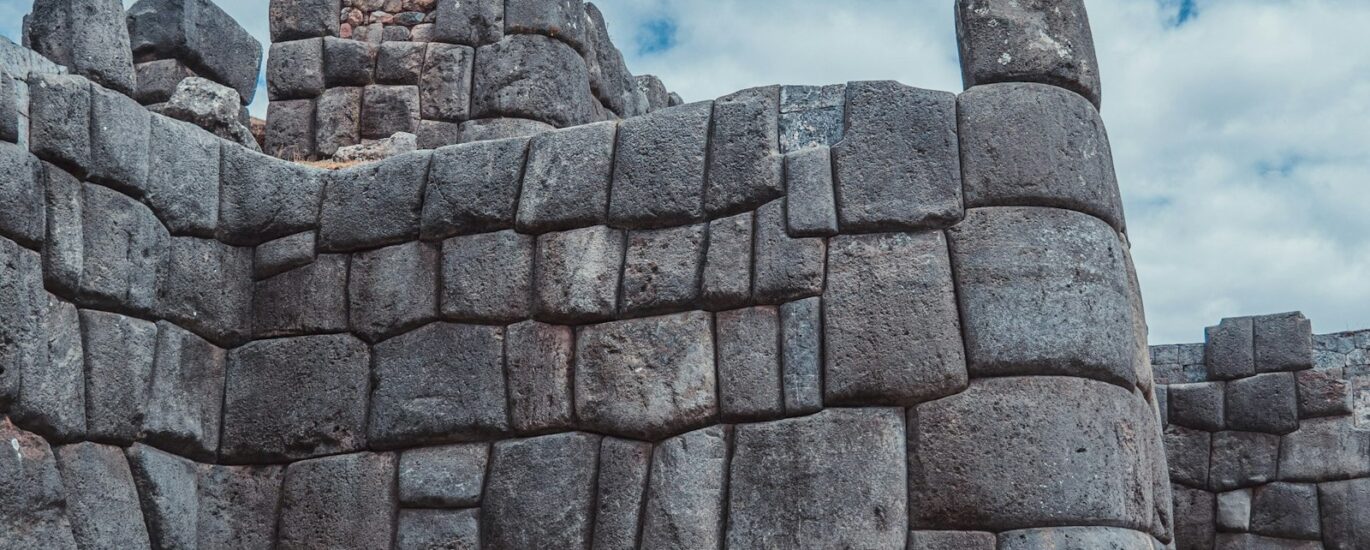
Sacsayhuaman is an Inca complex on a hill above Cusco, Peru. Its zigzag walls are built from enormous, carefully shaped stones. Many fit together so tightly that no mortar was needed. For students studying the Inca, few sites show their engineering skill as clearly.
This guide covers what students should know before they visit. You will learn who built Sacsayhuaman, what it was used for, and what happened there during the Spanish conquest. We also introduce the Qorikancha and other Cusco Inca sites that help complete the story. Finally, we share tips for school groups and explain how Sacsayhuaman fits into our Cusco language immersion program.
Sacsayhuaman history: who built it and why
Sacsayhuaman sits on the northern edge of Cusco, at about 3,701 meters above sea level. That is roughly 300 meters higher than the city center. Peru’s tourism board describes the walk up from Cusco as about 25 minutes.
Builders and timeline
People of the earlier Killke culture first used the hill. The Inca later expanded it on a much larger scale. Most sources credit the main construction to Pachacuti, the ruler who turned Cusco into an imperial capital in the 15th century. His successors continued the work.
The great walls
The most famous feature is a set of three terrace walls. They zigzag across the hillside, one above the other. The longest runs about 400 meters. The stones are mostly andesite. Estimates for the largest block range from about 128 to nearly 200 tonnes.
The Inca shaped each stone to fit its neighbors. The walls lean slightly inward. Students can see the joints up close and talk about how the Inca moved and shaped such heavy blocks.
What was it for?
The Spanish described Sacsayhuaman as a fortress. Peru’s tourism board describes it as a ceremonial center that also served administrative purposes. Its walls also played a defensive role during the conquest. The name may come from the Quechua word waman, often translated as falcon or hawk. Scholars do not fully agree on its meaning.
The 1536 siege and what came after
Sacsayhuaman played a central role in the Siege of Cusco. In May 1536, the Inca leader Manco Inca surrounded the city, which the Spanish had occupied. Inca forces took Sacsayhuaman and used it as a base. From the hill, they hurled burning stones with slings and set fire to the city’s thatched roofs.
The Spanish fought to retake the complex. Juan Pizarro, a brother of Francisco Pizarro, was mortally wounded in the assault. The Spanish eventually captured it. Manco’s forces later withdrew to Ollantaytambo.
After the conquest, the Spanish took apart much of Sacsayhuaman. They used its stones to build colonial Cusco. The great terrace walls remain. In 1983, UNESCO listed the City of Cuzco, including Sacsayhuaman, as a World Heritage Site.
Today, the esplanade in front of the walls hosts Inti Raymi, the Inca festival of the sun, held every June 24.
Other Cusco Inca sites to connect the story
Qorikancha
The Qorikancha was the most important temple in the Inca world. It was dedicated to Inti, the sun. Pachacuti rebuilt it as part of his new Cusco. Its walls were once covered in sheets of gold. The Spanish melted down most of the gold and built the Santo Domingo convent on top of the temple. Visitors today can see Inca walls and colonial architecture side by side. Students can use it to discuss how the conquest changed Cusco.
Puca Pucara and Tambomachay
Two smaller sites lie on the road north of Sacsayhuaman. Puca Pucara means “red fort.” It may have served as a lodge, storage site, or checkpoint on the road to the Sacred Valley. Tambomachay is known for its stone channels that still carry flowing water. It is often linked to water ceremonies.
Tips for visiting Sacsayhuaman with students
- Plan for altitude. The site is higher than central Cusco. Visit after students have had time to adjust. Our Cusco altitude preparation guide has more advice.
- Bring sun protection and water. There is little shade on the hill.
- Wear sturdy shoes. Paths and steps are uneven.
- Stay on marked paths. Do not climb on the walls.
- Check tickets. Sacsayhuaman is included in the Cusco tourist ticket. Confirm current rules before you go.
Sacsayhuaman on our Cusco program
Our Language Immersion in Cusco program is an 8-day trip for high school groups. Day 3 focuses on Cusco’s Inca past. Students start with an interactive Spanish lesson. They then tour the historic center and visit Sacsayhuaman, Puca Pucara, and Tambomachay with a guide. In the evening, the group visits the Centro Qosqo de Arte Nativo.
Later in the week, students visit Pisac and Machu Picchu. Seeing Sacsayhuaman first gives them a reference point for Inca stonework. The trip also builds language and cultural skills. Our article on cross-cultural learning for teens explains why that matters. Teachers can also explore bilingual education in Peru to frame the role of Quechua.
FAQ
Who built Sacsayhuaman?
The Inca built most of Sacsayhuaman in the 15th century, mainly under the ruler Pachacuti and his successors. The earlier Killke culture had used the site before them.
How high is Sacsayhuaman?
Sacsayhuaman sits at about 3,701 meters (12,142 feet) above sea level, on a hill north of central Cusco.
What festival takes place at Sacsayhuaman?
Inti Raymi, the Inca festival of the sun, is held at Sacsayhuaman every June 24.
Explore Inca Cusco with your students
Sacsayhuaman gives students a direct view of Inca engineering and the story of the conquest. Our Language Immersion in Cusco program pairs these visits with daily Spanish practice. Fill out our form to learn more.
Start your journey by downloading the Engaged Education Brochure and learn more about our immersive programs in Peru, Spain, and beyond. Interested in creating lasting impact around the world? You can directly assist communities in need by becoming a monthly donor through MEDLIFE’s Moving Mountains initiative.