

Food is one of the easiest ways for students to connect with a new culture. Every meal is a chance to practice vocabulary, ask questions and learn some history. Traditional Spanish food also changes from region to region, so a single trip can feel like several.
This guide introduces dishes students are likely to see in Spain, with a focus on Barcelona and Madrid. You will learn where each dish comes from and what makes it special. You will also find tips on Spanish meal times and food etiquette for school groups. Tapas already have their own guide, so this article covers the main dishes, regional specialties and sweets that complete the picture.
Classic Traditional Spanish Food Across the Country
Some dishes are known across Spain, even though each one started in a specific region.
Paella
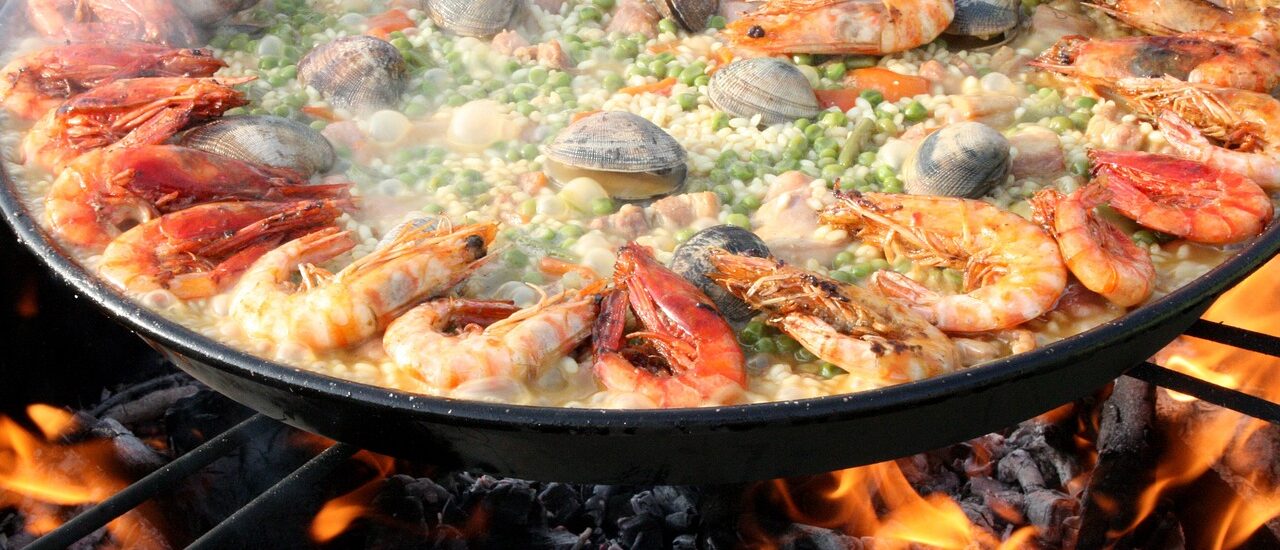
Paella comes from the Valencian Community. The word “paella” is Valencian for the wide, shallow pan the dish is cooked in. The traditional paella valenciana uses short-grain rice, chicken, rabbit, green beans, saffron and olive oil. It began as a lunchtime meal for farmers near the Albufera lagoon outside Valencia.
Seafood paella is a separate version that swaps the meat for fish and shellfish. Students may also hear about the “socarrat,” the thin layer of toasted rice at the bottom of the pan. Many people consider it the best part.
Gazpacho
Gazpacho is a cold soup from Andalusia, in southern Spain. It is made with bread, olive oil, garlic, salt and fresh vegetables such as tomatoes, peppers and cucumbers. Tomatoes only entered the recipe after Spain’s contact with the Americas, which makes gazpacho a good link to a history lesson.
Churros con Chocolate
Churros con chocolate are fried dough sticks served with thick hot chocolate for dipping. In Madrid, they are a classic breakfast or afternoon snack, especially in winter. The afternoon snack in Spain is called the “merienda,” a useful vocabulary word for students.
Regional Specialties in Barcelona and Madrid
Barcelona and Madrid each have dishes tied to their own history. Comparing them helps students see that Spanish food has many regional identities.
Barcelona and Catalonia
- Pa amb tomàquet: Toasted bread rubbed with tomato and garlic, then drizzled with olive oil. It appears at many Catalan meals.
- Escalivada: Roasted red pepper, eggplant, onion and tomato, peeled, cut into strips and dressed with olive oil.
- Crema catalana: A custard dessert with a caramelized sugar top, similar to crème brûlée.
The dish names are in Catalan, which gives students a chance to compare Catalan and Spanish spelling.
Madrid
- Cocido madrileño: A stew of chickpeas, vegetables, noodles and several meats. It is often served in three courses: the broth with noodles, then the chickpeas and vegetables, then the meat.
- Bocadillo de calamares: A sandwich filled with fried squid. It is one of Madrid’s best-known street foods.
- Callos a la madrileña: A tripe stew with chorizo, black pudding and paprika. It is a good test for adventurous eaters.
Food Tips for Student Groups in Spain
Meal Times
Spanish meal times are later than in the U.S. and Canada. Lunch is often the main meal of the day and is commonly eaten around 2 pm. Dinner is usually served around 9:30 pm or later, and many restaurants do not open for dinner until about 8 pm. Prepare students for this schedule before departure.
Etiquette and Language Practice
Encourage students to order in Spanish, ask what a dish contains and thank the staff. Learning phrases like “¿Qué lleva este plato?” (What is in this dish?) helps with both language practice and food allergies. Our guide to Spanish etiquette for students covers table manners and greetings.
Allergies and Dietary Needs
Share any food allergies, intolerances or dietary needs with your program provider well before travel. Students with serious allergies should carry a translated allergy card and any prescribed medication.
For small plates and bar culture, read our tapas food culture guide. It pairs well with this article.
Spanish Food on Our Spain Program
Breakfast, lunch and dinner are included every day on our 10-day Spain program. The trip begins with a welcome dinner featuring regional cuisine in Barcelona.
On day 4, students visit Mescladis, a Barcelona social organization that provides training and job opportunities to refugees, immigrants and people with disabilities. After a project presentation, students join a hands-on Spanish tapas cooking class. In Madrid, the group visits San Cristóbal Market for a project presentation and team-building activity. On another day, students prepare picnic bags for local children with a local NGO. These activities connect food with the people and organizations working in each city.
FAQ
What is the most traditional Spanish food?
Paella is one of the best-known traditional Spanish dishes. It comes from the Valencian Community and is named after the pan it is cooked in. Other classics include gazpacho, cocido madrileño and churros con chocolate.
When do people eat churros con chocolate in Spain?
Churros con chocolate are commonly eaten for breakfast or as an afternoon snack, called the merienda. They are especially popular in Madrid during the colder months.
What time is dinner in Spain?
Dinner in Spain is usually eaten around 9:30 pm or later. Many restaurants open for dinner around 8 pm.
Taste Spain With Your Students
Spanish food gives students a daily, hands-on way to learn about regions, history and language. Our Spain Global Impact Fellowship 2027 is a 10-day program in Barcelona and Madrid built for high school groups. Fill out our form to learn more.
Start your journey by downloading the Engaged Education Brochure and learn more about our immersive programs in Spain and beyond. Interested in creating lasting impact around the world? You can directly assist communities in need by becoming a monthly donor through MEDLIFE’s Moving Mountains initiative.


