
Many students of Spanish arrive in Barcelona and notice something surprising. The metro sign says “Sortida,” the menu says “Bon profit,” and the street sign reads “Carrer.” That is Catalan. Understanding Catalan vs Spanish helps students make sense of what they see and hear in the city.
This guide explains what Catalan is and where it is spoken. It covers how Catalan and Spanish share daily life in Barcelona and which words students will notice most. You will also find simple classroom ideas to prepare your group before the trip. The goal is practical. Students should feel confident using their Spanish while respecting the local language around them.
What Is the Catalan Language?
Catalan is a Romance language. Like Spanish, French and Italian, it grew out of Latin. That shared root is why students often recognize Catalan words on sight.
Catalan is the official language of Andorra. In Spain, it is official alongside Spanish in three autonomous communities: Catalonia, the Balearic Islands and the Valencian Community, where it is known as Valencian. It also has semi-official status in the town of Alghero, on the Italian island of Sardinia. Estimates from 2012 put the total number of speakers at about 9 million, counting native and second-language speakers.
Catalan is its own language with its own grammar and spelling. It has a long literary history. Students should not treat it as a dialect or a mix of Spanish and French.
Catalan vs Spanish in Daily Life
Bilingual Barcelona
Barcelona has two official languages, Catalan and Spanish. The city’s international welcome office notes that most residents consider themselves fully bilingual. Catalan is the teaching language in Catalonia’s schools, which also teach Spanish and usually English. Catalan is also the working language of local government.
In practice, students will hear both languages every day. A family may speak Catalan at home. A shop worker may switch to Spanish as soon as a visitor starts speaking. Students can use their Spanish anywhere in the city, and people will understand them.
Words Students Will Notice
Many words look familiar. Some are quite different. Here are examples students will see on signs, menus and in greetings:
| Catalan | Spanish | English |
|---|---|---|
| Bon dia | Buenos días | Good morning |
| Gràcies | Gracias | Thank you |
| Si us plau | Por favor | Please |
| Adéu | Adiós | Goodbye |
| Carrer | Calle | Street |
| Sortida | Salida | Exit |
| Bon profit | Buen provecho | Enjoy your meal |
Spelling Clues
Catalan uses a few features that Spanish does not. Look for the grave accent, as in “à” or “è.” Look for “ç,” as in “plaça” (square). The middle dot in “l·l” is another clear sign, as in “col·legi” (school). Spotting these marks helps students tell the two languages apart quickly.
Turning a Bilingual City Into a Lesson
Barcelona gives students a real example of how languages coexist. Teachers can build on that before, during and after the trip.
Before the Trip
- Teach a short list of Catalan greetings and courtesy words. Using “Bon dia” or “Gràcies” is a small sign of respect.
- Compare Catalan and Spanish cognates. Ask students to predict meanings, then check.
- Review Castilian Spanish features, since students will hear them in Madrid. Our guide to Castilian vs Latin American Spanish is a good starting point.
During the Trip
- Give students a “language hunt.” They photograph signs in Catalan, Spanish or both.
- Ask them to note which language people use first in shops or cafés.
- Encourage them to start conversations in Spanish and listen for switches.
After the Trip
- Hold a discussion on language and identity. Why might a region protect its own language?
- Compare Barcelona with bilingual places students know, such as communities in the U.S. or Canada.
For more phrases to practice, share our list of easy Spanish phrases with your class.
Hearing Catalan and Spanish on Our Spain Program
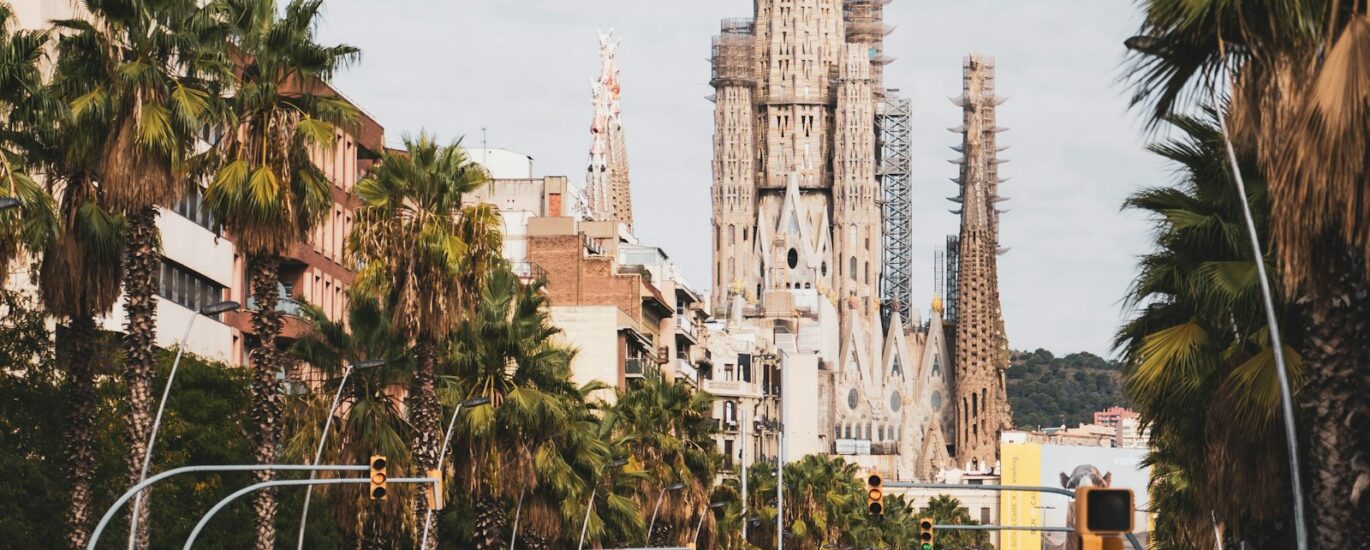
Our 10-day Spain program spends its first five days in Barcelona. Students take a guided walking tour of the historic center and visit the Sagrada Familia and Park Güell. They travel to Montserrat by train and ride the cogwheel train to the monastery. At Mescladis, a social organization that provides training and job opportunities to refugees, immigrants and people with disabilities, they hear a project presentation and join a tapas cooking class. A guided bike tour along the waterfront rounds out their time in the city.
The group then takes the high-speed train to Madrid, where Spanish is the main language of daily life. This shift gives students a clear before-and-after comparison. You can read more about why Spain suits language immersion.
FAQ
Is Catalan a dialect of Spanish?
No. Catalan is a separate Romance language with its own grammar, spelling and literature. It is official in Andorra and co-official in Catalonia, the Balearic Islands and the Valencian Community.
Do people in Barcelona speak Spanish?
Yes. Spanish and Catalan are both official in Barcelona, and most residents are bilingual. Visitors can communicate in Spanish throughout the city.
Should students learn Catalan before visiting Barcelona?
It is not required. Learning a few greetings, such as “Bon dia” and “Gràcies,” is a polite gesture and helps students read signs.
Explore Barcelona’s Two Languages With Your Students
Barcelona lets students practice Spanish while seeing how two languages share one city. Our Spain Global Impact Fellowship 2027 is a 10-day program in Barcelona and Madrid built for high school groups. Fill out our form to learn more.
Start your journey by downloading the Engaged Education Brochure and learn more about our immersive programs in Spain and beyond. Interested in creating lasting impact around the world? You can directly assist communities in need by becoming a monthly donor through MEDLIFE’s Moving Mountains initiative.