Spain is a democracy with a king. That surprises many students in the United States, where the head of state is an elected president. In Spain, King Felipe VI serves as head of state, while an elected government runs the country. The Spanish royal family appears at national ceremonies, travels abroad to represent Spain and lives under close public attention.
This guide explains who the members of the Spanish royal family are, what the king actually does and how the monarchy returned after decades of dictatorship. You’ll also learn about the public debate over the monarchy’s future. We include classroom ideas and a link to the Royal Palace of Madrid, which students visit on Engaged Education’s Spain Global Impact Fellowship.
Who is in the Spanish royal family?
- King Felipe VI: Became king in June 2014, when his father, Juan Carlos I, abdicated.
- Queen Letizia: A former television journalist who married Felipe in 2004.
- Leonor, Princess of Asturias: The king’s elder daughter and heir to the throne, born in 2005. On her 18th birthday in 2023, she swore an oath to the Spanish Constitution.
- Infanta Sofía: The king’s younger daughter, born in 2007.
- King Juan Carlos I and Queen Sofía: The king’s parents. Juan Carlos reigned from 1975 to 2014.
The royal family belongs to the House of Bourbon, which first took the Spanish throne in 1700.
How Spain’s constitutional monarchy works
Spain’s Constitution of 1978 defines the country as a parliamentary monarchy. The king is head of state, but political power rests with elected institutions.
What the king does
- Represents Spain at home and abroad
- Formally appoints the president of the government after elections
- Signs laws passed by parliament
- Serves as the symbolic supreme commander of the armed forces
- Attends official ceremonies and state visits
What the king does not do
The king does not make laws, set government policy or govern the country day to day. Those roles belong to parliament and the government, led by the president, often called the prime minister in English.
The monarchy and Spain’s transition to democracy
After Franco
General Francisco Franco ruled Spain as a dictator from the end of the Civil War in 1939 until his death in 1975. Franco named Juan Carlos as his successor. Many expected him to continue the regime. He instead supported reforms that led to free elections in 1977 and the 1978 Constitution.
The 1981 coup attempt
On February 23, 1981, armed civil guards stormed parliament in an attempted coup. Juan Carlos appeared on television in military uniform and ordered the army to support the constitution. The coup failed, and many Spaniards credited the king with protecting democracy.
Controversies and debate
In later years, Juan Carlos faced criticism over his private life and finances. He abdicated in 2014, and in 2020 he moved abroad amid investigations into his finances. Felipe VI has worked to present a more transparent monarchy.
Spaniards hold different views on the monarchy. Supporters say it provides stability, unity and a neutral head of state. Critics argue that an inherited position does not fit a modern democracy and support a republic. Polls show that opinions vary by age, region and political views. Students can explore these arguments respectfully.
The Royal Palace of Madrid
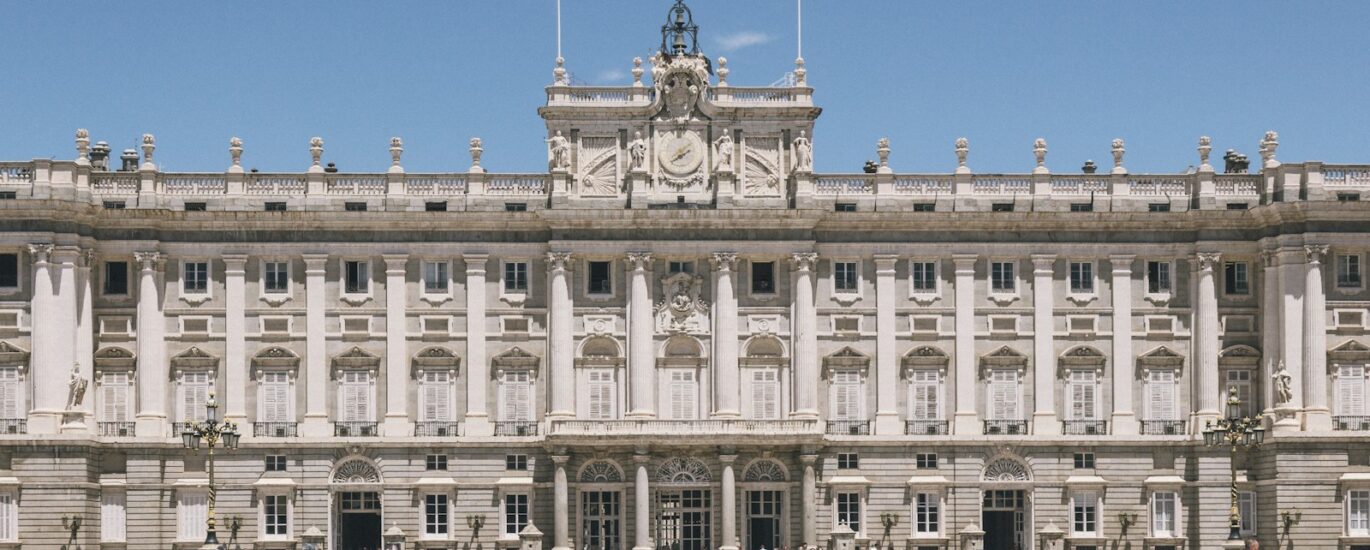
The Royal Palace is the official residence of the Spanish royal family, though the family lives in the smaller Zarzuela Palace outside central Madrid. The Royal Palace is used for state ceremonies and is open to visitors when not in use. Our guide to the Royal Palace of Madrid explains what students can see inside.
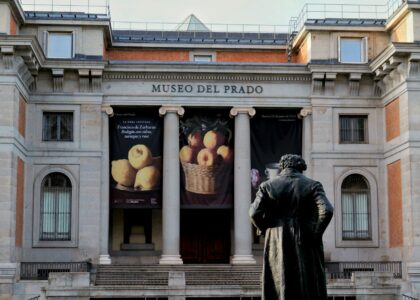
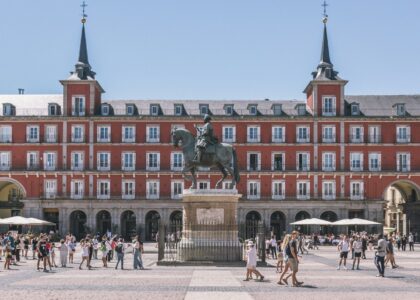
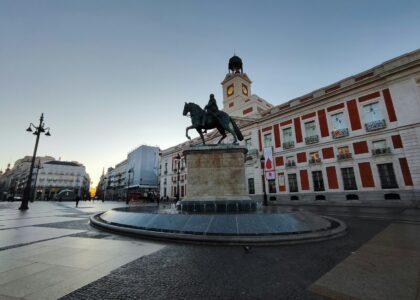
On day seven of Engaged Education’s Spain program, students tour Plaza Mayor, Puerta del Sol and the Royal Palace, then visit the Prado Museum, which holds the former royal art collections.
Teaching the Spanish monarchy in class
- Compare systems: Students compare Spain’s constitutional monarchy with the U.S. presidential system and Canada’s own constitutional monarchy.
- Timeline: Build a timeline from 1939 to today, focusing on the transition to democracy.
- Debate: Students research arguments for and against the monarchy and hold a structured debate.
- Vocabulary: el rey, la reina, la princesa, el heredero, la Constitución, el jefe de Estado.
For more historical context, see our post on Guernica and Picasso and our Madrid facts for students.
FAQ
Who is the current king of Spain?
Felipe VI has been king of Spain since June 2014, after his father, Juan Carlos I, abdicated.
Who will be the next monarch of Spain?
Leonor, Princess of Asturias, is the heir to the throne. She is the elder daughter of King Felipe VI and Queen Letizia.
Does the king of Spain have real power?
The king is head of state with mostly symbolic and ceremonial duties. Political power belongs to the elected parliament and government.
Explore Spain’s history and government
The Spanish royal family helps students understand how history shapes modern democracies. Our Spain Global Impact Fellowship 2027 is a 10-day program in Barcelona and Madrid built for high school groups. Fill out our form to learn more.
Start your journey by downloading the Engaged Education Brochure and learn more about our immersive programs in Spain and beyond. Interested in creating lasting impact around the world? You can directly assist communities in need by becoming a monthly donor through MEDLIFE’s Moving Mountains initiative.