Students interested in medicine, nursing or public health often ask what healthcare looks like in other countries. Healthcare in Peru offers a clear example of how geography, income and history shape health. Peru has modern hospitals in Lima and dedicated health workers across the country. It also faces challenges in reaching rural communities and fast-growing neighborhoods on the edges of cities.
This guide explains how healthcare in Peru is organized, the main public health challenges the country faces and how students can learn about global health with respect and humility. You’ll also find classroom activities and vocabulary. On Engaged Education’s Lima and Cusco language immersion programs, students visit MEDLIFE partner communities to learn about global health while practicing Spanish.
How healthcare in Peru is organized
Peru has a mixed system with several parts. Each covers different groups of people.
The Ministry of Health and SIS
The Ministry of Health, known as MINSA, runs public hospitals, health centers and posts across the country. Many low-income residents are covered by the Seguro Integral de Salud (SIS), a public insurance program.
EsSalud
EsSalud is the social security health system for workers with formal jobs and their families. It runs its own hospitals and clinics.
Armed forces and police
The military and the national police have their own health services for members and families.
Private clinics
Private clinics and insurance serve people who can pay for them, mostly in cities.
A fragmented system
Because these systems run separately, people may face different levels of care depending on where they work and live. Peru has worked for years to expand insurance coverage and connect the systems.
Public health challenges in Peru
Geography and access
Peru’s geography includes desert coast, high mountains and Amazon rainforest. Reaching remote communities can take many hours. Doctors and specialists are concentrated in cities, especially Lima.
Growing urban neighborhoods
Over recent decades, many families moved from rural areas to cities. Some settled on hillsides around Lima, in neighborhoods that grew faster than water, sanitation and health services. Access to clean water, safe housing and nearby clinics remains a concern in some areas.
Childhood anemia
Anemia in young children is one of Peru’s most discussed public health issues. According to Peru’s national statistics institute, INEI, 43.1 percent of children aged 6 to 35 months had anemia in 2023. Anemia can affect growth and learning, so reducing it is a national priority.
Altitude and climate
High altitude, cold nights in the Andes and seasonal weather events affect health. Respiratory infections are a concern in highland winters.
Strengths to recognize
Peru also has well-trained health professionals, community health workers and programs that have expanded insurance and vaccination. Learning about challenges should include learning about the people and systems working to solve them.
Learning about global health ethically
Students who want to learn about global health abroad should keep a few principles in mind:
- Learn first, then act. Listen to community members and local professionals.
- Respect privacy. Ask before taking photos and never share images of patients or private homes without consent.
- Stay in your role. High school students should never perform medical procedures. Their role is to learn.
- Avoid savior thinking. Communities lead their own development.
Our posts on avoiding voluntourism and global citizenship expand on these ideas.
Classroom activities
- Compare systems: Students compare how healthcare is organized in Peru, the U.S. and Canada.
- Data analysis: Students read INEI figures on anemia and discuss causes and solutions.
- Social determinants: Discuss how water, housing, income and education affect health.
- Vocabulary: la salud, el seguro, el centro de salud, la anemia, el agua potable, la comunidad.
For background on daily life, see our post on education in Peru.
Global health on Engaged Education’s Peru programs
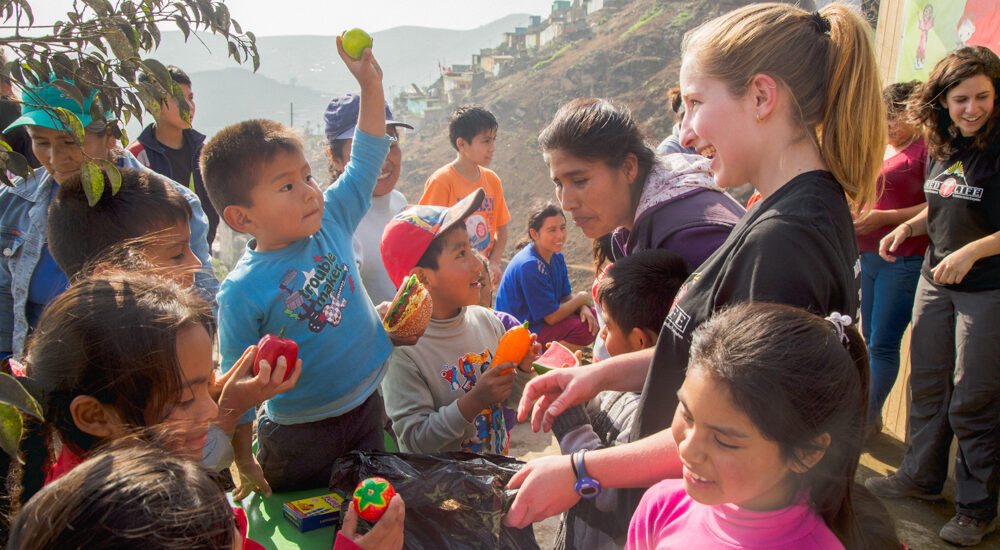
On day three of the 8-day Lima program and day four of the 8-day Cusco program, students visit MEDLIFE partner communities to learn about global health while practicing Spanish. MEDLIFE is a nonprofit that works with communities in Latin America and Africa on health, education and community development. Students also take Spanish lessons, join cooking classes and explore historic sites. Each program ends with a reflection session where students discuss what they learned.
FAQ
How does healthcare work in Peru?
Peru has a mixed system: public services from the Ministry of Health with SIS insurance, EsSalud for formal workers, separate military and police systems and private clinics.
What are the main health challenges in Peru?
Key challenges include access in rural areas, services in fast-growing urban neighborhoods, childhood anemia and the effects of altitude and climate.
Can high school students learn about global health in Peru?
Yes. Students can learn by listening to community members and local professionals, following ethical guidelines and staying in a learning role.
Learn about global health with your class
Healthcare in Peru helps students understand how health connects to geography, income and community. Our Language Immersion programs in Lima and Cusco include visits to MEDLIFE partner communities. Fill out our form to learn more.
Start your journey by downloading the Engaged Education Brochure and learn more about our immersive programs in Peru, Spain, and beyond. Interested in creating lasting impact around the world? You can directly assist communities in need by becoming a monthly donor through MEDLIFE’s Moving Mountains initiative.