Doctors and nurses treat patients one at a time. Public health professionals work to keep whole communities healthy. They track disease outbreaks, design vaccination campaigns, improve access to clean water and teach healthy habits. For high school students who care about health and social issues, public health careers offer many paths, from science and data to education and policy.
This guide introduces common public health careers and what each one involves. You’ll learn about education paths, the skills that matter and how students can explore the field while still in high school. We also explain how learning about global health abroad, with respect and in a learning role, can help students understand how health connects to geography, income and community.
What is public health?
Public health focuses on preventing disease and promoting health across populations. It looks at whole groups of people and asks questions like:
- Why do some neighborhoods have higher rates of asthma?
- How can a city reduce traffic injuries?
- What helps families get clean drinking water?
- How can communities respond to an outbreak?
Public health professionals work in government agencies, hospitals, nonprofits, universities, international organizations and private companies.
Public health careers to explore
Epidemiologist
Epidemiologists study patterns of disease and injury. They collect and analyze data to find causes and guide prevention. Strong math, statistics and science skills are important.
Biostatistician
Biostatisticians design studies and analyze health data. They help answer questions about which treatments or programs work.
Health educator and community health worker
Health educators design programs that teach healthy behaviors. Community health workers connect people with services in their own communities. Language skills, including Spanish, can be very valuable in these roles.
Environmental health specialist
These professionals study how air, water, soil and food affect health. They may inspect restaurants, test water or respond to pollution.
Health policy analyst
Policy analysts research laws and programs and recommend changes. They combine knowledge of health, economics and government.
Global health professional
Global health professionals work on health issues that cross borders, such as infectious disease, maternal and child health or access to care. Many work with international organizations and nonprofits.
Public health nurse and physician
Some nurses and doctors focus on community and population health, such as running clinics, vaccination programs or disease control.
Education paths
- Bachelor’s degree: Many universities offer undergraduate degrees in public health, global health or related fields such as biology or sociology.
- Master of Public Health (MPH): A common graduate degree for many public health roles.
- Doctoral degrees: Research and leadership roles may require a PhD or DrPH.
- Certifications: Some roles, such as community health worker, offer state certification or training programs.
Requirements vary by role and location, so students should research specific careers and talk with counselors.
Skills that matter
- Science and math, especially biology and statistics
- Communication, including writing and public speaking
- Cultural awareness and the ability to work with diverse communities
- Languages, especially Spanish in many parts of the U.S. and Canada
- Problem solving and teamwork
How high school students can start exploring
- Take relevant classes: Biology, statistics, health and Spanish.
- Join clubs: Health occupations clubs, science clubs or Model UN.
- Volunteer locally: Food banks, health fairs or community organizations, following age rules.
- Do a research project: Analyze a local health issue for a science fair.
- Talk to professionals: Arrange an informational interview with someone in public health.
- Learn about global health: Study how health systems work in other countries.
Our posts on STEM field trips and travel and college applications offer more ideas. For ethical guidelines, read about avoiding voluntourism.
Learning about global health abroad
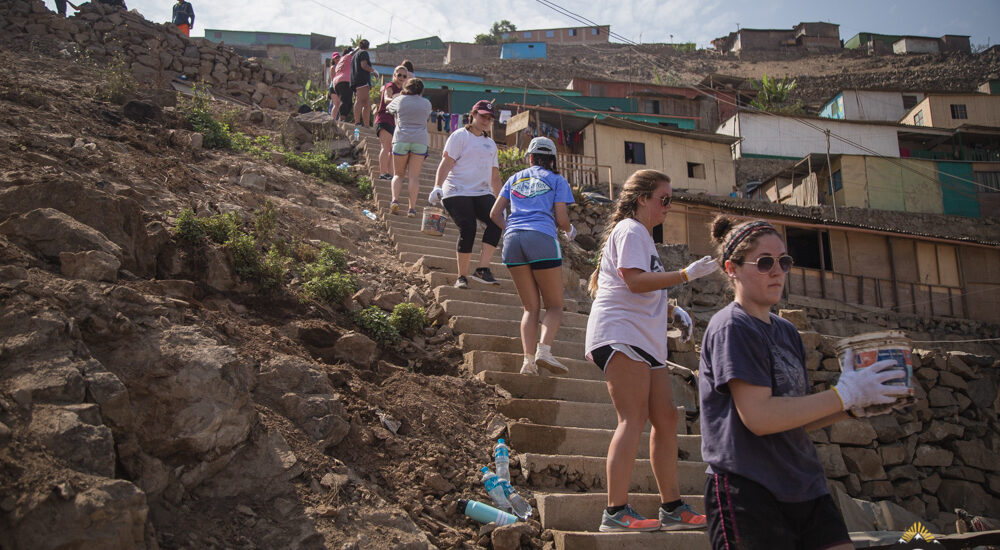
On Engaged Education’s 8-day Lima and Cusco language immersion programs, students visit MEDLIFE partner communities to learn about global health while practicing Spanish. MEDLIFE is a nonprofit that works with communities in Latin America and Africa on health, education and community development. Students listen, ask questions and reflect on what affects health in each community. They also take Spanish lessons, join cultural activities and end with a reflection session. These experiences can help students decide whether public health is a path they want to explore further.
FAQ
What are some public health careers?
Common public health careers include epidemiologist, biostatistician, health educator, community health worker, environmental health specialist and health policy analyst.
What degree do you need for public health?
Many roles start with a bachelor’s degree. A Master of Public Health (MPH) is common for advanced roles.
How can high school students explore public health?
Students can take biology, statistics and Spanish, join health clubs, volunteer locally and learn about global health.
Explore global health with your students
Public health careers start with curiosity about what keeps communities healthy. Our Language Immersion programs in Lima and Cusco include visits to MEDLIFE partner communities. Fill out our form to learn more.
Start your journey by downloading the Engaged Education Brochure and learn more about our immersive programs in Peru, Spain, and beyond. Interested in creating lasting impact around the world? You can directly assist communities in need by becoming a monthly donor through MEDLIFE’s Moving Mountains initiative.