
There’s a limit to what any classroom can teach. Textbooks describe the world; educational travel lets students experience it. When students step outside the school environment and into real communities, ecosystems, and cultures, learning stops being abstract and becomes immediate, personal, and lasting. Educational travel for students isn’t just a field trip — it’s a fundamentally different way of learning that complements and enriches everything that happens in a classroom.
At Engaged Education Tours, we’ve seen how transformative this kind of learning can be. But we’ve also seen how easily it can go wrong — when travel becomes tourism dressed up as education, or when “service” becomes more about the traveler’s experience than the community’s needs. Done well, educational travel is one of the most powerful tools in a student’s development. Done poorly, it can reinforce the very stereotypes it aims to dismantle.
What Is Educational Travel?
Educational travel is structured travel designed with specific learning objectives. Unlike tourism, which prioritizes sightseeing and entertainment, educational travel integrates academic content, cultural immersion, reflection, and — when done responsibly — meaningful community engagement.
Effective educational travel includes:
- Clear learning objectives tied to curriculum or personal development goals
- Local expertise — guides and community members who provide authentic context
- Structured reflection that helps students process what they’re experiencing
- Cultural immersion that goes beyond tourist sites and into real community life
- Responsible engagement that respects and benefits host communities
Why Learning Beyond the Classroom Matters
Theory Becomes Real
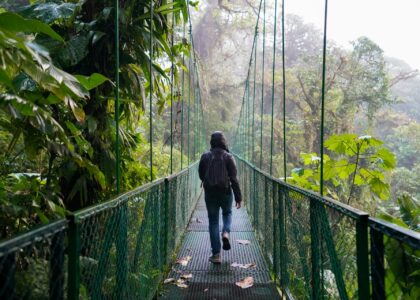
In a classroom, a student might learn about the social determinants of health, biodiversity, or cultural history. On an educational trip, they see how those concepts play out in real communities and ecosystems. A lecture on water access becomes a conversation with a family that walks miles for clean water. A textbook chapter on tropical ecology becomes a walk through a rainforest with a local guide who knows every plant and animal.
This shift from abstract to concrete makes learning stick. Studies consistently show that experiential learning — learning by doing and seeing — produces better retention, deeper understanding, and greater engagement than passive instruction alone.
Students Develop Cross-Cultural Competence
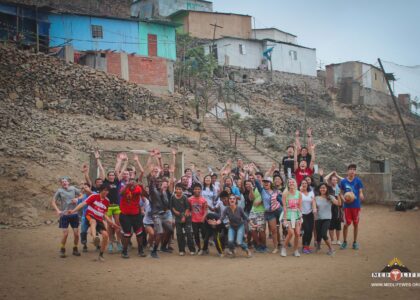
The world our students will inherit is increasingly interconnected. The ability to understand, respect, and collaborate across cultures is no longer optional — it’s essential. Educational travel develops this competence by putting students in direct contact with people whose lives, perspectives, and experiences are different from their own.
When students share a meal with a host family, learn a few words of a new language, or listen to a community leader describe local challenges, they develop empathy and perspective that no lecture can provide. They learn that their way of seeing the world isn’t the only way — and that understanding difference is a strength, not a weakness.
Real-World Problem-Solving Skills
Educational travel puts students in unfamiliar situations where they must adapt, communicate, and solve problems in real time. Whether it’s navigating a new city, working through a language barrier, or collaborating on a community project, students develop resilience, resourcefulness, and confidence.
These are the skills that employers, graduate schools, and communities value most — and they’re difficult to develop in the controlled environment of a classroom.
Deeper Engagement With Academic Subjects
Students who struggle to engage with abstract academic content often come alive when they see it in context. A student who finds environmental science boring in a textbook might become fascinated when standing in a cloud forest, learning from a guide who’s spent their life studying that ecosystem. Educational travel has the power to ignite passion for subjects that classrooms alone can’t always reach.
Personal Growth and Independence
For many students, educational travel is their first experience navigating the world without their usual support systems. They learn to manage themselves, contribute to a group, and take responsibility for their own learning and behavior. The independence and self-awareness they develop travel with them long after the trip ends.
The Problem With Traditional “Voluntourism”
Not all educational travel is created equal. The travel industry is full of programs that market themselves as “service” or “learning” experiences but are really just tourism with a feel-good veneer. This model — often called “voluntourism” — has been widely criticized for:
- Prioritizing the traveler’s experience over community needs: Projects are designed to make volunteers feel useful, not to address what communities actually need
- Reinforcing the “white savior” narrative: Framing communities as helpless and volunteers as heroes
- Creating dependency: One-time projects that don’t contribute to sustainable change
- Lack of local input: Decisions made by outside organizations without community involvement
- Superficial engagement: Brief visits that don’t allow for real understanding or relationship-building
Responsible educational travel rejects this model. Instead, it prioritizes:
- Community-designed experiences: Host communities shape what students learn and how they engage
- Locally-based guides: People from the region who understand its history, culture, and challenges
- Mutual benefit: Communities gain real value from the engagement, not just from volunteer labor
- Educational depth: Students learn about systemic issues, not just symptoms
- Respect for culture and dignity: No photography of vulnerable people for social media, no assumption that outsiders know best
How Engaged Education Tours Does It Differently
Engaged Education Tours, a division of MEDLIFE, was built specifically to offer educational travel that goes beyond voluntourism. Our approach is grounded in three principles:
Responsible Travel
Every trip is designed with the knowledge that travel has an impact — on the places visited and the people who live there. We work to ensure that impact is positive, respectful, and sustainable.
Locally-Based Guides
Our trips are led by guides from the communities we visit. They bring deep understanding of local history, culture, and challenges — and they ensure that students hear authentic voices, not a sanitized version of reality created for tourists.
Customized, Thematic Learning
We design each trip around specific educational themes that can be combined and tailored to a group’s interests and curriculum:
- Spanish Language Immersion: Students learn language through real conversations, not just classroom instruction
- Biological & Environmental Sciences: Field studies in some of the world’s most biodiverse regions
- History, Culture, and Diversity: Understanding the forces that have shaped Latin American and African societies
- Volunteer Service & Social Impact: Structured service that supports community-led projects
Designing an Effective Educational Trip
For educators and group leaders considering educational travel, here’s what makes a trip effective:
- Start with learning objectives. What should students know, understand, or be able to do after the trip? Clear objectives shape everything else.
- Choose the right destination. The location should align with your learning goals — biodiversity, cultural history, public health, language immersion.
- Partner with local experts. The best learning comes from people who live the subject every day.
- Build in reflection. Students need structured time to process what they’re experiencing — through discussions, journals, or group activities.
- Prepare students culturally. Pre-trip education about the destination’s history, culture, and social context is essential.
- Keep groups appropriately sized. Small groups allow for deeper engagement and less disruption to communities.
- Follow up. Post-trip reflection and action helps students translate experience into lasting learning.
The Lasting Impact of Educational Travel
The students who travel with Engaged Education Tours don’t just come home with photos. They come home with new perspectives, deeper empathy, and a more nuanced understanding of the world. Many describe their trips as turning points — moments that clarified their career goals, expanded their worldview, or simply made them better, more engaged citizens.
In a world that demands cross-cultural competence, critical thinking, and social responsibility, educational travel for students isn’t a luxury. It’s one of the most effective ways to prepare young people for the future they’ll inherit.
Ready to plan an educational trip that transforms how your students see the world? Start your journey by downloading our Engaged Education Brochure and discover how immersive experiences can help students grow as learners and global citizens.