Money questions come up in every pre-trip meeting. How much cash should students bring? Can they use cards? Do they need to tip? This guide answers those questions with a focus on the Peruvian sol, Peru’s national currency, and the habits that keep students organized.
You will learn what soles look like, how to pay safely, and how tipping in Peru works in restaurants, taxis, and tours. You will also find simple budgeting habits for students and a short Spanish phrase list for shopping. Teachers can share this guide with families so every student arrives with the same clear expectations about money in Peru.
Understanding the Peruvian Sol
The basics
Peru’s currency is the sol. Its international code is PEN, and its symbol is S/. One sol is divided into 100 céntimos. The currency was called the “nuevo sol” for many years. Peru’s Congress voted to change the name to “sol” in 2015, and banknotes began showing the new name in 2016. Students may still hear older Peruvians use the old name.
The Central Reserve Bank of Peru (Banco Central de Reserva del Perú) issues the currency.
Coins and banknotes
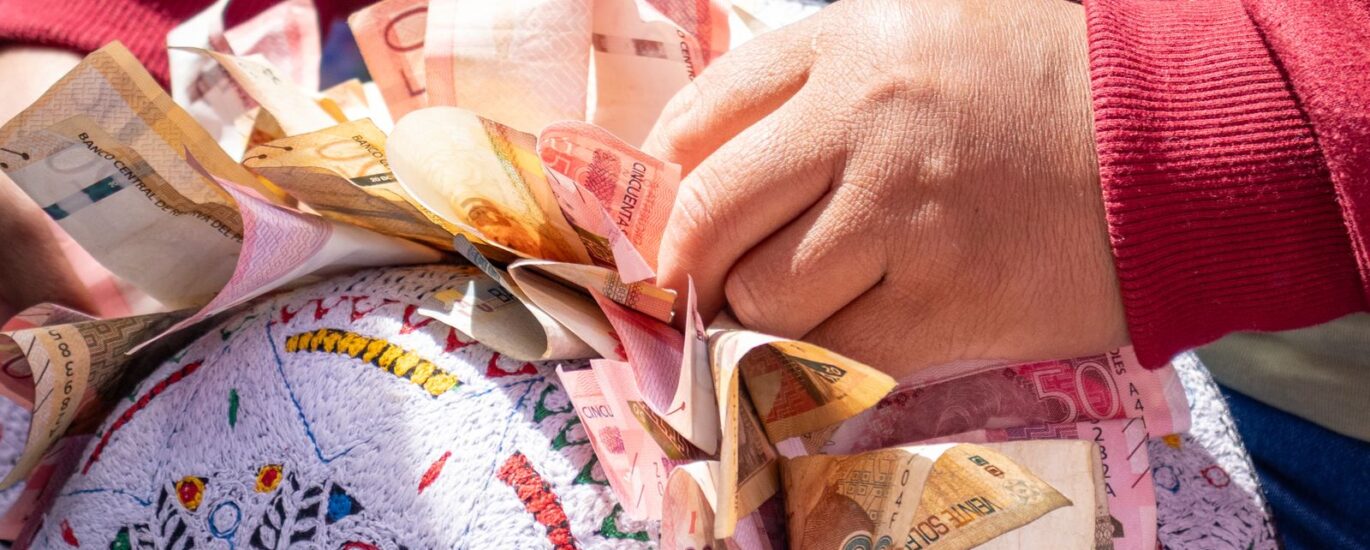
Common coins include 10, 20, and 50 céntimos, plus S/1, S/2, and S/5. Banknotes come in S/10, S/20, S/50, S/100, and S/200. The S/200 note is rarely used, and small shops may not accept it.
Students should keep coins and small notes on hand. Market vendors, snack shops, and taxi drivers often cannot break large bills. A S/10 or S/20 note is the most useful size for daily purchases.
Checking your notes
Peru’s banknotes include security features, and the Central Reserve Bank of Peru explains them on its website. Ask students to look closely at notes they receive as change. If a note looks or feels unusual, they should show it to a group leader.
Money in Peru: How Students Can Pay
Cash
Cash is still common in Peru, especially in markets and small shops. Students should carry a small amount for the day and keep the rest in the hotel safe. A money belt or a zipped inside pocket works well in crowded areas.
Cards
Many restaurants, hotels, and larger stores accept debit and credit cards. Before the trip, families should tell their bank about travel dates. They should also ask about foreign transaction and ATM fees.
ATMs
ATMs are common in cities like Lima and Cusco. Students should use machines inside banks, shopping centers, or hotels. Withdraw cash during the day, with a chaperone or friend nearby. Never accept help from strangers at an ATM.
Bringing U.S. dollars
Some tourist businesses accept U.S. dollars, mainly for larger amounts. Soles are easier for daily use. Peru requires travelers to declare large amounts of cash on arrival and departure. Chaperones can check the U.S. State Department’s Peru page for the current limit.
Tipping in Peru: A Simple Guide
Tipping in Peru is voluntary, but it is appreciated. Amounts are usually modest.
Restaurants
Check the bill first. Some restaurants add a service charge. If service is not included, a tip of 5 to 10 percent is common at sit-down restaurants. At casual spots, rounding up or leaving a few soles is fine. Students can ask, “¿Incluye servicio?” (Is service included?).
Taxis
Tipping taxi drivers is not customary in Peru. Passengers sometimes round up for extra help, such as heavy luggage.
Guides, drivers, and hotel staff
Tipping guides and drivers at the end of a tour is common. Hotel porters often receive a few soles per bag. On a group program, leaders usually explain the tipping plan in advance so students know what to expect.
Paying in soles
Tips are best given in soles. Local staff can use them directly.
Budgeting Tips for Students
- Set a daily budget. Decide with families how much spending money each student needs for snacks, drinks, and souvenirs.
- Split money into two places. Keep a small amount in a day bag and the rest in a secure spot.
- Track spending. A notes app or small notebook helps students see where money goes.
- Practice Spanish. Learn numbers and phrases like “¿Cuánto cuesta?” (How much is it?). Our list of easy Spanish phrases is a good place to start.
- Save ahead. Families can plan spending money months in advance. See our guide on saving money for travel.
What Our Peru Programs Cover
Knowing what is included makes budgeting easier.
Language Immersion in Lima (8 days) includes daily breakfast, one box lunch, one lunch, and three dinners. It also includes an expert tour conductor, transportation, entrance fees for listed activities, 7 nights in Lima, and medical emergencies insurance. Other meals, personal expenses, and tips are not included. Students practice money skills during a market challenge at Mercado #1.
Language Immersion in Cusco (8 days) includes daily breakfast, one lunch, two box lunches, and three dinners. It also includes an expert tour conductor, transportation, entrance fees, local guides, and train and bus tickets to Machu Picchu. Students should budget for meals not listed and for personal purchases.
Schools that want help with group costs can review our school trip fundraising ideas.
FAQ
What currency is used in Peru?
Peru uses the sol (PEN), with the symbol S/. One sol equals 100 céntimos. Banknotes come in S/10, S/20, S/50, S/100, and S/200.
Do you tip in Peru?
Tipping in Peru is voluntary. A tip of 5 to 10 percent is common at sit-down restaurants if no service charge is included. Tipping taxi drivers is not customary.
Should students bring U.S. dollars or soles to Peru?
Soles are easier for daily purchases. Students can withdraw soles from ATMs with a debit card and carry a small amount of cash each day.
Prepare Your Students for Peru
Clear money habits help students travel with confidence and focus on learning. Our Language Immersion in Lima and Language Immersion in Cusco programs give high school groups guided Spanish practice in real settings, from markets to cultural workshops. Fill out our form to learn more.
Start your journey by downloading the Engaged Education Brochure and learn more about our immersive programs in Peru, Spain, and beyond. Interested in creating lasting impact around the world? You can directly assist communities in need by becoming a monthly donor through MEDLIFE’s Moving Mountains initiative.