Picture a large adobe pyramid standing between apartment buildings and busy streets. That is Huaca Pucllana, an archaeological site in the Miraflores district of Lima. It was built long before the Inca Empire. Today it sits in one of the city’s most visited neighborhoods, and many travelers walk past it without knowing its story.
For teachers and students, this site is a useful entry point into Peru’s coastal history. In this guide, you will learn who built Huaca Pucllana and how they built it. You will also see how later cultures used the site, what the on-site museum shows, and how this history connects to Lima culture today. We close with practical notes for groups and a short FAQ.
What Is Huaca Pucllana?
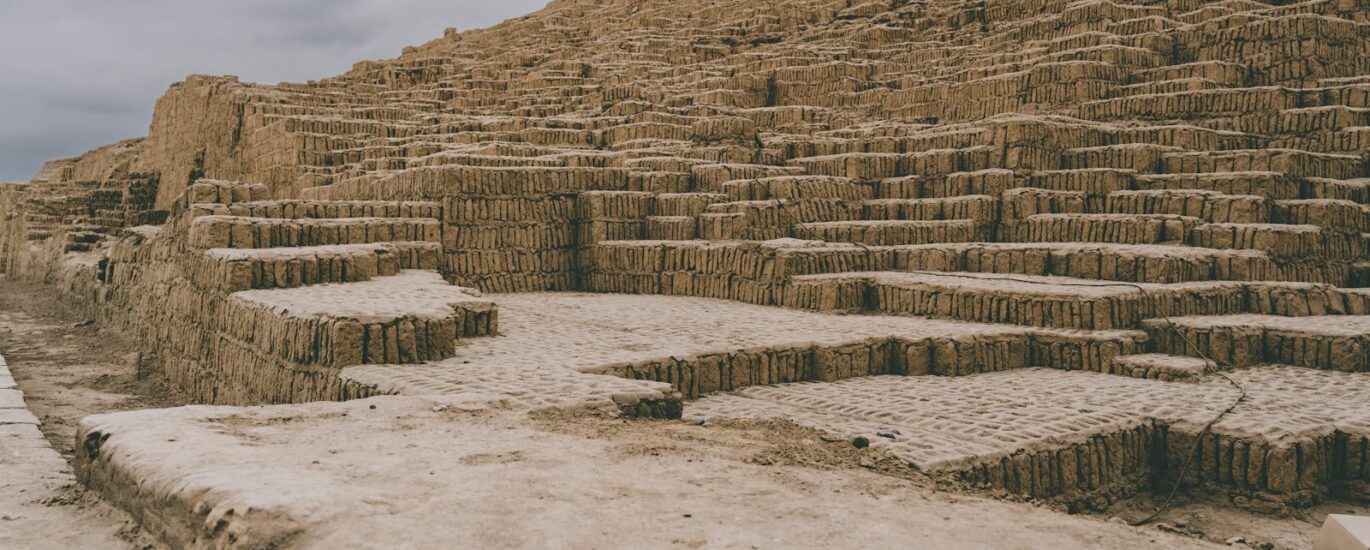
A “huaca” is a sacred place or structure in Andean tradition. Lima has many of them, and Huaca Pucllana is one of the best known. It is a stepped pyramid made of adobe and clay. Its main structure rises about 22 meters. The full complex stretches roughly 500 meters long and 100 meters wide.
The pyramid is built as seven staggered platforms. Many guides translate the name “Pucllana” from Quechua as “place to play.” Researchers believe the site served ceremonial and administrative purposes.
The Lima Culture
The people who built the pyramid belonged to the Lima culture. This society developed on Peru’s central coast between about AD 200 and 700. They lived close to the Pacific and built large adobe structures across the area that is now the capital.
The “Bookshelf” Building Technique
The builders used a method often called the “bookshelf technique.” They placed adobe bricks upright, side by side, like books on a shelf. Small gaps were left between them. According to site guides, this arrangement helped the structure absorb movement during earthquakes. Lima sits in an active seismic zone, so this detail is a good discussion starter for physics or engineering classes.
Huaca Pucllana Through the Centuries
The Lima culture was not the last group to use the pyramid. Over time, other societies left their mark on it.
Wari and Ychsma Periods
The Wari culture, which spread across the Andes between about AD 500 and 1000, used the site after the Lima period. Archaeologists have found Wari remains at the site. Later, the Ychsma people of the central coast also occupied the area. Each layer gives researchers clues about how power and religion changed in the region.
Offerings to the Sea
The Lima culture had a strong connection to the ocean. In one section of the complex, archaeologists found pits that held offerings of fish and other marine life. These offerings were likely made to win the favor of the gods. Excavations also uncovered burials, including a tomb with three adults and a child.
The Site Museum
A small site museum opened in 1984. It displays objects and remains found during excavation and restoration work. Visits are usually guided, and paths lead around and partway up the pyramid. Hours, ticket rules and access to upper areas can change, so check current information with the site before planning a stop.
Lima Culture Today: Why This Site Matters for Students
Huaca Pucllana shows students that Lima’s history did not begin in 1535 with the Spanish founding of the city. Many centuries of coastal civilizations came first. The pyramid also raises real questions about modern cities. How do you protect ancient sites when a city keeps growing? Who decides what gets preserved?
These questions fit well into social studies, world history and Spanish classes. Students can compare adobe architecture with stone construction in the Andes. They can also read about the many huacas still standing across Lima. For a wider view, see our guide to top historical sites in Peru.
If you are building a list of things to do in Lima, Huaca Pucllana is a strong option for families or schools exploring Miraflores on their own time.
Lima Culture on the Engaged Education Language Immersion Program
Our 8-day Language Immersion in Lima program takes place in the same city. Please note that Huaca Pucllana is not part of the program itinerary. The program does include a walk in Miraflores on arrival day, after an orientation and safety overview.
On Day 4, students explore the historic center of Lima with museum visits and the Lugar de la Memoria (LUM). Other days include Spanish classes, a market challenge, a cooking class, the Barranco art district and an Afro-Peruvian music and dance workshop. Students also visit MEDLIFE partner communities to learn about global health while practicing Spanish. A full-day excursion covers the Ballestas Islands and Huacachina. Want more background before you go? Read these interesting facts about Peru.
FAQ
Where is Huaca Pucllana?
Huaca Pucllana is in the Miraflores district of Lima, Peru. It sits inside a residential area, a short distance from the neighborhood’s main streets and parks.
Who built Huaca Pucllana?
The Lima culture built Huaca Pucllana. This society lived on Peru’s central coast between about AD 200 and 700. Later, the Wari and Ychsma cultures also used the site.
Can students visit Huaca Pucllana?
Yes. The site is open to the public with guided visits and has a small museum. Check the site’s current hours and rules before you go, since they can change.
Explore Lima’s History with Your Students
Lima offers students layers of history, from adobe pyramids to colonial plazas, plus daily chances to practice Spanish. Our Language Immersion in Lima program is an 8-day experience designed for high school groups. Fill out our form to learn more.
Start your journey by downloading the Engaged Education Brochure and learn more about our immersive programs in Peru, Spain, and beyond. Interested in creating lasting impact around the world? You can directly assist communities in need by becoming a monthly donor through MEDLIFE’s Moving Mountains initiative.