
Madrid is a strong choice for a school trip to Spain. The historic center is compact. Royal history, major art collections and local neighborhoods sit close together. That makes it easy to plan things to do in Madrid that fit a high school group’s schedule and your curriculum goals.
In this guide, you will find the main sights that work well for student groups, with a short note on what students learn at each one. You will also get practical planning tips for teachers and chaperones. At the end, we explain how Madrid fits into our 10-day Spain program for high schools, so you can see what a structured visit looks like.
Top Things to Do in Madrid for Student Groups
These sights give students a clear picture of Spanish history, art and city life. Most of them sit within walking distance of each other in the center.
The Royal Palace of Madrid
The Royal Palace was built after a fire destroyed the old Alcázar fortress on Christmas Eve 1734. Charles III was the first king to live there, starting in 1764. The palace has 3,418 rooms. Today it is the official residence of the Spanish royal family, and it is used mainly for state ceremonies. It is open to visitors except during official events.
Students can see the Throne Room, with a ceiling fresco by Tiepolo, and the Royal Armoury. On Wednesdays and Saturdays, the Royal Guard holds a Changing of the Guard outside the palace. Check the schedule before you go, because it can be suspended for official events or bad weather.
Plaza Mayor and Puerta del Sol
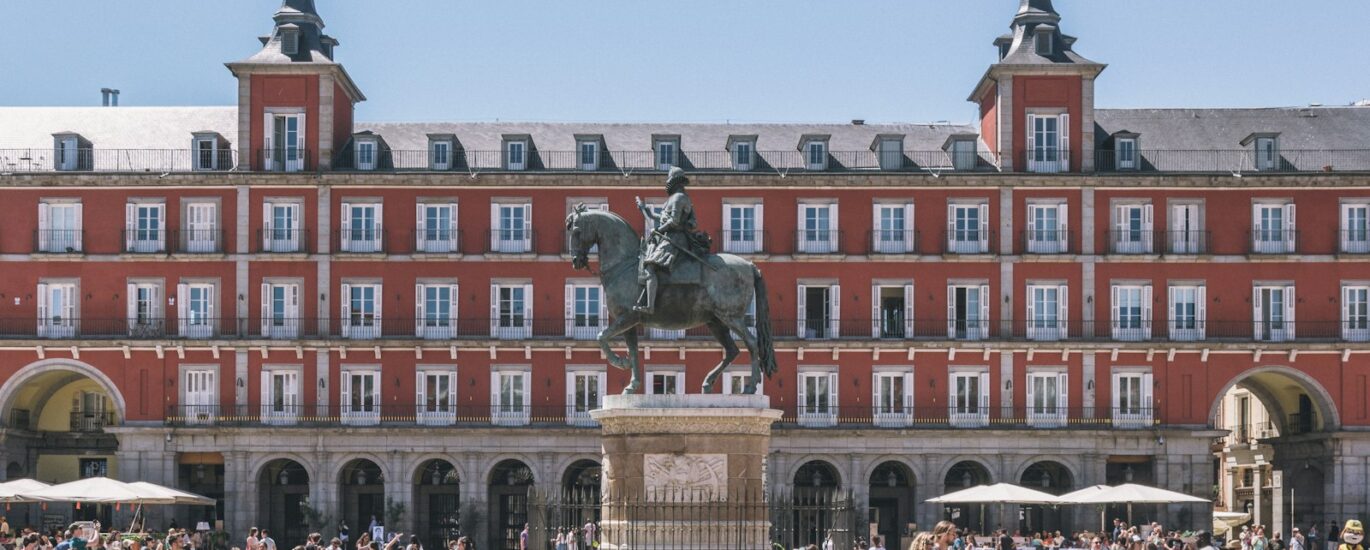
Plaza Mayor is a large arcaded square with an equestrian statue of Philip III at its center. It is a good place to talk about how cities were planned around public squares.
A short walk away, Puerta del Sol holds the Kilometre Zero marker. This stone plaque marks the starting point of Spain’s radial road network. The clock on the Real Casa de Correos leads the national New Year’s Eve countdown, when people eat twelve grapes at midnight. Students also enjoy finding the statue of the Bear and the Strawberry Tree, the symbol of the city.
The Prado Museum
The Prado opened to the public in 1819. Its collection includes Velázquez’s Las Meninas, many works by Goya and Bosch’s The Garden of Earthly Delights. A guided student visit helps groups focus on a few key works. That approach works better for teenagers than trying to see everything.
Retiro Park
Retiro Park covers more than 125 hectares and was once a royal garden. Students can walk to the Great Pond and the Alfonso XII monument, or rent rowboats. The area that includes the Paseo del Prado and Retiro Park was added to the UNESCO World Heritage List in 2021. The park can close during weather alerts, so check local updates on the day.
Neighborhoods, Food and Local Life in Madrid
Monuments tell part of the story. Neighborhoods show how people live in Madrid today.
Lavapiés is one of the city’s most diverse neighborhoods. Its street art gives students a way to discuss migration, identity and public space. Local food markets are another good stop. Students can practice ordering in Spanish, read labels and compare prices and products with home. If you want to prepare them for meals, our guide to tapas and Spanish food culture is a useful pre-trip reading. For quick classroom hooks, share these interesting facts about Madrid before you leave.
Planning Tips for Teachers Visiting Madrid
A good Madrid day balances walking, guided time and rest. These tips help you plan:
- Book timed entries early. Major sites often use timed tickets. Confirm group rules and entry times directly with each site.
- Plan for the heat. Madrid summers are hot. Schedule outdoor visits for the morning and keep water with everyone.
- Adjust to local meal times. Lunch and dinner usually happen later than in the U.S. and Canada. Plan snacks for long afternoons.
- Watch belongings in crowds. Busy squares and the metro attract pickpockets. Ask students to use zipped bags and keep phones off tables.
- Use a buddy system. Assign pairs and set clear meeting points at every stop.
For a broader view of how Spain trips are structured, read our overview of educational tours to Spain.
Madrid in the Spain Global Impact Fellowship 2027
Madrid is the second base of our Spain program, after Barcelona. Groups arrive in Madrid by high-speed train on Day 6 and have free time before dinner.
On Day 7, students take a city tour of Plaza Mayor, Puerta del Sol and the Royal Palace. They then join a guided student visit to the Prado Museum. On Day 8, they take a Lavapiés street art tour and workshop. They also prepare picnic bags for local children with a local NGO. On Day 9, they visit San Cristóbal Market for a project presentation and a team-building activity. Day 10 is the group transfer to Madrid airport.
Daily meals, hotel accommodation, program transportation and guided activities are included. International flights, tips and personal expenses are not.
FAQ
What are the best things to do in Madrid with high school students?
The Royal Palace, Plaza Mayor, Puerta del Sol and the Prado Museum are the core sights. Add a neighborhood visit, such as Lavapiés, and a local market to show daily life.
How many days do students need in Madrid?
Three to four days cover the main sights at a comfortable pace. This leaves time for a guided museum visit, a neighborhood activity and some rest.
Is Madrid good for Spanish language practice?
Yes. Spanish is the main language in Madrid, so students hear it in shops, markets and on the street. Short tasks, like ordering food or asking for directions, give them real practice.
Explore Madrid with Your Students
Madrid gives students royal history, world-class art and real neighborhood life in one compact city. Our Spain Global Impact Fellowship 2027 is a 10-day program in Barcelona and Madrid built for high school groups. Fill out our form to learn more.
Start your journey by downloading the Engaged Education Brochure and learn more about our immersive programs in Spain and beyond. Interested in creating lasting impact around the world? You can directly assist communities in need by becoming a monthly donor through MEDLIFE’s Moving Mountains initiative.