
Students spend months learning Spanish grammar and vocabulary. Then they land in Madrid and realize half the conversation happens with hands, faces, and timing. A greeting goes in for two kisses. A friend taps their elbow. A waiter waits for them to ask for the check.
This guide covers common gestures in Spanish culture and the everyday etiquette students will meet in Spain. It’s written for teachers preparing a group, parents who want to know what to expect, and students who want to feel less lost on day one. You’ll learn how people greet each other, which hand gestures carry meaning, and how social rhythms like mealtimes and conversation shape daily life. Each section includes a simple way to practice before the trip.
How people greet each other in Spain
Greetings are the first place students notice cultural differences. Getting them right helps students feel at ease quickly.
Dos besos: the two-kiss greeting
Among friends and in casual settings, people in Spain often greet with dos besos. This means a light touch of cheeks, first on the right, then on the left. The kiss is usually just a light sound near the cheek. It’s common between women and between men and women. Men who know each other well may hug or shake hands instead.
Students don’t have to greet strangers this way. Program staff will usually model what’s appropriate in each setting. A friendly smile and a handshake are always acceptable for a student meeting an adult for the first time.
The Spanish handshake
In formal situations, such as meeting a museum guide or a partner organization, a handshake is standard. It’s usually brief and firm, with eye contact. Students should say a greeting at the same time, like “Mucho gusto” or “Encantado/Encantada.”
Greetings in Catalonia
In Barcelona, students will hear Catalan alongside Spanish. A simple “Bon dia” (good morning) or “Bona tarda” (good afternoon) is a respectful touch. Using a few Catalan words shows students understand that Spain is home to several languages and regional identities.
Common gestures in Spanish culture
Many gestures in Spain have meanings that surprise English speakers. Here are some students are likely to see.
Gestures students will see often
- Tapping the elbow: In Spain, tapping your elbow with your hand means someone is stingy or cheap. It’s usually said as a joke among friends.
- Pulling down the lower eyelid: Touching the skin under the eye and pulling slightly down means “ojo” — watch out or pay attention.
- Bunching the fingers together: Pressing the fingertips together and moving the hand up and down often means a place is crowded, as in “it was packed.”
- Wobbling a flat hand: A flat hand tilting side to side means “más o menos” — so-so.
- Fanning the hand near the face or shaking it: This can show that something was intense, surprising, or a lot of work.
Gestures to avoid
Some gestures that seem harmless in the U.S. or Canada can come across as rude. The “horns” gesture, made with the index and little fingers raised, can be an insult in Spain. Pointing directly at people is also seen as impolite. Students should point only at objects and use an open hand when they can.
A quick practice activity
Before the trip, show students a short set of gestures without explaining them. Ask them to guess the meaning, then reveal the answer. This works well as a warm-up in Spanish class and gives students a story to share when they see the gesture in Madrid.
Everyday etiquette in Spain
Social rhythms matter as much as gestures. Knowing them helps students avoid awkward moments and enjoy daily life more.
Mealtimes and the sobremesa
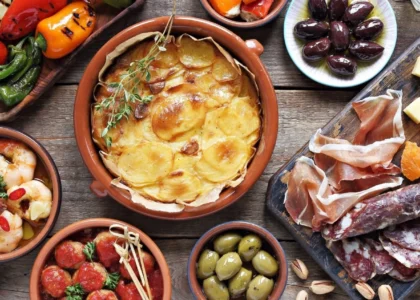
Lunch in Spain is often eaten between 2:00 and 3:30 p.m., and dinner around 9:00 p.m. or later. After a meal, people often stay at the table talking. This time is called the sobremesa. In restaurants, the waiter usually won’t bring the check until you ask. Students can practice saying “La cuenta, por favor.”
Conversation style
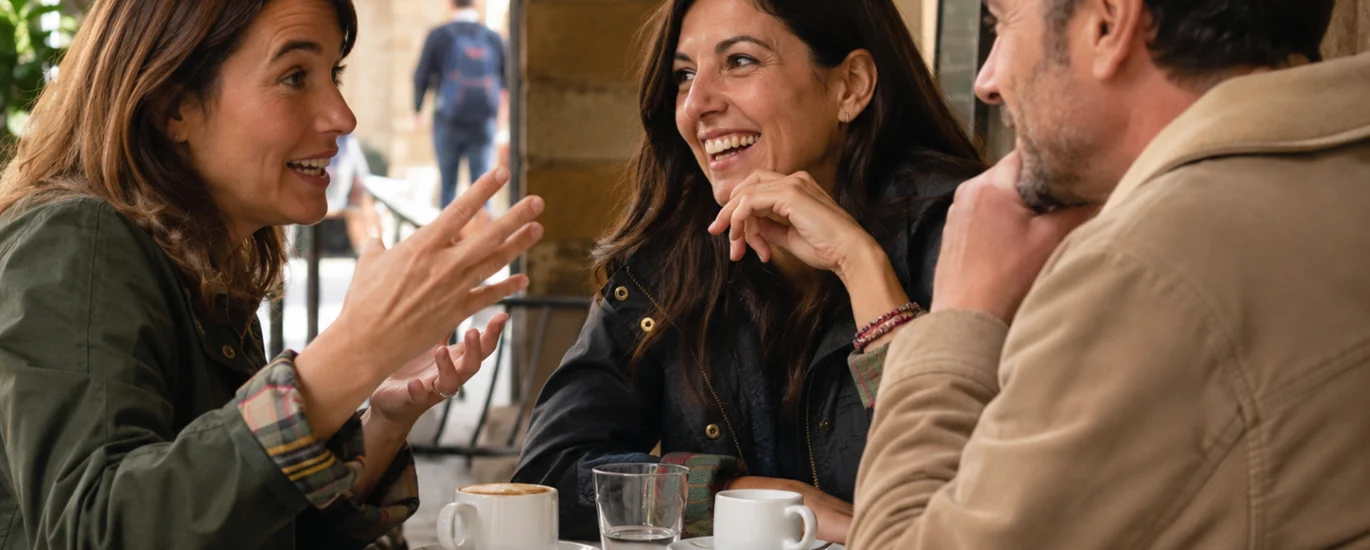
Conversations in Spain can feel loud and fast to visitors. People often talk over each other, and that’s normal in many settings. It usually signals interest in the topic. Students can join in by asking questions and showing curiosity.
Tipping and paying
Tipping in Spain is generally smaller than in North America. Rounding up or leaving small change is common in casual places. Many educational programs include meals in the trip price, so students may not need to handle this often.
Public spaces and churches
Students will visit sites like the Sagrada Familia and the Royal Palace in Madrid. Churches and some monuments ask visitors to cover shoulders and keep voices low. Packing a light layer solves most dress-code issues.
How etiquette fits into an immersion trip
Etiquette is easiest to learn in real situations. On the Barcelona & Madrid Discovery itinerary, students use public transport, visit markets, and take part in community activities. Each of these moments gives them a chance to greet, ask, and respond in Spanish. Our guide to the best immersion program in Spain explains how these activities are built into the trip.
For language prep, pair this guide with our list of easy Spanish phrases. Teachers building the case for a trip may also find why Spanish students should travel helpful.
Prepare your students for real conversations in Spain
Gestures and etiquette help students feel comfortable faster, which means they speak more Spanish. Engaged Education’s Spain program combines guided landmark visits with community activities, public transport, and local meals, all with a dedicated tour leader.
Fill out our form to learn more about our immersion programs in Spain.

FAQ
Do people in Spain greet with two kisses?
Yes, in many casual settings. The dos besos greeting is a light cheek touch on each side, starting on the right. In formal settings, a handshake is more common, and students can always use one.
What does tapping your elbow mean in Spain?
Tapping your elbow means someone is stingy or doesn’t like to spend money. It’s usually playful and used among friends.
What hand gestures are considered rude in Spain?
The “horns” gesture can be offensive, and pointing directly at people is seen as impolite. Using an open hand to indicate something is a safe choice.