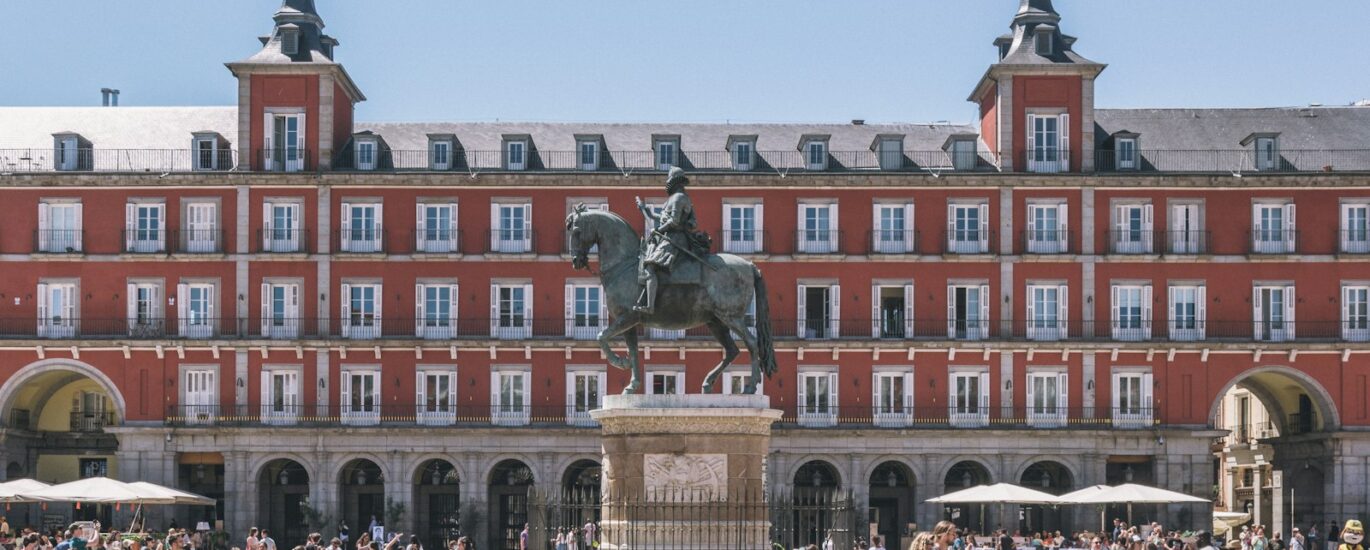
Step through one of its stone archways and the noise of the city fades. Plaza Mayor in Madrid is a large rectangular square surrounded by red buildings, hundreds of balconies and a painted facade. For four centuries, it has hosted markets, royal celebrations, bullfights, trials and festivals. Today, visitors sit at cafés under the arcades and street performers entertain crowds.
This guide explains the history of Plaza Mayor in Madrid and what students should look for during a visit. You’ll learn about its royal origins, the fires that reshaped it and the events that once filled the square. You’ll also find classroom ideas and vocabulary. Plaza Mayor is part of the city tour on day seven of Engaged Education’s Spain Global Impact Fellowship.
The history of Plaza Mayor in Madrid
From market to royal square
Before the square existed, this area outside the old city walls held a busy market called the Plaza del Arrabal. After Madrid became the capital in 1561, the crown wanted a grand central square. Under King Philip III, architect Juan Gómez de Mora designed a new, regular plaza. It was completed in 1619.
A stage for public life
For centuries, Plaza Mayor was Madrid’s main public stage. It hosted:
- Markets selling bread, meat and other goods
- Royal celebrations, including the canonization of Madrid’s patron saint, Isidore
- Bullfights and festivals watched from the balconies
- Trials of the Inquisition, known as autos de fe
- Public executions in earlier centuries
The balconies worked like box seats. Residents could rent their windows to spectators during big events.
Fires and rebuilding
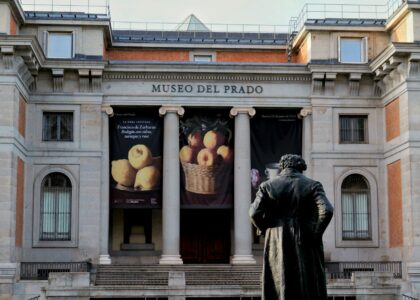
The square burned several times, in 1631, 1670 and 1790. After the last fire, architect Juan de Villanueva rebuilt it. He closed the corners and lowered the buildings, giving the plaza much of its current appearance. Villanueva also designed the building that became the Prado Museum.
What to see in Plaza Mayor
The statue of Philip III
In the center stands an equestrian statue of King Philip III. It was made in the early 17th century and moved to the square in the 19th century.
The Casa de la Panadería
The most decorated building is the Casa de la Panadería, the former bakers’ guild house. Its facade is covered with colorful murals of mythological figures, painted in the 1990s.
The arches
Nine entrances lead into the square. The Arco de Cuchilleros, with its steep steps, is one of the best known. Its name refers to the knife makers who once worked nearby.
Nearby: Mercado de San Miguel
Just outside the square stands the Mercado de San Miguel, an iron and glass market from 1916. Our guide to Spanish food markets describes it.
Seasonal events
In December, Plaza Mayor hosts a popular Christmas market with stalls selling nativity figures, decorations and costumes. A classic local snack in the area is the bocadillo de calamares, a fried squid sandwich.
Teaching Plaza Mayor in class
Classroom ideas
- Then and now: Compare historical engravings of the square with modern photos.
- Role-play: Students describe an event in the square from the point of view of a 17th-century resident.
- Urban design: Discuss why cities build central squares and how they are used today.
- Art study: Describe the Casa de la Panadería murals in Spanish.
Vocabulary
- los soportales: arcades
- el balcón: balcony
- la estatua ecuestre: equestrian statue
- el arco: arch
- el mercado navideño: Christmas market
Plaza Mayor on the Spain Global Impact Fellowship
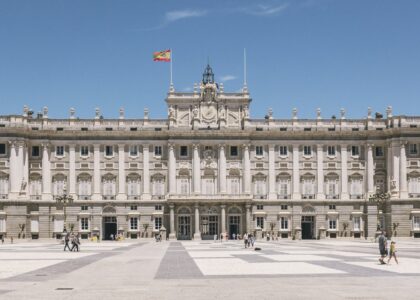
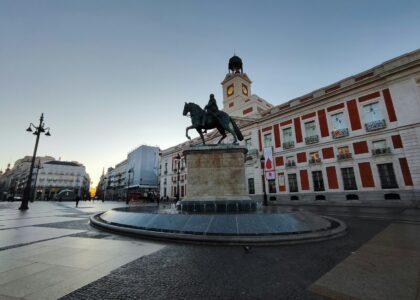
On day seven of Engaged Education’s Spain program, students tour Plaza Mayor, Puerta del Sol and the Royal Palace, then take a guided visit to the Prado. Walking from the square to the palace helps students see how royal power shaped Madrid’s center. Later in the program, they join a Lavapiés street art workshop, prepare picnic bags for local children with an NGO and visit San Cristóbal Market. Read our guide to the Royal Palace of Madrid and our Madrid facts for students to prepare.
Visiting tips
- Meet at the statue. It is an easy landmark for groups.
- Watch belongings. The square is busy with visitors.
- Look up. Many details are on the upper floors and balconies.
FAQ
When was Plaza Mayor in Madrid built?
Plaza Mayor was completed in 1619 under King Philip III. It was rebuilt after a major fire in 1790.
What happened in Plaza Mayor in the past?
The square hosted markets, royal celebrations, bullfights, Inquisition trials and public executions.
What is the painted building in Plaza Mayor?
It is the Casa de la Panadería, the former bakers’ guild house. Its facade has colorful murals painted in the 1990s.
Explore Madrid’s history with your class
Plaza Mayor helps students imagine centuries of public life in one place. Our Spain Global Impact Fellowship 2027 is a 10-day program in Barcelona and Madrid built for high school groups. Fill out our form to learn more.
Start your journey by downloading the Engaged Education Brochure and learn more about our immersive programs in Spain and beyond. Interested in creating lasting impact around the world? You can directly assist communities in need by becoming a monthly donor through MEDLIFE’s Moving Mountains initiative.