A little princess stands in the center of a dark palace room, surrounded by maids, a dog and a painter at work. In the background, a mirror shows two faint figures. Who is the painting really about? Las Meninas, painted by Diego Velázquez in 1656, is one of the most studied works in art history. It hangs in the Prado Museum in Madrid and is a perfect painting for teaching observation, history and Spanish.
This guide explains who appears in Las Meninas, why the mirror has puzzled viewers for centuries and how other artists, including Picasso, responded to it. You’ll find questions, activities and vocabulary for Spanish, art and history classes. Students who prepare this way get much more from seeing the painting in person during a guided visit to the Prado.
Who’s who in Las Meninas
The scene takes place in a room of the old royal palace in Madrid, the Alcázar.
- Infanta Margarita Teresa: The young daughter of King Philip IV, at the center in a light dress.
- The meninas: Two maids of honor. One kneels to offer the princess a drink. The other curtsies.
- Mari Bárbola and Nicolasito Pertusato: Two people with dwarfism who served at court. Nicolasito rests his foot on a large dog.
- A chaperone and a guard: Two figures in the shadows behind the group.
- José Nieto Velázquez: The queen’s chamberlain, standing in a bright doorway at the back.
- Diego Velázquez: The painter himself, holding a brush and palette beside a huge canvas.
- The mirror: At the back, a mirror reflects King Philip IV and Queen Mariana.
On Velázquez’s chest is the red cross of the Order of Santiago. He received the honor in 1659, after the painting was finished, so the cross was added later.
The mystery of the mirror
Viewers have debated Las Meninas for centuries. Some key questions include:
- What is Velázquez painting? The canvas faces away from us. He may be painting the king and queen, the princess or the scene itself.
- Where are the king and queen? The mirror suggests they stand where the viewer stands. That puts us inside the painting.
- Who is the main subject? The princess is at the center, but the painter and the royal couple are also important.
Philosophers and art historians have written whole books about these questions. There is no single correct answer, which makes the painting ideal for discussion.
Why Las Meninas matters
- Technique: Velázquez used loose, quick brushstrokes that look precise from a distance. Later painters, including the Impressionists, admired this.
- Status of artists: By placing himself in the royal scene, Velázquez presented painting as a noble art and himself as a respected member of the court.
- Royal history: The painting shows daily life at the Spanish court during the reign of Philip IV.
Picasso’s response
In 1957, Pablo Picasso studied Las Meninas intensely and created 58 works based on it. He broke the scene into shapes, changed colors and focused on different figures. The series is now held by the Museu Picasso in Barcelona. Comparing Velázquez’s original with Picasso’s versions is a great lesson in how artists learn from each other. Our post on teaching Guernica explores more of Picasso’s work.
Teaching Las Meninas in the classroom
Observation questions
- What do you notice first? Why?
- How many people are looking toward you?
- Where does the light come from?
- What do you think happens a moment later?
Activities
- Tableau vivant: Students recreate the scene with their bodies, then discuss each character’s role.
- Who’s speaking?: Students write a short dialogue in Spanish between two figures in the painting.
- Modern version: Students design a modern Las Meninas set in their school.
- Compare with Picasso: Students compare the original with one of Picasso’s versions.
Vocabulary
- el cuadro: painting
- el espejo: mirror
- la infanta: princess (daughter of a king)
- el pintor: painter
- la luz y la sombra: light and shadow
Seeing Las Meninas on the Spain Global Impact Fellowship
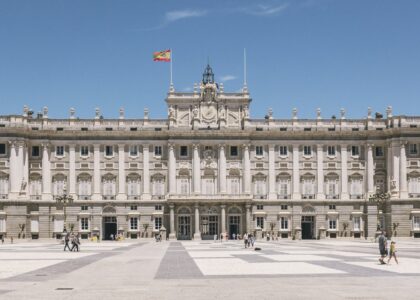
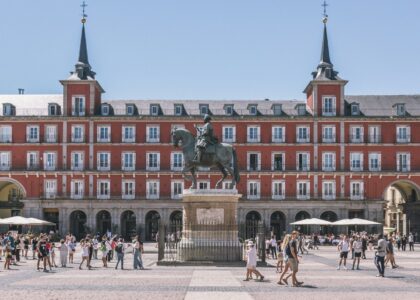
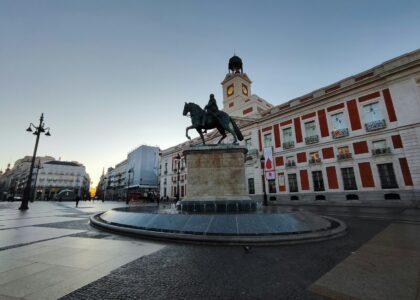
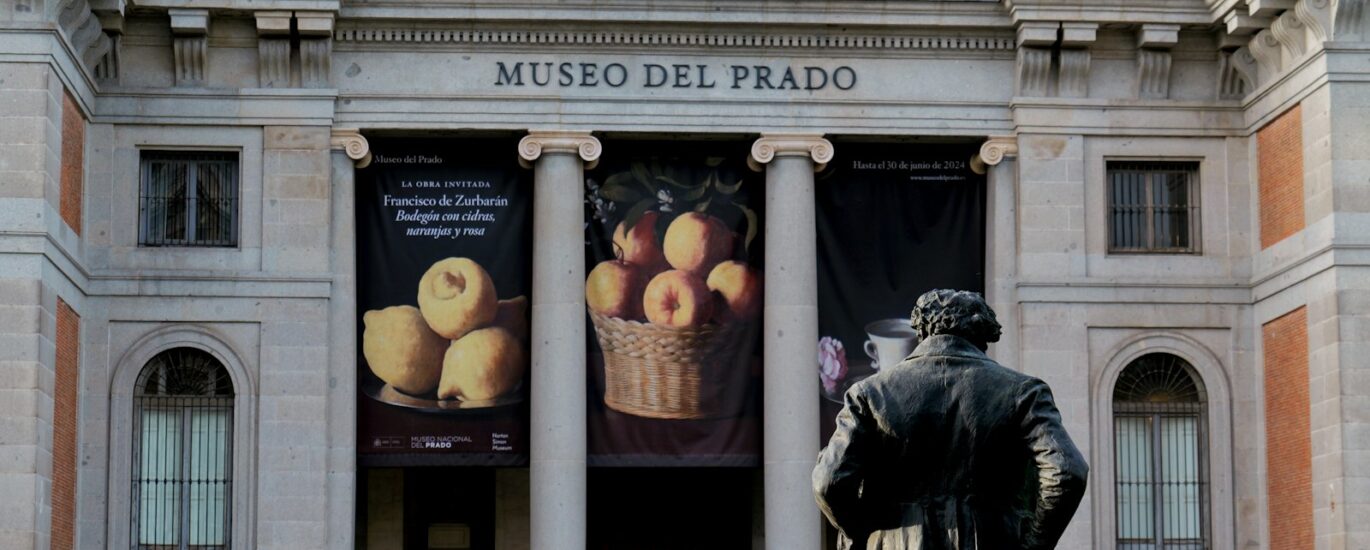
On day seven of Engaged Education’s Spain program, students take a city tour of Plaza Mayor, Puerta del Sol and the Royal Palace. They then take a guided visit to the Prado, where Las Meninas hangs. The Royal Palace stands on the site of the old Alcázar, the palace shown in the painting, which burned in 1734. Our guides to Prado Museum masterpieces and the Royal Palace of Madrid help students prepare.
FAQ
Who painted Las Meninas?
Diego Velázquez, the court painter of King Philip IV of Spain, painted Las Meninas in 1656.
Where is Las Meninas?
Las Meninas hangs in the Prado Museum in Madrid.
Why is Las Meninas so famous?
It is famous for its complex composition, the mirror reflecting the king and queen, Velázquez’s self-portrait and the questions it raises about who is watching whom.
See Velázquez’s masterpiece with your class
Las Meninas turns a single painting into a lesson in history, art and observation. Our Spain Global Impact Fellowship 2027 is a 10-day program in Barcelona and Madrid built for high school groups. Fill out our form to learn more.
Start your journey by downloading the Engaged Education Brochure and learn more about our immersive programs in Spain and beyond. Interested in creating lasting impact around the world? You can directly assist communities in need by becoming a monthly donor through MEDLIFE’s Moving Mountains initiative.