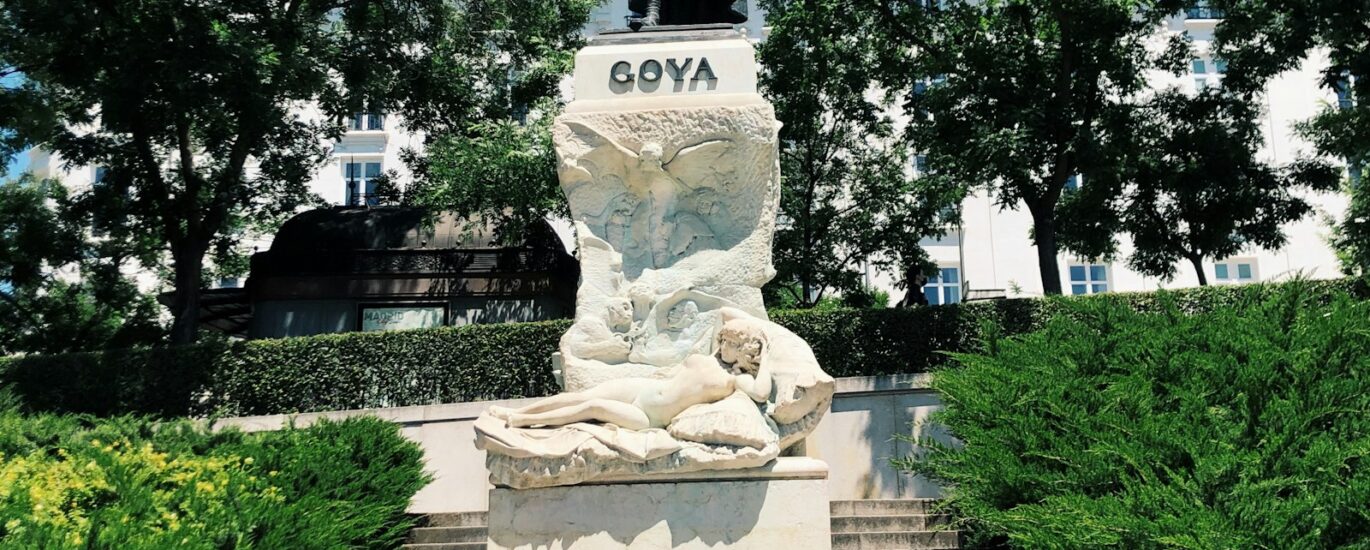
Francisco Goya began his career painting cheerful scenes of picnics and festivals for royal tapestries. He ended it painting dark, haunting images on the walls of his house. In between, he became court painter to the Spanish kings, lost his hearing and recorded the horrors of war like no artist before him. For students, Goya is a doorway into Spanish history, art and the question of what artists owe to the truth.
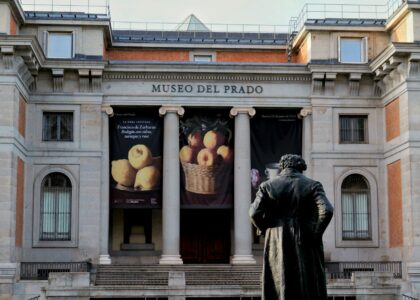
This guide covers Francisco Goya’s life and his most important works, organized by period. You’ll learn how his style changed, why historians call him a bridge between old masters and modern art and how to teach his work in Spanish, history and art classes. The Prado Museum in Madrid holds the largest collection of his paintings, and students see it on Engaged Education’s Spain Global Impact Fellowship.
Francisco Goya’s life
Goya was born in 1746 in Fuendetodos, a small village in Aragon. He trained in Zaragoza, traveled to Italy and settled in Madrid.
His career grew steadily. He designed paintings for the Royal Tapestry Factory, then became a painter to the royal court. In 1799, he was named First Court Painter to King Charles IV.
Around 1792 and 1793, a serious illness left Goya deaf. Many historians see a change in his work after this, as he turned toward more personal and critical subjects.
Goya lived through the French invasion of Spain and the restoration of an absolute monarchy. In 1824, he moved to Bordeaux, France, where he died in 1828.
Goya’s work by period
Tapestry cartoons
Goya’s early designs for tapestries show daily life in Madrid: people playing games, picnicking or dancing. The Parasol is a well-known example. These works are bright and lively.
Royal portraits
As court painter, Goya portrayed the royal family. The Family of Charles IV shows the king, queen and relatives in rich clothes. Goya included himself in the shadows at the back, much as Velázquez did in Las Meninas. Viewers still debate whether he flattered or quietly criticized the royal family.
Los Caprichos
In 1799, Goya published Los Caprichos, a series of 80 prints that criticized superstition, ignorance and corruption. The most famous is The Sleep of Reason Produces Monsters, showing a man asleep at his desk surrounded by owls and bats.
War and the Third of May
In 1808, Napoleon’s troops occupied Spain. On May 2, people in Madrid rose up, and the French responded with executions. In 1814, Goya painted The Second of May 1808 and The Third of May 1808. The second painting shows a man in a white shirt raising his arms before a firing squad. It is one of the most powerful images of war ever painted.
Goya also created The Disasters of War, a series of prints showing violence and suffering on all sides. They were published decades after his death.
The Black Paintings
Late in life, Goya painted dark scenes directly on the walls of his house outside Madrid. These works include Saturn Devouring His Son. They were later transferred to canvas and are now in the Prado.
Why Goya matters
- Truth about war: Goya showed war’s cruelty, influencing later artists, including Picasso in Guernica.
- A modern voice: His personal, expressive style influenced painters such as Édouard Manet.
- Social criticism: His prints used art to question society.
Our post on teaching Guernica shows how Picasso’s work connects to Goya.
Teaching Goya in class
Activities
- Then and now: Compare a cheerful tapestry cartoon with a Black Painting. Ask what may have changed in Goya’s life.
- Caption writing: Students write captions in Spanish for prints from Los Caprichos.
- War and art: Compare The Third of May 1808 with a modern war photograph.
- Role of artists: Debate whether artists should show disturbing truths.
Note that some of Goya’s works are violent or disturbing. Choose images that fit your students’ age and school guidelines.
Vocabulary
- el grabado: print
- el retrato: portrait
- el pintor de cámara: court painter
- la guerra: war
- la sordera: deafness
Seeing Goya on the Spain Global Impact Fellowship
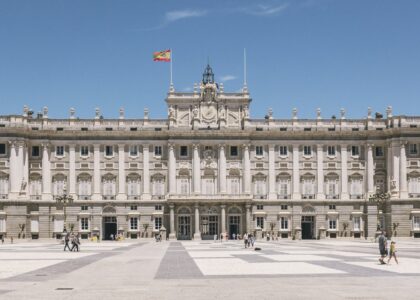
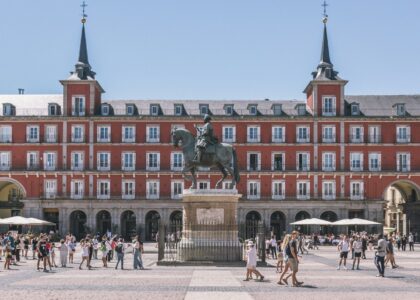
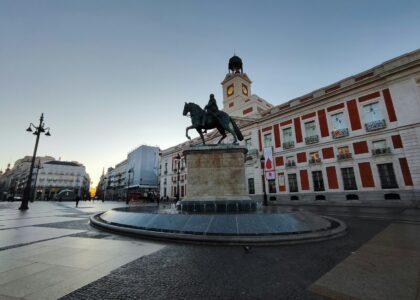
On day seven of Engaged Education’s Spain program, students tour Plaza Mayor, Puerta del Sol and the Royal Palace, then take a guided visit to the Prado Museum. They can see Goya’s royal portraits, The Third of May 1808 and the Black Paintings in one visit. Walking through Puerta del Sol, where the 1808 uprising took place, gives the paintings real context. Our guide to Prado Museum masterpieces and the Royal Palace of Madrid help students prepare.
FAQ
Who was Francisco Goya?
Francisco Goya (1746–1828) was a Spanish painter and printmaker. He served as court painter to King Charles IV and is known for royal portraits, war images and the Black Paintings.
What is Goya’s most famous painting?
The Third of May 1808 is one of his most famous works. It shows French soldiers executing Spanish civilians.
Where can you see Goya’s paintings?
The Prado Museum in Madrid holds the largest collection of Goya’s paintings, including the Black Paintings.
Discover Goya with your students
Goya helps students connect art with Spanish history and big questions about truth and power. Our Spain Global Impact Fellowship 2027 is a 10-day program in Barcelona and Madrid built for high school groups. Fill out our form to learn more.
Start your journey by downloading the Engaged Education Brochure and learn more about our immersive programs in Spain and beyond. Interested in creating lasting impact around the world? You can directly assist communities in need by becoming a monthly donor through MEDLIFE’s Moving Mountains initiative.