The sound of the Andes is unmistakable. Breathy flutes, bright strings and deep drums fill festivals, markets and street corners from Cusco to the Sacred Valley. Andean music instruments carry centuries of history. Some date back thousands of years, and others developed after the Spanish arrived. Together they tell a story of mountains, rituals, community and cultural exchange.
This guide introduces the most important Andean music instruments, how they are played and what they mean in Andean culture. You’ll also find listening and classroom activities for Spanish, music and social studies. On Engaged Education’s Cusco language immersion program, students see Andean music and dance at the Centro Qosqo de Arte Nativo and visit the Sounds of the Andes Interpretation Center, where they learn about clay instruments.
Andean music instruments: winds
Quena
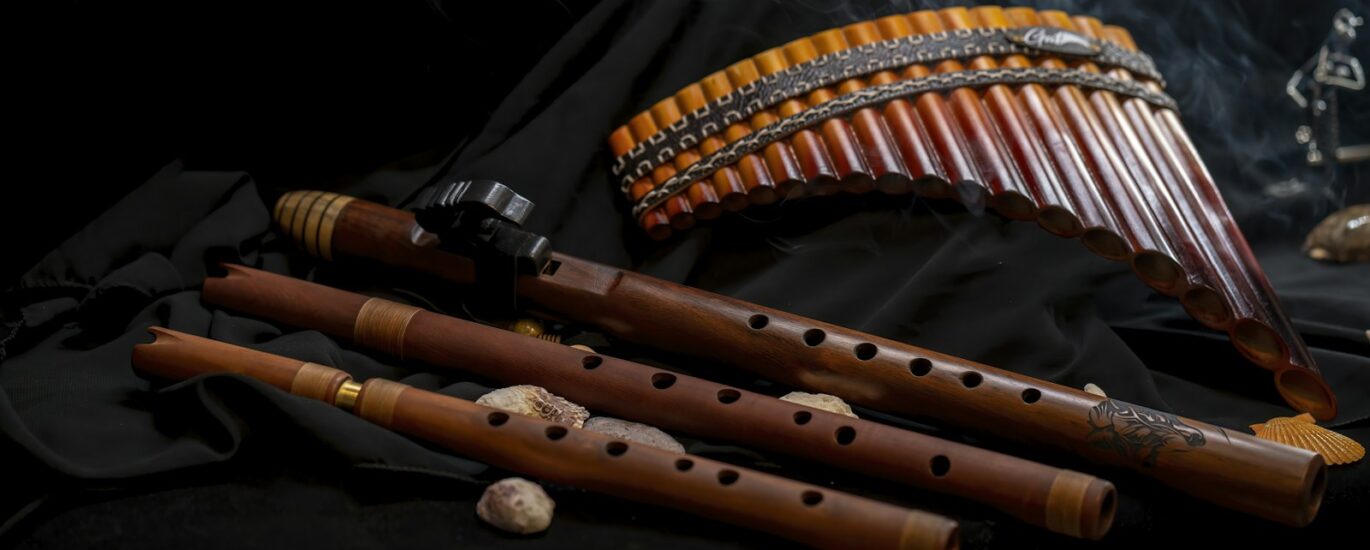
The quena is a notched flute played vertically. Traditionally made from cane, it can also be made from wood or bone. Its soft, breathy sound is one of the signatures of Andean music. Archaeologists have found ancient flutes in Peru made from bone and clay.
Zampoña or siku
The zampoña, also called siku, is a set of panpipes made from cane tubes of different lengths. Each tube plays one note. In many traditions, the notes are split between two players. They alternate quickly to complete a melody, a practice that reflects Andean values of cooperation and balance.
Ocarinas and clay instruments
Clay whistles and ocarinas have a long history in the Andes. Ancient cultures made them in the shapes of animals and people. Some modern artisans and centers keep this tradition alive.
Pinkullo
The pinkullo is a wooden or cane flute played in many Andean festivals, often together with a drum.
String instruments
Charango
The charango is a small instrument similar to a guitar, usually with ten strings in five pairs. It developed after the Spanish introduced string instruments to the Andes. Traditionally, some charangos were made with an armadillo shell as the body. Today, most are made from wood. Its bright, fast sound fills festive music.
Andean harp and violin
The Spanish brought harps and violins to the Andes in the colonial period. Andean musicians adapted them to local styles. Harp and violin players are common in festivals in the southern highlands of Peru.
Percussion instruments
Bombo
The bombo is a large drum made from wood and animal skin. It provides a deep, steady beat in many Andean ensembles.
Tinya
The tinya is a small hand drum, often played by women in traditional ceremonies and harvest festivals.
Chajchas
Chajchas are rattles made from goat or llama hooves tied together. They add a rhythmic, rustling sound.
Afro-Peruvian music from the coast uses other instruments, such as the cajón. Our post on the cajón drum explains that tradition.
Music in Andean culture
Music in the Andes is tied to community life. It accompanies planting and harvest, religious festivals and celebrations. Many songs are sung in Quechua. Some melodies became famous worldwide, such as “El Cóndor Pasa,” composed by Peruvian Daniel Alomía Robles in the early 20th century.
Classroom activities
- Listening map: Play short recordings of a quena, a zampoña and a charango. Students identify each instrument.
- Build a panpipe: Students make simple panpipes with straws of different lengths and explore pitch.
- Cooperation exercise: Two students try to play a simple melody by alternating notes, like siku players.
- Vocabulary: la flauta, el tambor, las cuerdas, tocar, la fiesta, el ritmo.
- Culture connection: Research a festival where these instruments are played.
For more on regional music, see our post on South American music and dance and our guide to Peruvian culture and traditions.
Andean music on the Cusco language immersion program
On day three of Engaged Education’s 8-day Cusco program, students take an interactive Spanish lesson and explore Cusco’s historic center and Inca sites above the city. In the evening, they attend a performance at the Centro Qosqo de Arte Nativo, which presents Andean music and dance. On day five, in the Sacred Valley, students visit the Sounds of the Andes Interpretation Center in Cuyo Chico for a ceramic workshop focused on clay instruments. These experiences let students hear and handle instruments they have studied.
FAQ
What instruments are used in Andean music?
Common Andean instruments include the quena flute, zampoña panpipes, charango, bombo drum, tinya, harp, violin and clay ocarinas.
What is a charango?
A charango is a small Andean string instrument, usually with ten strings. It developed after the Spanish brought string instruments to South America.
Why are zampoñas played in pairs?
In many traditions, a siku melody is split between two players who alternate notes. This reflects Andean values of cooperation.
Hear the Andes with your class
Andean music instruments help students connect sound, history and culture. Our Language Immersion program in Cusco includes a night of Andean music and dance and a workshop on clay instruments. Fill out our form to learn more.
Start your journey by downloading the Engaged Education Brochure and learn more about our immersive programs in Peru, Spain, and beyond. Interested in creating lasting impact around the world? You can directly assist communities in need by becoming a monthly donor through MEDLIFE’s Moving Mountains initiative.