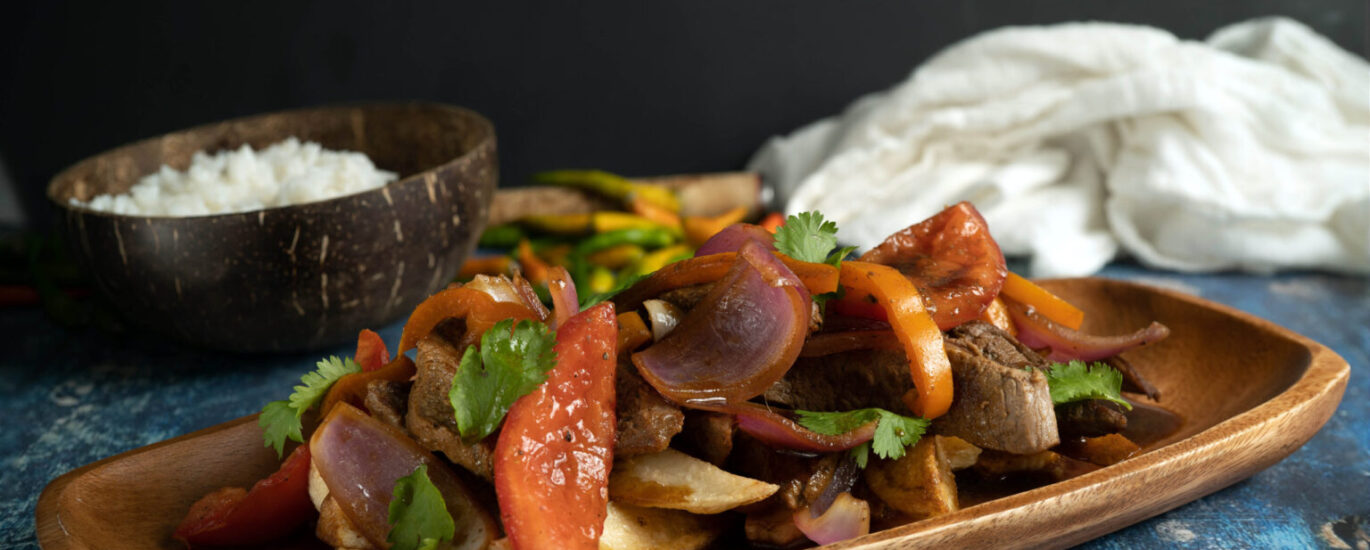
Strips of beef, red onion and tomato hit a smoking hot pan with soy sauce and vinegar. A burst of flame rises. Seconds later, the mixture lands on a plate next to French fries and white rice. Lomo saltado is one of the most popular dishes in Peru, served in homes, neighborhood restaurants and fine-dining spots alike. It also tells a story of immigration and cultural exchange.
This guide explains what lomo saltado is, how it is made and how Chinese immigrants helped shape it. You’ll learn about common variations, including vegetarian versions, and the Spanish vocabulary behind the dish. You’ll also find classroom ideas that connect food with history and migration. Food is a key part of Engaged Education’s Lima and Cusco language immersion programs.
What is lomo saltado?
Lomo saltado is a stir-fried dish made with:
- Beef, usually sirloin, cut into strips
- Red onion and tomato, cut into wedges
- Ají amarillo, a yellow Peruvian pepper
- Soy sauce and vinegar
- Garlic, cumin, salt and pepper
- Fresh cilantro or parsley to finish
The ingredients are cooked quickly over very high heat. Many cooks use a wok and let the flame touch the food briefly, which adds a smoky flavor. The dish is served with French fries, often mixed into the stir-fry or placed on the side, and a mound of white rice.
The name comes from the verb saltear, which means to sauté or stir-fry, and lomo, a cut of beef.
A dish shaped by immigration
Chinese immigrants in Peru
Chinese immigrants began arriving in Peru in 1849, many as contract laborers on coastal plantations. Over time, communities settled in Lima and other cities. They opened restaurants and adapted their cooking to local ingredients. This blend became known as chifa.
Chinese technique, Peruvian ingredients
Lomo saltado shows this exchange clearly. The wok, the high heat and the soy sauce come from Chinese cooking. The ají amarillo, tomatoes, potatoes and the habit of serving rice with almost every meal reflect Peruvian and Spanish traditions. The French fries connect to the Andean potato.
Many Peruvians consider lomo saltado part of comida criolla, the traditional cooking of the Peruvian coast. Others call it a chifa dish. Both views show how deeply Chinese influence has become part of Peruvian cuisine. Our post on Nikkei food and chifa tells more of this story.
Variations of lomo saltado
- Pollo saltado: Made with chicken.
- Tallarín saltado: Stir-fried noodles with meat and vegetables.
- Saltado de verduras: A vegetarian version with mushrooms or mixed vegetables.
- Lomo saltado a lo pobre: Topped with a fried egg and sometimes fried plantain.
Vegetarian students can ask for saltado de verduras at many restaurants.
Vocabulary for the dish
- saltear: to sauté or stir-fry
- el lomo: sirloin
- la cebolla roja: red onion
- las papas fritas: French fries
- el arroz blanco: white rice
- la salsa de soya / el sillao: soy sauce (Peru)
The Peruvian word sillao for soy sauce comes from Chinese, another trace of immigration in Peruvian Spanish.
Classroom ideas
- Ingredient origins: Students research where each ingredient comes from: Asia, Europe or the Americas.
- Migration timeline: Build a timeline of Chinese immigration to Peru and its effects on food.
- Menu writing: Students write a restaurant menu in Spanish with descriptions of lomo saltado and its variations.
- Compare fusion foods: Compare lomo saltado with a fusion dish from the students’ own country.
- Recipe reading: Read a recipe in Spanish and highlight cooking verbs.
For more Peruvian dishes, see our guide to traditional Peruvian food and our tips on ordering food in Spanish.
Food on Engaged Education’s Peru programs
On Engaged Education’s 8-day Lima program, students take a food vocabulary class, complete a market challenge at Mercado #1 and join a cooking class. They also explore Lima’s historic center, close to the city’s Barrio Chino, the heart of chifa. On the 8-day Cusco program, students take a cooking class on day two. Both programs include daily breakfast and several group meals, giving students chances to try Peruvian dishes like lomo saltado.
FAQ
What is lomo saltado?
Lomo saltado is a Peruvian stir-fry of beef strips, red onion, tomato and ají amarillo with soy sauce and vinegar, served with French fries and rice.
Is lomo saltado Chinese or Peruvian?
It is a Peruvian dish with strong Chinese influence. Chinese immigrants brought stir-frying techniques and soy sauce, which blended with Peruvian ingredients.
Is there a vegetarian lomo saltado?
Yes. Many restaurants offer saltado de verduras, a vegetarian version with mushrooms or mixed vegetables.
Taste Peru’s history with your class
Lomo saltado shows students how migration shapes the food we eat. Our Language Immersion programs in Lima and Cusco include cooking classes, market challenges and Spanish lessons. Fill out our form to learn more.
Start your journey by downloading the Engaged Education Brochure and learn more about our immersive programs in Peru, Spain, and beyond. Interested in creating lasting impact around the world? You can directly assist communities in need by becoming a monthly donor through MEDLIFE’s Moving Mountains initiative.