When a world language teacher says a student is “Intermediate Mid,” they are usually using the ACTFL proficiency levels. These levels come from the American Council on the Teaching of Foreign Languages, the main professional organization for language educators in the United States. They describe what learners can actually do with a language in real situations.
This guide explains the ACTFL proficiency levels in plain language. You’ll learn what each major level looks like, the difference between proficiency and performance, how levels are assessed and how teachers can use can-do statements to track progress. We also discuss how real-world experiences, including immersion trips, give students chances to show what they can do. The guide is designed for world language teachers, department leaders and curious families.
What are the ACTFL proficiency levels?
The ACTFL Proficiency Guidelines describe language ability across speaking, writing, listening and reading. ACTFL published an updated edition of the guidelines in 2024. The major levels are:
- Novice
- Intermediate
- Advanced
- Superior
- Distinguished
Novice, Intermediate and Advanced each have three sublevels: Low, Mid and High.
What each level looks like in speaking
Novice
Novice speakers rely mostly on memorized words and phrases. They can name familiar objects, greet people and answer simple questions with single words or short lists. Me llamo Ana. Me gusta el fútbol.
Intermediate
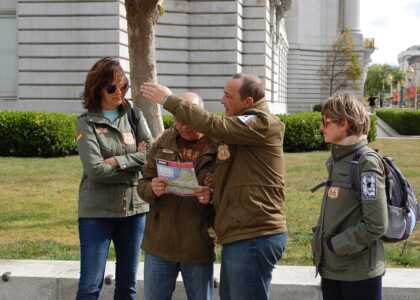
Intermediate speakers can create with the language. They combine words into their own sentences, ask and answer simple questions and handle everyday tasks, such as ordering food or asking for directions. Their speech is mostly in the present and on familiar topics.
Advanced
Advanced speakers can narrate and describe in major time frames, past, present and future, using connected paragraphs. They can handle a situation with an unexpected complication, such as resolving a problem with a hotel room.
Superior
Superior speakers can discuss abstract topics, support opinions and hypothesize. They communicate with accuracy and fluency in formal and informal settings.
Distinguished
Distinguished speakers use language with great skill and cultural awareness, adapting to many audiences and purposes.
Proficiency vs performance
ACTFL distinguishes between two related ideas:
- Performance is what a student can do with language they have practiced, in familiar contexts, such as a unit test on food vocabulary.
- Proficiency is what a student can do in unrehearsed, real-world situations, on a wide range of topics.
Students often perform at a higher level in practiced tasks than their overall proficiency. Both are useful. Performance shows progress within units. Proficiency shows long-term growth.
How proficiency is assessed
Schools and states use several assessments, including:
- The Oral Proficiency Interview (OPI): A structured conversation with a certified tester.
- Computer-based proficiency tests: These measure several skills and report results on the ACTFL scale.
- AP and IB language exams: These are not ACTFL tests, but many teachers relate results to proficiency levels.
Many states use proficiency tests for the Seal of Biliteracy, which commonly recommends at least Intermediate Mid. Our post on the Seal of Biliteracy explains this connection.
Using can-do statements in class
The NCSSFL-ACTFL Can-Do Statements turn the proficiency levels into clear, student-friendly goals. Examples include “I can ask and answer simple questions about my daily routine” or “I can tell a story about a past event.”
Tips for teachers
- Share goals with students. Post can-do statements for each unit.
- Design real tasks. Ask students to do something with language, such as plan a trip or solve a problem.
- Use self-assessment. Students rate themselves on can-do statements and set goals.
- Track growth over time. Collect speaking samples at the start and end of the year.
For more on cultural goals, see our guide to intercultural competence. For exam connections, read about AP Spanish and travel.
Real-world practice and proficiency
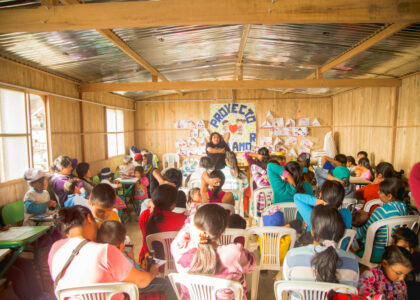
Proficiency grows when students use language in unrehearsed situations. Travel offers many of these moments. On Engaged Education’s 8-day Lima and Cusco language immersion programs, students take Spanish lessons and use them in market challenges, cooking classes and visits to MEDLIFE partner communities. On the 10-day Spain Global Impact Fellowship, students practice Spanish in Barcelona and Madrid during community projects and workshops. Teachers can use these experiences for speaking samples and reflection.
FAQ
What are the ACTFL proficiency levels?
The major levels are Novice, Intermediate, Advanced, Superior and Distinguished. Novice, Intermediate and Advanced each have Low, Mid and High sublevels.
What does Intermediate Mid mean?
An Intermediate Mid speaker can handle everyday conversations on familiar topics, create sentences and ask and answer simple questions.
What is the difference between proficiency and performance?
Performance is what students can do with practiced material in familiar contexts. Proficiency is what they can do in unrehearsed, real-world situations.
Give students real chances to perform
ACTFL proficiency levels help teachers set clear goals and measure growth. Explore our Language Immersion programs in Lima and Cusco and our Spain Global Impact Fellowship 2027. Fill out our form to learn more.
Start your journey by downloading the Engaged Education Brochure and learn more about our immersive programs in Peru, Spain, and beyond. Interested in creating lasting impact around the world? You can directly assist communities in need by becoming a monthly donor through MEDLIFE’s Moving Mountains initiative.