Every March, the city of Valencia fills with giant sculptures, flowers, music and fireworks. Some of the figures stand taller than a house. On the final night, almost all of them are set on fire. This is Las Fallas, one of Spain’s most famous festivals. It combines art, satire, community pride and a lot of noise.
This guide explains what Las Fallas is, how the festival works day by day and where the tradition comes from. You’ll learn the key words students will need, such as ninot, mascletà and cremà. You’ll also find classroom ideas for Spanish, art and social studies. Las Fallas is not part of Engaged Education’s itinerary, but it is a rich topic to study before any trip to Spain.
What is Las Fallas?
Las Fallas is a festival held in Valencia, on Spain’s Mediterranean coast. The main events take place from March 15 to March 19, the feast of Saint Joseph. Preparation lasts all year.
Each neighborhood has a community group called a falla. Members raise money, design and build monuments, organize meals and take part in parades. The word falla also refers to the monument itself.
The monuments and ninots
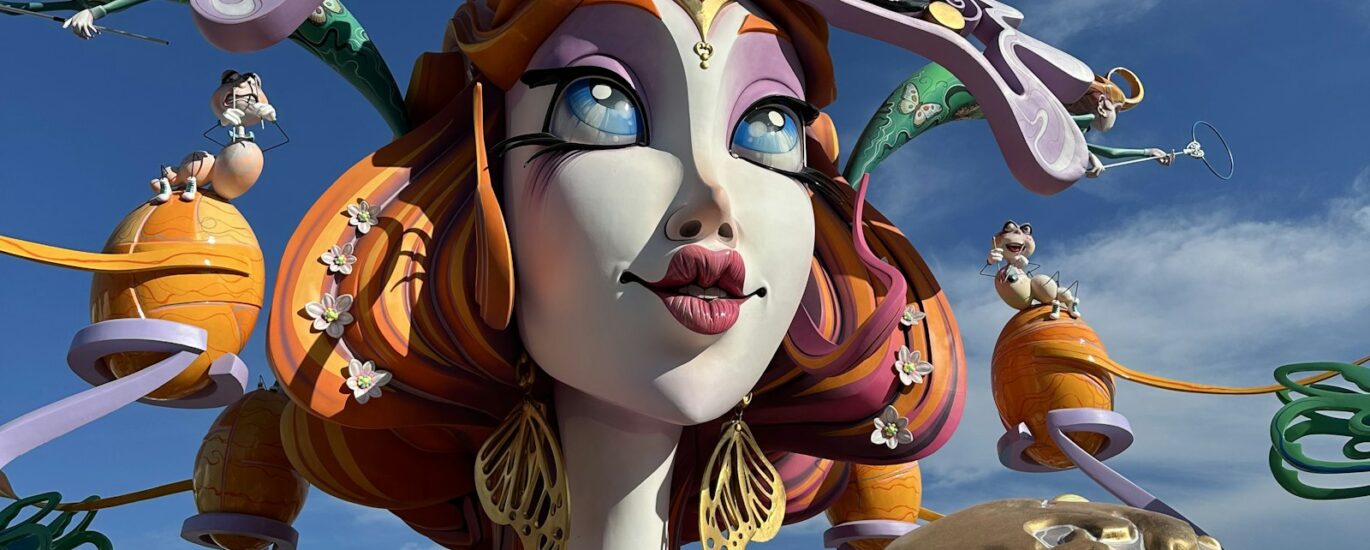
The monuments are huge structures made of wood, cardboard, polystyrene and other materials. They are covered in colorful figures called ninots. Many monuments make fun of politicians, celebrities, social trends or local news. Artists work for months to build them.
UNESCO added the Valencia Fallas festivity to its list of the Intangible Cultural Heritage of Humanity in 2016.
How Las Fallas unfolds
La plantà
The monuments are assembled in streets and squares across the city, usually by March 15. Visitors walk from neighborhood to neighborhood to see them.
La mascletà
Each afternoon at 2 p.m. during the main festival days, a mascletà takes place in the city hall square. It is a powerful show of firecrackers designed for sound and rhythm more than for light. The ground shakes, and the crowd cheers.
La ofrenda
Over two days, thousands of people in traditional dress walk in a parade to offer flowers to the Virgin of the Forsaken, Valencia’s patron. The flowers are used to build a giant floral image of the Virgin in a central square.
La cremà
On the night of March 19, the monuments are burned. Firefighters stand by as the structures go up in flames. The burning symbolizes renewal and the end of winter.
The ninot indultat
Each year, the public votes to save one ninot from the flames. This ninot indultat (“pardoned ninot”) goes to a museum dedicated to the festival.
The history of Las Fallas
Las Fallas likely grew from an old custom. Carpenters in Valencia burned scraps of wood and old items on the feast of Saint Joseph, their patron saint, to mark the arrival of spring. Over time, neighbors began dressing these piles with old clothes to look like people. The figures grew more elaborate and satirical. In the 20th century, the festival became highly organized.
Debates around the festival
Las Fallas brings tourism and jobs to Valencia. It also raises discussions about noise, safety, cost and environmental impact, especially the materials that are burned. Some artists are experimenting with more sustainable materials.
Vocabulary and classroom ideas
Vocabulary
- la falla: the monument, or the neighborhood group
- el ninot: a figure on the monument
- la mascletà: a daytime firecracker display
- la cremà: the burning
- los petardos: firecrackers
- la fallera / el fallero: a festival participant
Classroom activities
- Design a ninot: Students sketch a satirical figure about a school or local issue and explain it in Spanish.
- Compare festivals: Compare Las Fallas with another fire festival or a community celebration students know.
- Debate: Discuss the festival’s environmental impact and possible solutions.
- Timeline: Students create a day-by-day schedule of the festival in Spanish.
For more celebrations, read our guides to Spanish festivals and traditions and castells, Catalonia’s human towers.
Exploring Spanish culture on the Spain Global Impact Fellowship
Las Fallas takes place in Valencia, which is not part of Engaged Education’s Spain program. Students on the Spain Global Impact Fellowship explore Barcelona and Madrid over ten days. They visit the Sagrada Familia, Park Güell and Montserrat, join a tapas cooking class with Mescladis and a Lavapiés street art workshop, and see Madrid’s Royal Palace and the Prado. Learning about regional festivals before the trip helps students understand how diverse Spain’s cultures are.
FAQ
When is Las Fallas?
The main days of Las Fallas are March 15 to March 19 each year, ending on the feast of Saint Joseph.
What happens at Las Fallas?
Neighborhood groups build giant satirical monuments covered in figures called ninots. There are daily firecracker shows, a flower offering and, on the last night, the monuments are burned.
Why do they burn the Fallas?
The burning, called la cremà, symbolizes renewal and the end of winter. It comes from an old custom of burning wood scraps on Saint Joseph’s Day.
Discover Spain’s festival culture
Las Fallas shows students how art, humor and community come together in Spanish traditions. Our Spain Global Impact Fellowship 2027 is a 10-day program in Barcelona and Madrid built for high school groups. Fill out our form to learn more.
Start your journey by downloading the Engaged Education Brochure and learn more about our immersive programs in Spain and beyond. Interested in creating lasting impact around the world? You can directly assist communities in need by becoming a monthly donor through MEDLIFE’s Moving Mountains initiative.