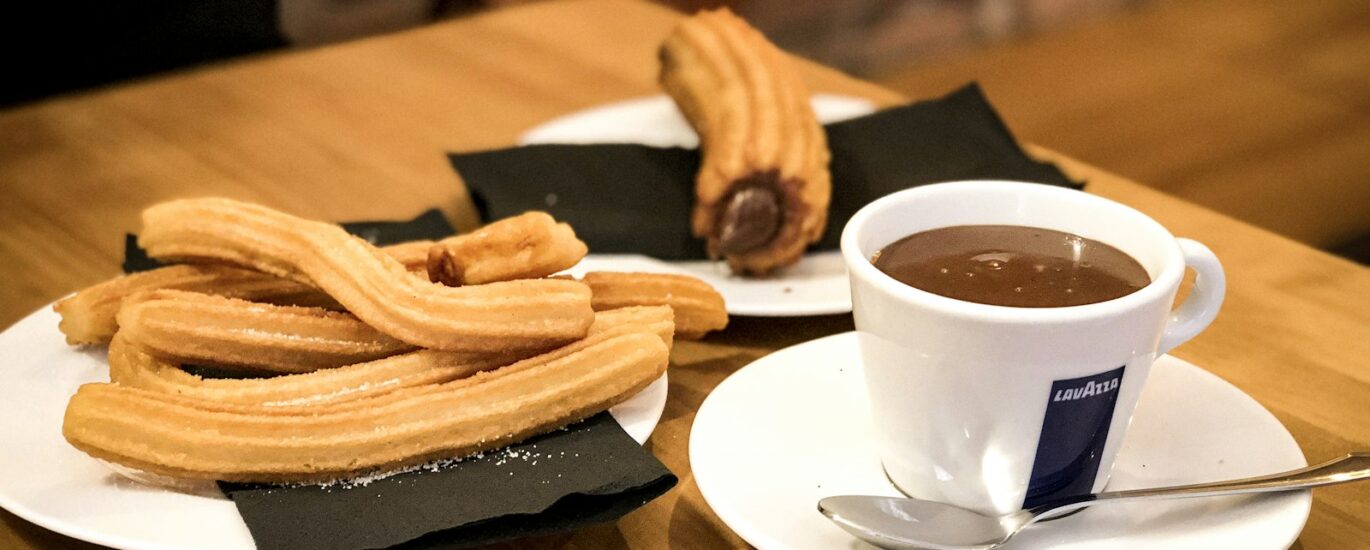
Few foods say “Spain” like a plate of hot churros dipped in thick chocolate. Spaniards eat churros con chocolate for breakfast, as an afternoon snack or in the early hours after a night out. The tradition connects simple fried dough with one of the most important foods to cross the Atlantic: cacao. For students, it is a tasty way into Spanish history, language and daily life.
This guide explains what churros and Spanish hot chocolate are, where the tradition comes from and how Spaniards enjoy it today. You’ll learn the difference between churros and porras, discover how chocolate reached Spain from the Americas and find vocabulary and classroom ideas. We also share where students might see this tradition during a trip to Madrid.
What are churros con chocolate?
Churros
Churros are made from a simple dough of flour, water and salt. The dough is pushed through a star-shaped nozzle and fried in hot oil until crisp. In Spain, churros are usually thin and shaped into loops or sticks. Many Spaniards eat them plain or sprinkled with sugar.
Porras
In Madrid and other regions, people also eat porras, a thicker, fluffier version of churros. Some cafés serve both.
Spanish hot chocolate
Spanish chocolate a la taza is thick, rich and less sweet than many hot chocolates in North America. It is made for dipping. A good cup coats each churro in a thick layer of chocolate. Many cafés serve it in small cups, and some people finish the leftover chocolate with a spoon.
The history behind the tradition
Cacao from the Americas
Cacao comes from Mesoamerica, where peoples such as the Maya and the Mexica prepared it as a drink long before Europeans arrived. After the Spanish conquest of Mexico in the 16th century, cacao reached Spain. Spaniards added sugar and spices such as cinnamon. Drinking chocolate became popular among the nobility and in monasteries, then spread to the rest of society.
Where did churros come from?
The origin of churros is debated. Some stories link them to Spanish shepherds who made fried dough in the mountains. Others suggest a connection with fried dough traditions from Asia brought by Portuguese traders. Historians have not settled the question, which makes it a fun topic for student research.
The chocolatería
By the 19th century, cafés specializing in chocolate, called chocolaterías, had become popular in Spanish cities. One of the best known is the Chocolatería San Ginés in Madrid, near Puerta del Sol, which opened in the 1890s. It remains a favorite with locals and visitors.
How Spaniards enjoy churros today
- Breakfast: Churros with coffee or chocolate are a classic weekend breakfast.
- Merienda: The afternoon snack, often between school and dinner.
- Celebrations: Many people eat churros con chocolate early on New Year’s Day or after late-night celebrations.
- Fairs and festivals: Churro stands are common at town festivals.
Our post on Spain’s daily schedule explains the merienda and other meal times.
Vocabulary and classroom ideas
Vocabulary
- los churros / las porras: churros / thick churros
- mojar: to dip
- el chocolate a la taza: thick hot chocolate
- la merienda: afternoon snack
- freír: to fry
- el azúcar: sugar
Classroom activities
- Food history map: Students trace cacao’s journey from Mesoamerica to Spain.
- Ordering role-play: Students practice ordering at a chocolatería: Una ración de churros y dos chocolates, por favor.
- Origin debate: Groups research and present competing theories about where churros came from.
- Compare snacks: Students compare the merienda with after-school snacks at home.
- Tasting day: If school rules allow, students sample churros and hot chocolate. Check for allergies first.
For more food culture, see our guide to tapas in Spain and our tips on ordering food in Spanish.
Food on the Spain Global Impact Fellowship
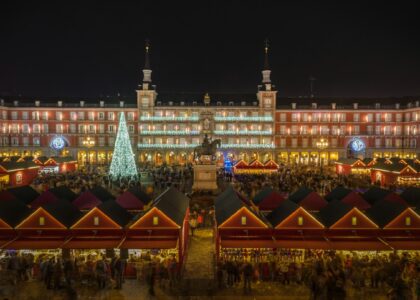
Engaged Education’s Spain program includes breakfast, lunch and dinner every day. Students share a welcome dinner featuring regional cuisine in Barcelona and join a hands-on tapas cooking class with Mescladis, a social organization. In Madrid, they tour Puerta del Sol and Plaza Mayor, close to some of the city’s best-known chocolaterías, and visit San Cristóbal Market. Specific food stops depend on the daily schedule, so teachers can ask the group leader about tasting opportunities during free moments.
FAQ
What is churros con chocolate?
It is a Spanish snack of fried dough sticks, called churros, served with thick hot chocolate for dipping.
When do Spaniards eat churros con chocolate?
Spaniards eat them for breakfast, as an afternoon snack and after late-night celebrations, such as early on New Year’s Day.
What is the difference between churros and porras?
Porras are a thicker, fluffier version of churros, popular in Madrid and other parts of Spain.
Taste Spanish culture with your class
Churros con chocolate connect food, history and everyday Spanish life. Our Spain Global Impact Fellowship 2027 is a 10-day program in Barcelona and Madrid built for high school groups. Fill out our form to learn more.
Start your journey by downloading the Engaged Education Brochure and learn more about our immersive programs in Spain and beyond. Interested in creating lasting impact around the world? You can directly assist communities in need by becoming a monthly donor through MEDLIFE’s Moving Mountains initiative.