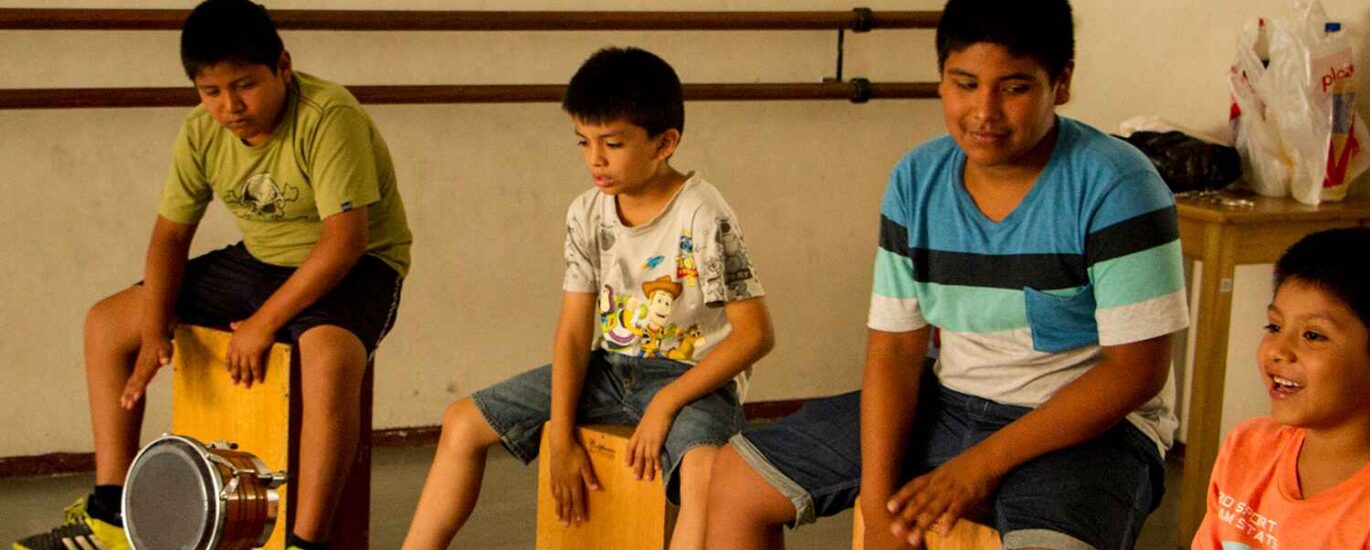
The cajón drum looks simple. It is a wooden box that a musician sits on and plays with bare hands. Yet this box carries a long history of resistance, creativity, and community on Peru’s coast. Today it is heard in Afro-Peruvian music, Peruvian waltz, flamenco, and pop.
This guide is for teachers and students who want to understand the instrument before a trip to Lima. You will learn where the cajón came from, how it is built and played, and how it spread beyond Peru. You will also find classroom ideas and see how our Lima program introduces Afro-Peruvian music through a music and dance workshop.
Where the Cajón Drum Came From
The cajón developed among enslaved people of African origin on Peru’s coast during the colonial period. Historians describe several possible origins. Some accounts say musicians adapted wooden shipping crates and drawers. Others link the cajón to colonial restrictions on African drums. A wooden box could be played without drawing attention.
The singer Susana Baca has shared her mother’s description of the cajón as “the box of the people who carried fruit and worked in the ports.” That line connects the instrument to everyday labor on the coast.
Peru abolished slavery in 1854. Afro-Peruvian music continued to grow in the decades after. In 1969, the ensemble Perú Negro was founded, and it helped bring the cajón to wider audiences. In 2001, Peru’s National Institute of Culture declared the cajón part of the nation’s heritage.
For a broader look at coastal history, food, and dance, read our post on Afro-Peruvian music and traditions.
How the Cajón Peruano Is Built and Played
The parts of the instrument
A traditional cajón peruano has five sides made of fairly thick wood. The front panel, called the tapa, is a thinner sheet of plywood. This is the striking surface. A round sound hole is cut in the back panel to let the sound out.
Playing technique
The player sits on top of the box and leans slightly forward. Hitting the center of the tapa with a flat palm produces a deep bass tone. Striking near the top edge with the fingers produces a sharper, higher slap. Musicians combine these two sounds to create rhythm patterns. Some players also tap the sides of the box.
Afro-Peruvian music styles that use the cajón
The cajón is central to festejo, a lively Afro-Peruvian dance rhythm. It also accompanies coastal styles such as tondero, zamacueca, and the Peruvian waltz. In many groups, the cajón plays alongside guitar, quijada (a donkey jawbone percussion instrument), and voice.
From Lima to the World
In the 1970s, the Spanish flamenco guitarist Paco de Lucía visited Lima and heard the cajón. He brought one back to Spain. Within a few years, the cajón became a standard part of flamenco percussion. Today, many people outside Peru know the instrument through flamenco or acoustic pop.
Peru also celebrates the cajón at home. June 4 is the Day of Afro-Peruvian Culture. It honors the birthday of Nicomedes Santa Cruz, a poet and musician who worked to preserve Afro-Peruvian traditions.
Classroom ideas before the trip
- Listen to a festejo recording and a flamenco recording. Ask students to compare the role of the cajón in each.
- Build a simple rhythm in class using desks or boxes, with bass and slap tones.
- Research one Afro-Peruvian musician, such as Susana Baca, Eva Ayllón, or Nicomedes Santa Cruz.
- Write three questions to ask workshop instructors in Lima.
The Cajón and Our Lima Language Immersion Program
Our 8-day Language Immersion in Lima program includes an Afro-Peruvian Music and Dance Workshop. It takes place on Day 5, after a Spanish lesson focused on art vocabulary and a visit to the Barranco art district. Students meet local artists, take a graffiti tour, and then learn about Afro-Peruvian rhythms and dance in a hands-on setting.
The rest of the program builds context around that experience. Students explore Lima’s historic center, visit museums and the Lugar de la Memoria (LUM), and practice Spanish in markets and cooking classes. They also visit MEDLIFE partner communities to learn about global health while using their Spanish. Our guide to things to do in Lima shows more of what the city offers student groups.
After the trip, a structured debrief helps students connect the workshop to what they studied. See our tips on student travel reflection for ideas.
FAQ
What is a cajón drum?
A cajón is a box-shaped percussion instrument from Peru’s coast. The player sits on it and strikes the front panel with the hands to produce bass and slap tones.
Where did the cajón originate?
The cajón originated among Afro-Peruvian communities on Peru’s coast during the colonial era. Peru declared it part of the nation’s heritage in 2001.
How did the cajón become part of flamenco?
Flamenco guitarist Paco de Lucía heard the cajón in Lima in the 1970s and brought one to Spain. It soon became a common instrument in flamenco groups.
Bring Afro-Peruvian Music Into Your Spanish Program
The cajón gives students a direct, hands-on link to Afro-Peruvian history and coastal culture. Our Language Immersion in Lima program combines Spanish lessons with guided cultural workshops, including Afro-Peruvian music and dance. Fill out our form to learn more.
Start your journey by downloading the Engaged Education Brochure and learn more about our immersive programs in Peru, Spain, and beyond. Interested in creating lasting impact around the world? You can directly assist communities in need by becoming a monthly donor through MEDLIFE’s Moving Mountains initiative.