Spanish festivals are a natural fit for the language classroom. They come with stories, music, food and vocabulary that students remember. They also show how different each region of Spain can be. A fire festival in Valencia and a book festival in Barcelona tell very different stories about local identity.
This guide covers five Spanish traditions that work well in high school lessons. For each one, you will find the key facts, where and when it happens, and a classroom idea. We also explain how to connect these lessons to travel planning. Use the guide to build a unit, plan a cultural day or prepare students before a trip to Spain.
Five Spanish Festivals to Teach
Las Fallas in Valencia
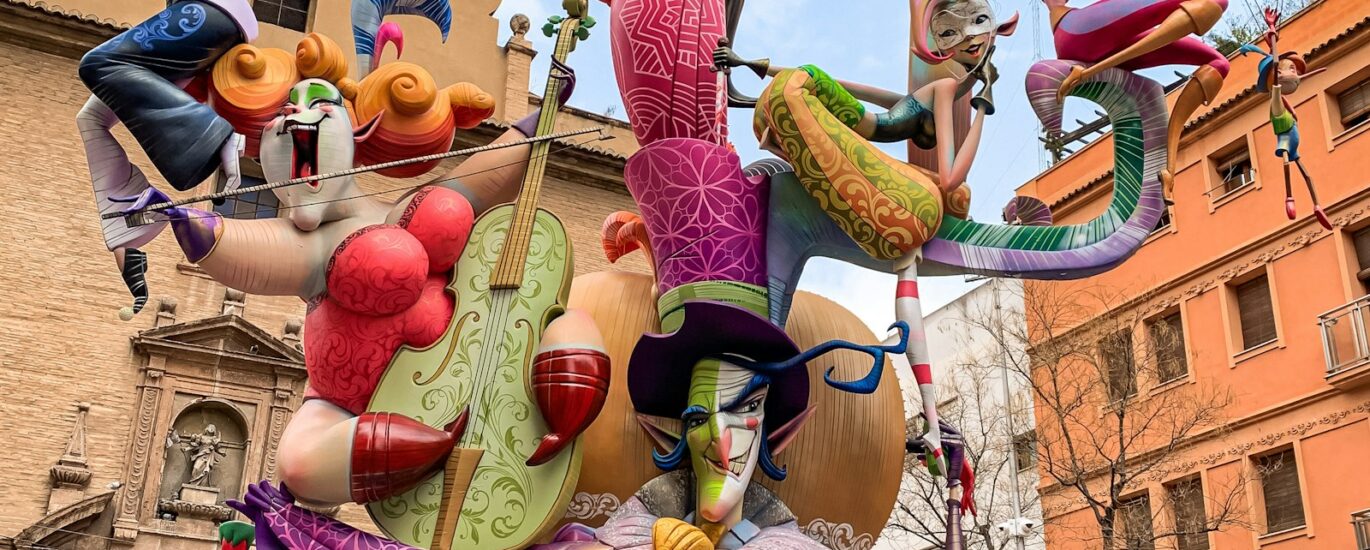
Las Fallas takes place in Valencia in mid-March and ends on March 19, Saint Joseph’s Day. Neighborhood groups and artists build large satirical monuments called “fallas.” Each one is made of figures called “ninots.” On the final night, known as La Cremà, the monuments are burned. Each year, one ninot is pardoned by public vote and kept in the city’s Fallero Museum. UNESCO added Las Fallas to its list of Intangible Cultural Heritage of Humanity in 2016.
Classroom idea: Students design their own satirical ninot about a school topic and present it in Spanish.
La Tomatina in Buñol
La Tomatina is a tomato fight held in Buñol, a town in Valencia province, on the last Wednesday of August. It began in 1945 during a local parade. The fight lasts about one hour. Today, participation requires a ticket, and the event is capped at about 20,000 people.
Classroom idea: Use La Tomatina to teach the preterite. Students retell the 1945 origin story in the past tense.
Semana Santa
Semana Santa, or Holy Week, runs from Palm Sunday to Easter Sunday. Catholic brotherhoods called “cofradías” carry religious sculptures through the streets on floats called “pasos.” Celebrations differ by city. Seville and Málaga are known for their scale. Cities in Castilla y León, such as Zamora and Valladolid, are known for more solemn processions.
Classroom idea: Compare Holy Week traditions in Spain with spring celebrations students know. Focus on respectful, accurate description.
Sant Jordi in Catalonia
Sant Jordi is celebrated every April 23 in Catalonia. People exchange books and roses. The book tradition began in the early 20th century, when Barcelona booksellers chose the date to honor Miguel de Cervantes and William Shakespeare. UNESCO later named April 23 World Book and Copyright Day.
Classroom idea: Hold a class book exchange. Students write a short recommendation in Spanish for the book they bring.
Castells: Human Towers
Castells are human towers built by community groups, mostly during festivals in Catalan towns. The towers rise six to ten levels. Adults form the base, and children climb to the top. Musicians play a wind instrument called the gralla to set the rhythm. UNESCO recognized castells as Intangible Cultural Heritage in 2010.
Classroom idea: Use castells to discuss teamwork and trust. Students describe each level of the tower using Spanish vocabulary for body parts and positions.
Teaching Spanish Traditions With Context
Festivals are easy to turn into fun facts. They work best in class when students also learn the history and meaning behind them.
Tips for Teachers
- Start with the region. Show students where each festival takes place on a map of Spain.
- Teach the vocabulary. Words like “falla,” “paso,” “cofradía” and “castell” carry cultural meaning.
- Respect religious traditions. Present Semana Santa as a living practice for many families.
- Use primary sources. Official city and tourism sites often have photos and videos.
- Connect to students’ lives. Ask what local festivals or traditions exist in their own community.
These lessons support experiential learning even before students travel. Our article on learning by doing offers more ideas. For festivals beyond Spain, see our guide to cultural festivals in Europe.
A Note on Travel Timing
Large festivals bring heavy crowds, higher demand for transport and lodging, and changing local rules. Groups that want to attend one should check official city sources well in advance. Many teachers choose to study festivals in class and plan trips around the school calendar.
From Classroom Traditions to Spain
Learning about Spanish festivals gives students context for daily life in Spain. Our 10-day Spain program in Barcelona and Madrid focuses on culture, language and community engagement. It does not include festival attendance.
In Barcelona, students visit the Sagrada Familia and Park Güell, travel to Montserrat and join a tapas cooking class at Mescladis, a social organization that provides training and job opportunities to refugees, immigrants and people with disabilities. In Madrid, they tour the Royal Palace and Plaza Mayor, visit the Prado Museum and take a street art tour and workshop in Lavapiés. Our article on why Spanish students should travel explains more.
FAQ
What are the most famous Spanish festivals?
Well-known Spanish festivals include Las Fallas in Valencia, La Tomatina in Buñol, Semana Santa across the country and Sant Jordi in Catalonia. Each reflects the history and identity of its region.
When is La Tomatina?
La Tomatina takes place on the last Wednesday of August in Buñol, in Valencia province. Participation requires a ticket.
Which Spanish festivals are recognized by UNESCO?
Las Fallas of Valencia was added to UNESCO’s Intangible Cultural Heritage list in 2016. Catalonia’s human towers, or castells, were added in 2010.
Bring Spanish Culture to Life for Your Students
Studying Spanish festivals helps students understand the regions and people behind the language. Our Spain Global Impact Fellowship 2027 is a 10-day program in Barcelona and Madrid built for high school groups. Fill out our form to learn more.
Start your journey by downloading the Engaged Education Brochure and learn more about our immersive programs in Spain and beyond. Interested in creating lasting impact around the world? You can directly assist communities in need by becoming a monthly donor through MEDLIFE’s Moving Mountains initiative.