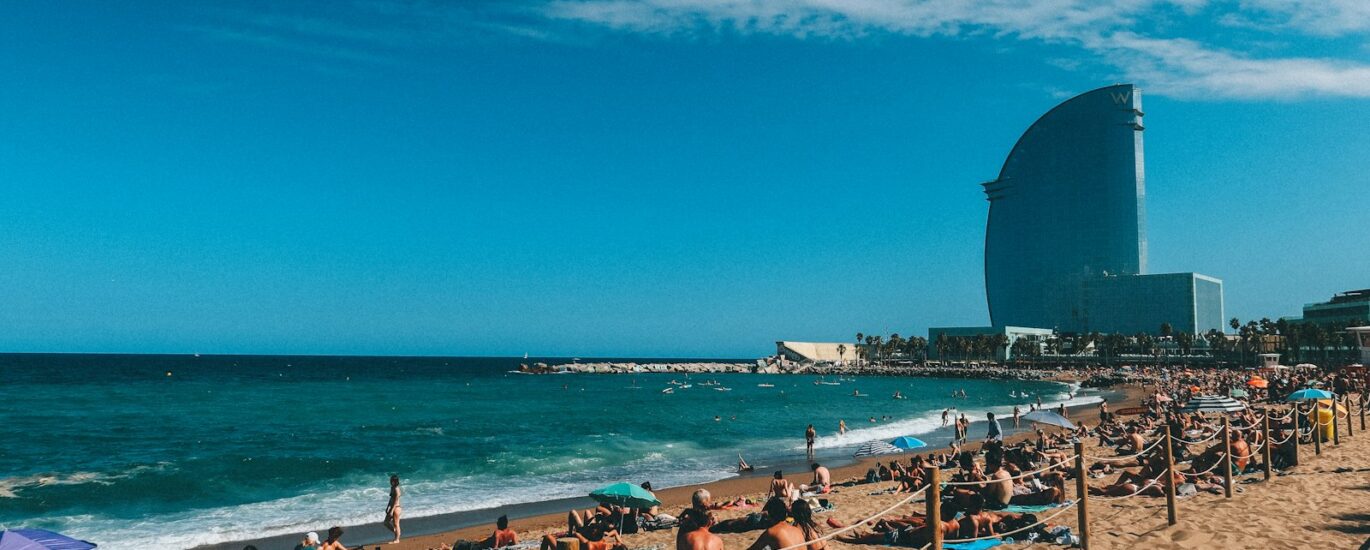
Today, Barceloneta Beach is one of the busiest spots in Barcelona. Joggers, cyclists, families and visitors share the boardwalk along the Mediterranean. Fifty years ago, the scene looked very different. Much of the city’s coast was lined with factories, rail tracks and warehouses. The story of how Barcelona reopened its waterfront is a great lesson in history, urban planning and the effects of tourism.
This guide covers the history of the Barceloneta neighborhood, the transformation of the beaches for the 1992 Olympic Games and the public art students can spot along the way. You’ll also find classroom ideas and safety tips. The waterfront is part of a guided bike tour on Engaged Education’s Spain Global Impact Fellowship.
The history of Barceloneta
A neighborhood built after a siege
In 1714, Barcelona fell to Bourbon troops at the end of the War of the Spanish Succession. The new rulers built a large fortress, the Ciutadella, in the Ribera neighborhood. Thousands of residents lost their homes.
In the mid-18th century, authorities built a new neighborhood on land near the port to house displaced families. This was Barceloneta, “little Barcelona.” It had a regular grid of narrow streets and long, low buildings. It was one of the first planned neighborhoods in the city.
A fishing and working-class quarter
For two centuries, Barceloneta was home to fishermen, sailors and port and factory workers. Small apartments were often divided again as the population grew. Residents developed a strong local identity, with neighborhood festivals and seafood traditions that continue today.
How Barceloneta Beach was transformed
Barcelona turns toward the sea
For much of the 20th century, industry, railways and wastewater outlets cut Barcelona off from its beaches. The beaches near Barceloneta were used, but many stretches of coast were polluted or hard to reach.
The 1992 Olympic Games
When Barcelona won the bid to host the 1992 Summer Olympics, the city used the event to rebuild its coast. Industrial areas were cleared, sand was added to create new beaches and a seafront promenade was built. The Olympic Village and Port Olímpic were developed nearby. Many people consider this project one of the clearest examples of a city using a major event to change its urban landscape.
Tourism and its effects
Today, the beaches attract millions of visitors. Tourism supports jobs and businesses. It has also raised concerns about rents, crowding and the loss of local character in Barceloneta. Residents have organized to protect their neighborhood. This debate gives students a real example of how tourism affects communities.
What to see along the waterfront
- L’Estel Ferit: A sculpture of stacked rusted metal cubes by artist Rebecca Horn, created for 1992. It recalls the small beach shacks that once stood on the sand.
- The Golden Fish: A large fish-shaped sculpture by architect Frank Gehry near Port Olímpic, also built for the Olympics.
- Port Vell: The old port, with boats, a wooden pedestrian bridge and views of the city.
- The promenade: The passeig marítim links several beaches and is popular with cyclists.
Teaching Barceloneta in the classroom
Classroom ideas
- Map comparison: Show students a map of Barcelona’s coast before and after 1992. Ask what changed.
- Debate tourism: Students take the roles of residents, business owners, visitors and city officials.
- Urban planning: Discuss how major events like the Olympics can reshape cities.
- Spanish and Catalan words: la playa, el paseo marítimo, el puerto and the Catalan la platja.
For more about the city, see our fun facts about Barcelona.
The waterfront on the Spain Global Impact Fellowship
On day five of Engaged Education’s Spain program, students join a guided bike tour of Barcelona’s waterfront, including Barceloneta Beach. Riding along the promenade lets students see how the city meets the sea and connect what they see to the history above.
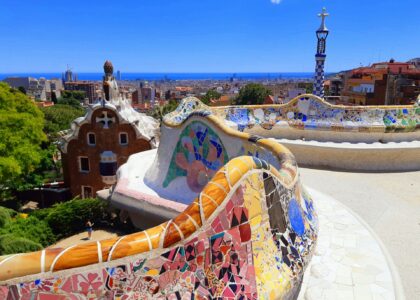
Earlier in the program, students tour the historic center, visit the Sagrada Familia, Park Güell and Montserrat and join a tapas cooking class with Mescladis. They then take the high-speed train to Madrid. Our guide to Barcelona safety for student groups has practical advice.
Safety tips for the beach and bike tour
- Follow the guide’s route and bike rules.
- Keep valuables secure. Busy beaches attract pickpockets.
- Use sun protection and drink water.
- Swim only when allowed and where lifeguards are present.
FAQ
When was Barceloneta built?
Barceloneta was built in the mid-18th century to house families displaced by the construction of the Ciutadella fortress after 1714.
Why did Barcelona’s beaches change for the 1992 Olympics?
The city cleared industrial areas, added sand and built a promenade, the Olympic Village and Port Olímpic to reconnect Barcelona with the sea.
Is Barceloneta Beach safe for students?
Barceloneta Beach is a busy public area. Students should stay with their group, protect belongings and follow lifeguard and guide instructions.
Explore Barcelona’s coast with your class
Barceloneta helps students see how history, sport and tourism shape a city. Our Spain Global Impact Fellowship 2027 is a 10-day program in Barcelona and Madrid built for high school groups. Fill out our form to learn more.
Start your journey by downloading the Engaged Education Brochure and learn more about our immersive programs in Spain and beyond. Interested in creating lasting impact around the world? You can directly assist communities in need by becoming a monthly donor through MEDLIFE’s Moving Mountains initiative.