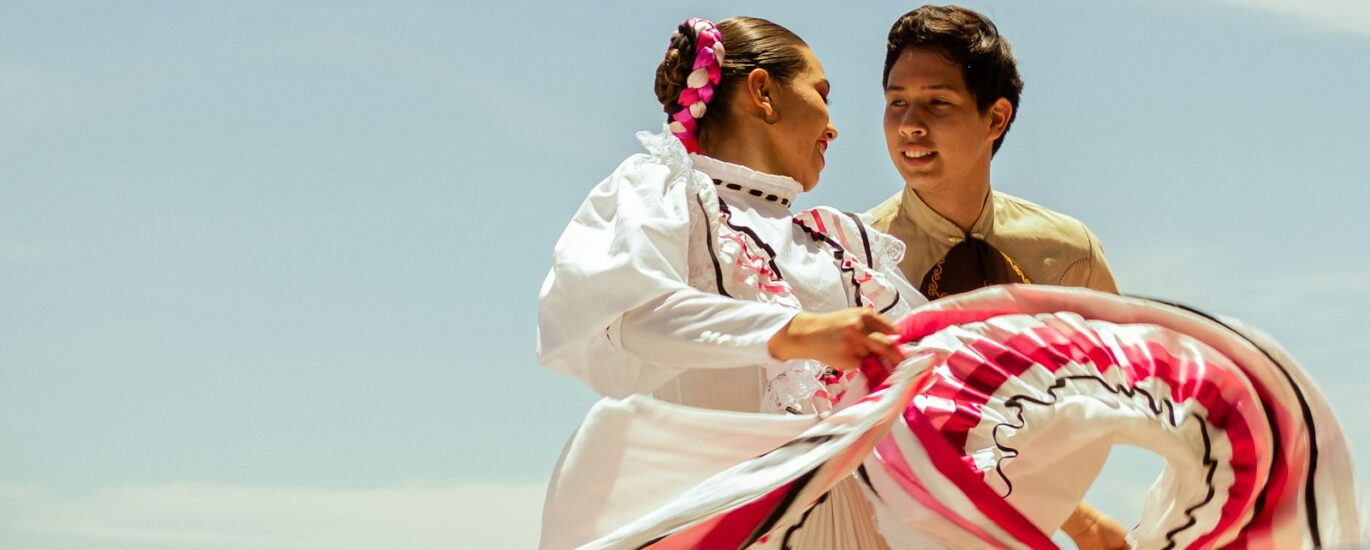
A couple circles each other, white handkerchiefs waving in the air. The woman’s skirt swirls. The man follows her steps with confidence. Guitars, a cajón and voices keep the rhythm. This is the marinera, often called Peru’s national dance. It is elegant, flirtatious and full of energy, and it brings together Spanish, African and Andean influences.
This guide explains the history of the marinera dance, its main regional styles and the symbols behind its movements. You’ll learn about the famous national contest in Trujillo and how Peruvians celebrate the dance today. You’ll also find classroom activities for Spanish, music and physical education. Students on Engaged Education’s Lima program join an Afro-Peruvian music and dance workshop that connects to this tradition.
What is the marinera dance?
The marinera is a couple dance performed with handkerchiefs, called pañuelos. It represents a courtship. The man pursues and impresses the woman, who responds with grace, playfulness and independence. The dancers never touch. They communicate through steps, glances and the movement of the handkerchiefs.
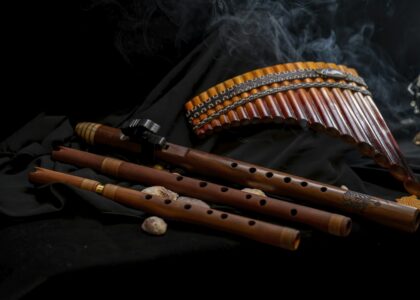
Typical music includes guitars, the cajón and sometimes brass bands, depending on the region. Singers often call out to the dancers. A performance usually has several parts, and the music speeds up toward the end. Dancers train for years to master the footwork, called zapateo, and the timing of the handkerchief movements.
The history of the marinera
Colonial roots
The marinera developed on Peru’s coast from older dances that blended Spanish, African and Indigenous traditions. In the 19th century, a popular couple dance in Peru and its neighbors was called the zamacueca.
A new name
During the War of the Pacific (1879–1884), Peru fought Chile. The writer Abelardo Gamarra proposed the name marinera to honor the Peruvian navy, the Marina de Guerra. The new name helped turn the dance into a symbol of national identity.
National recognition
Peru declared the marinera part of its national cultural heritage in 1986. The country celebrates a national day of the marinera every October 7.
Regional styles
Marinera limeña
The Lima style is slower, more refined and closely tied to música criolla from the capital. It often follows strict musical structures and includes sung verses.
Marinera norteña
The northern style, especially from Trujillo, is fast and energetic. Women often dance barefoot on hot ground, and men may wear wide straw hats and ponchos. This is the style most people picture when they think of marinera.
Marinera serrana
The highland style incorporates Andean rhythms and sometimes slower tempos. Dancers may wear traditional highland clothing, such as layered skirts and woven shawls. This style shows how the marinera adapted as it traveled from the coast into the Andes.
The Trujillo contest
Every January, the northern city of Trujillo hosts a national marinera contest. Dancers of all ages compete in categories, and the city fills with performances and parades. In some shows, a rider on a Peruvian Paso horse dances with a woman on foot, a style linked to northern traditions.
Teaching the marinera in class
Classroom activities
- Watch and describe: Show videos of marinera limeña and marinera norteña. Students describe the differences in Spanish.
- Handkerchief basics: Teach a simple handkerchief wave and walking pattern, if the class is comfortable.
- History link: Discuss how a dance became a national symbol during a war.
- Music analysis: Identify instruments like the guitar and cajón.
- Compare dances: Compare marinera with another courtship dance, such as flamenco sevillanas or a folk dance from the students’ own culture.
Vocabulary
- bailar: to dance
- el pañuelo: handkerchief
- la pareja: couple, partner
- el zapateo: footwork
- descalza: barefoot
- el concurso: contest
For background on coastal traditions, read about Afro-Peruvian culture and the cajón drum. For a European comparison, see our flamenco history guide.
Music and dance on the Lima program
On day five of Engaged Education’s 8-day Lima program, students take a Spanish lesson on art terms and explore the Barranco art district. They also join an Afro-Peruvian music and dance workshop. The workshop introduces coastal rhythms and instruments that shaped dances like the marinera. Other highlights include a market challenge and cooking class, MEDLIFE partner community visits, Lima’s historic center and the Ballestas Islands and Huacachina excursion.
FAQ
What is the marinera dance?
The marinera is a Peruvian couple dance performed with handkerchiefs. It represents a courtship and is often called Peru’s national dance.
Why is it called marinera?
The name was proposed during the War of the Pacific to honor the Peruvian navy, the Marina de Guerra.
Where is the national marinera contest held?
The national marinera contest is held every January in Trujillo, a city on Peru’s northern coast.
Bring Peruvian dance into your classroom
The marinera helps students connect music, movement and Peruvian history. Our Language Immersion program in Lima includes an Afro-Peruvian music and dance workshop. Fill out our form to learn more.
Start your journey by downloading the Engaged Education Brochure and learn more about our immersive programs in Peru, Spain, and beyond. Interested in creating lasting impact around the world? You can directly assist communities in need by becoming a monthly donor through MEDLIFE’s Moving Mountains initiative.