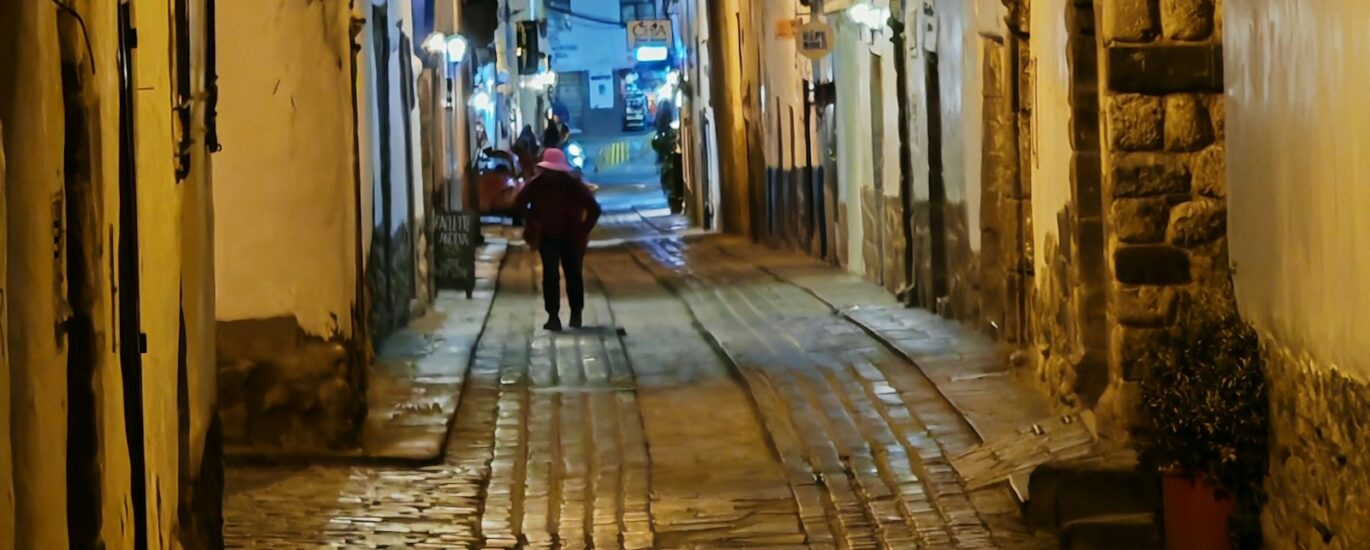
Christmas in Peru looks different from a snowy North American holiday. In Lima, it falls in summer, and families may head to the beach. In Cusco, it arrives during the rainy season, when the Plaza de Armas fills with a giant market of handmade nativity figures. Across the country, people share mugs of thick hot chocolate and slices of a sweet bread called panetón.
This guide explains the main traditions of Christmas in Peru, from December gatherings to Christmas Eve at midnight and Three Kings Day. You’ll learn about Andean nativity scenes, the Santurantikuy market in Cusco and the custom of chocolatadas. You’ll also find vocabulary and classroom activities. These traditions are a rich topic for Spanish classes in December and a good way to prepare students for life in Peru.
Christmas in Peru: the season
Summer on the coast, rain in the Andes
Peru is in the Southern Hemisphere. In December, Lima and the coast enjoy warm, sunny weather. In the highlands, including Cusco, December is part of the rainy season. This means Christmas traditions often mix indoor celebrations with outdoor markets and parades.
Chocolatadas
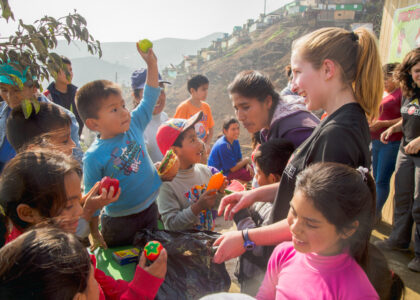
During December, communities, schools, churches and organizations host chocolatadas. These gatherings serve hot chocolate and panetón, often to children. They are a familiar part of the season in many neighborhoods.
Panetón
Peruvians love panetón, a tall, sweet bread with candied fruit and raisins, based on the Italian panettone. Families give boxes of panetón as gifts, and many companies give them to employees. It is often eaten with hot chocolate, even on warm days.
Christmas Eve and Christmas Day
Nochebuena
Christmas Eve, Nochebuena, is the main celebration. Families gather for a late dinner. Common dishes include roast turkey or pork, tamales, salads and applesauce. Many families attend a late mass, the Misa de Gallo.
Midnight
At midnight, families exchange hugs and toast with hot chocolate. Fireworks often light up the sky in cities. Many children open gifts right after midnight.
Christmas Day
December 25 is usually a calmer day for rest, visits and leftovers.
Andean traditions in Cusco
Nativity scenes
Peruvian nativity scenes, called nacimientos, often include Andean details. Shepherds may wear ponchos and chullos, and llamas or alpacas may stand beside the manger. Artisans from places such as Ayacucho and Cusco are known for these crafts.
The Niño Manuelito
In Cusco, a popular figure is the Niño Manuelito, a representation of the Christ Child in Andean style. Families dress and care for their figures and may take them to be blessed.
Santurantikuy
On December 24, Cusco’s Plaza de Armas hosts the Santurantikuy, a large market where artisans sell nativity figures, carvings, ceramics and other crafts. The name comes from Quechua and refers to the buying and selling of saints. Families come to buy figures for their nativity scenes and to enjoy the atmosphere.
After Christmas
On December 28, Peru celebrates the Day of the Holy Innocents with pranks. The season ends around January 6, the Epiphany, when some families take down their nativity scenes in a celebration called Bajada de Reyes.
Vocabulary and classroom activities
Vocabulary
- la Nochebuena: Christmas Eve
- el nacimiento: nativity scene
- el panetón: sweet Christmas bread
- el chocolate caliente: hot chocolate
- los fuegos artificiales: fireworks
- el regalo: gift
Activities
- Compare holidays: Students compare a Peruvian Christmas with their own holiday traditions.
- Seasons map: Discuss why Christmas is in summer in Lima.
- Design a nativity: Students design an Andean-style nativity scene and describe it in Spanish.
- Recipe reading: Read a Peruvian hot chocolate recipe in Spanish.
For more about Peruvian customs, see our guide to Peruvian culture and traditions and our post on Corpus Christi in Cusco.
Experiencing Peruvian culture on a language immersion trip
Christmas is not part of Engaged Education’s itinerary, and program dates vary. Students on the 8-day Cusco program still explore the Plaza de Armas, Cusco Cathedral and the city’s historic center, and attend a performance of Andean music and dance. On the Lima program, students join a market challenge, a cooking class and an Afro-Peruvian music workshop. Both programs include Spanish lessons and visits to MEDLIFE partner communities. Our guide to Cusco’s Plaza de Armas describes the square where Santurantikuy takes place.
FAQ
How is Christmas celebrated in Peru?
Peruvians celebrate with chocolatadas, panetón, a late Christmas Eve dinner, a midnight toast, fireworks and nativity scenes with Andean details.
What is Santurantikuy?
Santurantikuy is a large craft market held on December 24 in Cusco’s Plaza de Armas, where artisans sell nativity figures and crafts.
What do Peruvians eat at Christmas?
Common foods include roast turkey or pork, tamales, panetón and hot chocolate.
Explore Peruvian traditions with your class
Christmas in Peru helps students see how faith, climate and Andean culture shape a holiday. Our Language Immersion programs in Cusco and Lima combine Spanish lessons with cultural visits and community activities. Fill out our form to learn more.
Start your journey by downloading the Engaged Education Brochure and learn more about our immersive programs in Peru, Spain, and beyond. Interested in creating lasting impact around the world? You can directly assist communities in need by becoming a monthly donor through MEDLIFE’s Moving Mountains initiative.