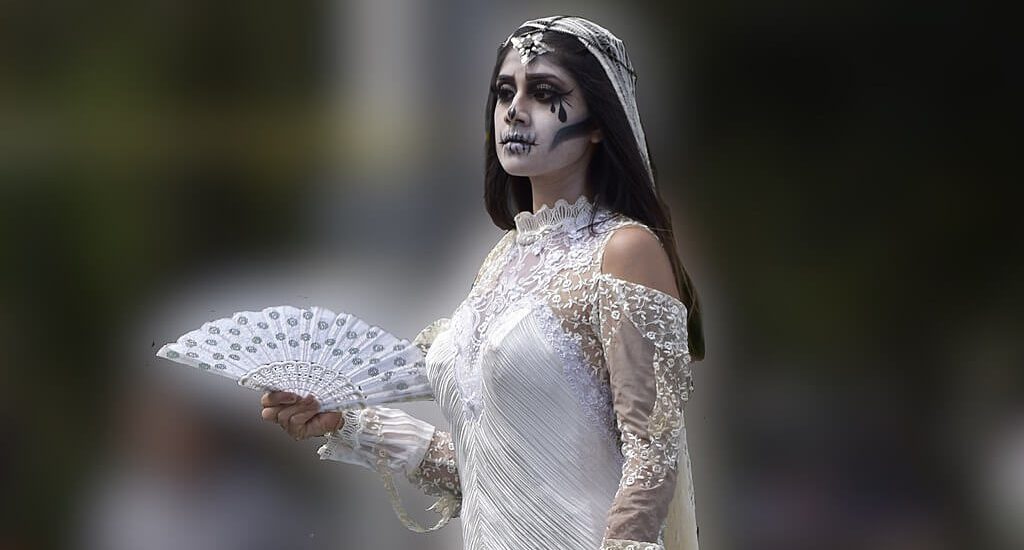
Each fall, Spanish teachers look for meaningful ways to teach Día de Muertos, the Day of the Dead. The celebration, strongly associated with Mexico, honors loved ones who have died with altars, flowers, food, music and memories. Thoughtful Day of the Dead activities help students understand the meaning behind the colorful images and practice Spanish in a real cultural context.
This guide explains the origins and main traditions of Día de Muertos and shares classroom activities for different levels. You’ll learn how to approach the topic respectfully and avoid stereotypes. We also compare Día de Muertos with All Saints’ and All Souls’ traditions in Peru and Spain, which helps students see how cultures across the Spanish-speaking world remember their dead in different ways.
What is Día de Muertos?
Día de Muertos is celebrated mainly on November 1 and 2. It blends Indigenous traditions from Mesoamerica with Catholic feasts brought by the Spanish. Families believe that the souls of loved ones return to visit, and they prepare to welcome them. UNESCO added the Indigenous festivity dedicated to the dead in Mexico to its list of the Intangible Cultural Heritage of Humanity in 2008.
It is a separate celebration from Halloween
Día de Muertos happens around the same time as Halloween, but its meaning is different. It is a time of remembrance, family and gratitude.
Main Day of the Dead traditions
The ofrenda
Families build an ofrenda, or altar, with:
- Photos of loved ones who have died
- Cempasúchil, bright orange marigolds whose color and scent are said to guide souls
- Candles to light the way
- Pan de muerto, a sweet bread
- Sugar skulls, called calaveras de azúcar
- Papel picado, colorful cut paper banners
- Favorite foods and drinks of the person being remembered
Visiting cemeteries
Many families clean and decorate graves, share meals and spend time together at the cemetery.
Calaveras literarias
These are short, humorous poems that imagine Death coming for a living person, often a public figure or friend. They mix humor and social commentary.
La Catrina
La Catrina is an elegant skeleton in a fancy hat. She comes from an early 20th-century print by Mexican artist José Guadalupe Posada, created to mock people who imitated European styles. Later, muralist Diego Rivera helped make her a national symbol.
Day of the Dead activities for Spanish class
Beginners
- Vocabulary match: la ofrenda, la vela, la flor, el pan, la calavera, recordar.
- Describe an ofrenda: Students label items on a picture of an altar.
- Papel picado craft: Students cut paper banners and describe colors in Spanish.
Intermediate
- Class ofrenda: Students create an ofrenda honoring a famous historical figure from the Spanish-speaking world and write a short description in Spanish.
- Reading: Read a short text about the holiday and answer questions.
- Compare holidays: Students compare Día de Muertos with Halloween in a Venn diagram.
Advanced
- Write calaveras literarias: Students write short, kind humorous poems about fictional characters or historical figures.
- Art analysis: Study Posada’s Catrina and discuss its social message.
- Research: Students research how Día de Muertos is celebrated in different regions of Mexico.
Teaching the topic respectfully
- Focus on meaning, such as remembering loved ones and celebrating life.
- Avoid costumes that turn the tradition into a party theme.
- Be sensitive to grief. Some students may have recently lost someone. Make personal participation optional.
- Invite, never pressure. Students with family traditions can share if they want to.
For more cultural activities, see our guide to Hispanic Heritage Month activities.
How Peru and Spain remember their dead
Peru
In Peru, November 1 is All Saints’ Day, a national holiday, and November 2 is the Day of the Dead, Día de los Difuntos. In the Andes, many families visit cemeteries, bring food and music and share meals near the graves. A popular tradition is baking t’anta wawas, bread shaped like babies, decorated with faces. Our guide to Peruvian culture and traditions shares more.
Spain
In Spain, November 1, Todos los Santos, is a holiday when many families visit cemeteries with flowers. Traditional sweets include huesos de santo, marzipan rolls, and buñuelos de viento, small fried pastries. In Catalonia, families celebrate the castanyada with roasted chestnuts and small sweets called panellets. Our guide to Spanish festivals and traditions covers more celebrations.
Exploring living traditions abroad
On Engaged Education’s 8-day Lima and Cusco language immersion programs and the 10-day Spain Global Impact Fellowship, students learn about local traditions through Spanish lessons, cultural workshops and conversations with local people. Program dates vary, so holidays may or may not fall during a trip.
FAQ
What is Día de Muertos?
Día de Muertos is a celebration on November 1 and 2, mainly in Mexico, when families honor loved ones who have died with altars, flowers, food and memories.
What is an ofrenda?
An ofrenda is an altar with photos, marigolds, candles, bread, sugar skulls and favorite foods of the people being remembered.
Do Peru and Spain celebrate Día de Muertos?
They mark All Saints’ Day and All Souls’ Day with their own traditions, such as cemetery visits, t’anta wawas in Peru and huesos de santo in Spain.
Bring culture into your Spanish class
Day of the Dead activities help students connect language with memory, art and family. Explore our Language Immersion programs in Lima and Cusco and our Spain Global Impact Fellowship 2027. Fill out our form to learn more.
Start your journey by downloading the Engaged Education Brochure and learn more about our immersive programs in Peru, Spain, and beyond. Interested in creating lasting impact around the world? You can directly assist communities in need by becoming a monthly donor through MEDLIFE’s Moving Mountains initiative.